

 Amazon Music
 Apple Podcasts
 Audacy
 Castbox
 Castro
 Deezer
 Goodpods
 iHeartRadio
 Pandora
 RSS Feed
 PlayerFM
 PocketCasts
 Podchaser
 Overcast
 Soundcloud
 Spotify
 TuneIn
 YouTube
 Unscripted: Dennis Brown on Theater, Criticism, and Conversations
The world of storytelling with the incredible Dennis Brown, who’s not just any guest—he’s a maestro of narratives! Dennis shares some delightful anecdotes about icons like Gregory Peck and Henry Fonda, giving us a peek behind the curtain of theater and film. We chat about his new book, "Stage Page: Memories of Mostly Marvelous St. Louis Theater," where he captures the essence of the local scene with a sprinkle of nostalgia and a dash of wit. Join us as we explore what it means to be a critic ("informed subjectivity"), the art of storytelling, and the memories that stick with us long after the curtain falls. So, grab your favorite beverage, turn off your phone (unless you are listening to this by that device), settle in, and let’s get ready to be entertained and enlightened!
If Dennis Brown were a weather report, today’s forecast would be: 50% wisdom, 50% experience, accompanied with a strong chance of storytelling. What a privilege to converse with Dennis as we explore his incredible journey through the world of theater and literature, from rubbing elbows with Hollywood legends like Gregory Peck and Jessica Tandy to sharing the stage with up-and-coming talent in St. Louis. He reflects on the heartwarming and sometimes hilarious moments from his years as a theater critic, revealing how he managed to maintain his passion for storytelling while navigating the ups and downs of the theatrical world.
One minute he's recounting the time he interviewed a young playwright, and the next, he’s dropping gems of wisdom about what it means to truly listen and engage with the stories that surround us. Dennis’s unique perspective not only captures the essence of theater but also serves as a reminder of the importance of community in the arts. Who knew that writing and storytelling could be as exhilarating as a rollercoaster ride? Buckle up, because Dennis is here to take us on a thrilling ride through the enchanting world of theater, one story at a time!
[00:00] Meet Dennis Brown
[00:33] Show Welcome and Banter
[01:32] Shaw Quote on Critics
[02:23] Dennis Background and Theater Roots
[03:32] Thesis That Started It All
[05:30] Teaching and Lifelong Learning
[07:51] Breaking Into the Post Dispatch
[09:31] Career Advice Stay Open
[11:17] CBS Speech to Publicist
[12:37] Working With Famous Actors
[15:21] Interviewing Secrets and Stories
[20:20] Sponsor Break and PSA
[22:14] Back to Stage Page and Books
[24:57] How to Be a Theater Critic: Informed Subjectivity
[28:52] Illustrations by Marjorie Williamson
[30:04] Illustration Perfectionism
[31:11] Choosing The Reviews
[33:58] Reviews As Short Stories
[36:18] The Lost Art Of Criticism
[40:03] Hook Meat And Ending
[41:03] Gregory Peck Prep Method
[47:04] GP On The Road
[52:00] Angela Lansbury Favor
[54:23] Final Book Plug Farewell
Takeaways:
- Our guest today is Dennis Brown, a super talented storyteller and playwright with some awesome stories to share about his adventures in theater.
- We dive into the world of theater history, featuring names like Gregory Peck and Jessica Tandy, and how they left their mark on the industry.
- Dennis emphasizes the importance of being informed rather than strictly objective when it comes to theater criticism; it’s all about that informed subjectivity, folks!
- The podcast reveals that Dennis' teaching experience keeps him young and in touch with fresh perspectives, highlighting the value of student insights.
- We also uncover that writing is a cerebral activity that connects us deeper, and even Gregory Peck had his unique way of learning lines by writing them out!
- Finally, we learn about Dennis' new book 'Stage Page', which is packed with reviews that tell more like short stories, celebrating the marvelous St. Louis theater scene.
This is Season 9! For more episodes, go to stlintune.com
#stlouistheater #dennisbrown #theatercritics #CBS #publicist #screenwriting #theaterarts #websteruniversity
Thank you for listening. Please take time to rate us on Apple podcasts,
Podchaser, or your favorite podcast platform.
00:00 - Untitled
00:00 - Stories of Influential Figures
06:17 - The Journey of a Playwright
11:15 - The Call to CBS
19:35 - The Art of Interviewing: Insights from Celebrity Encounters
26:06 - The Art of Theater Criticism
34:26 - The Evolution of Theater Reviews
46:07 - The Legacy of Gregory Peck
51:52 - The Story of Angela Lansbury's Special Visit
Arnold
Our guest is a remarkable storyteller. He has some wonderful stories about people who he's worked with. Henry Fonda, Jason Robards, Jessica Tandy.How about Gregory Peck, Stacy Keech, Paul Winfield and Jimmy Carter? Find out more on St. Louis in tune.Welcome to St. Louis in tune and thank you for joining us for fresh perspectives on issues and events with experts,.
Arnold
Community leaders and everyday people who make.
Arnold
A difference in shaping our society and world. I'm Arnold Stricker along with co host Mark Langston.
Mark
Howdy.
Arnold
What's happening? Did you build your ark, Mark?
Mark
No kidding. It is.
Dennis
Yeah.
Mark
I'm not sure when we replay this again and again, but this time when we're recording it, it is a monsoon out there.
Arnold
I looked this morning. We had 2.34 inches yesterday.
Mark
That doesn't sound like much.
Arnold
No, but in the span. It was in the span of probably about nine hours.
Mark
But that is a lot.
Arnold
Yes.
Mark
Yeah, yeah.
Arnold
Saturation point.
Mark
Oh, yeah.
Arnold
I would say, folks, we hope that you get saturated with what we're going to do today. We're glad that you've joined us. We want to thank our sponsor, Better Rate Mortgage, for their support of the show.You can listen to previous shows@stl in tune.com where you can follow us and leave a review. Now, we have a thought to ponder today. It's a funny theater quote from George Bernard Shaw.And some people might say George Bernard Shaw depends upon how you want to pronounce it and what country you're from. The Irish may pronounce it.
Dennis
Bernard.
Arnold
And those of us in the across the pond may pronounce it. Bernard. But he said this. He's talking about his fellow critics. A dramatic critic is a man who leaves no turn unstoned.A dramatic critic is a man who leaves no turn unstoned.
Mark
Okay, I get it.
Arnold
He had a way with words.
Mark
For me, a minute.
Arnold
He had a way with words.
Dennis
Yes. Diana Rigg took that quote and wrote an entire book simply comprised of negative things that reviewers had written about people.
Arnold
Oh, and that was. That voice was no doubt, Dennis Brown, who is our guest today. He has. He's a playwright, he's an author, he's a screenwriter.He's been a publicist for cbs. He's been a writer for the New York Times, the LA Times, the St. Louis Post Dispatch. He's been a book reviewer, a teacher, and sometimes actor.Dennis.
Dennis
Sometimes actor, sometimes actor.
Arnold
Welcome to St. Louis in Tune.
Dennis
That must have been a long time ago.
Arnold
I was reading about one of your acting performances.
Dennis
Suddenly it comes back to me.
Arnold
Yeah, in the book. We're talking about your book here. Stage page. Memories of mostly marvelous St. Louis theater.And you were a theater critic for the Riverfront Times for how many years?
Dennis
13 Years.
Arnold
Okay.
Dennis
2001 Through 2013.
Arnold
Now, we're going to track this back to. We won't ask where you went to high school. I know you're St. Louisian.
Mark
Gotta ask.
Dennis
Yeah, I went to Clayton High School.
Arnold
I went to Clayton High School. Ooh, the greyhounds.
Dennis
Yeah. Okay. You absolutely right about that, Mark.
Arnold
And I know our mascots from the St. Louis area here. When did you first become interested in rock writing?
Dennis
Oh, boy. I thought you were going to say, when did I first become interested in theater?I think I first became interested in writing when I quickly had to write a master's thesis in college, and I ended up doing a thesis on a production my. My advisor wanted me to do. I was Indiana University. And he said, you're from St. Louis. Why don't you.Right about when Henry Irving played St. Louis in 18. And I thought, oh, my goodness gracious. Wow. That means the archives of the Missouri History Museum, which is not air conditioned in the summer.I just can't think of anything more unpleasant than that. So I love the Missouri History Museum.And so I counter proposed and said, what if I did a production on the Miser, which had just been done at the Guthrie Theater a couple years ago, and I could maybe reach the actors? And he said, if you can get the people to go along with you, we'll do that. I called the director, and he was a man named Douglas Campbell.He was directing at Stratford that summer. Right then, Stratford, Ontario Romeo. He said, no, no, I don't want you to do a write about the Miser.Write about Romeo and Juliet, which I'm directing right now. You can come up here, you can talk to everybody. You have carte blanche. So I did that and I started interviewing people.That's the first time I ever really interviewed people and transcribed tapes and wrote it up. And that was my master's thesis, and I never stopped, really. Wow.
Arnold
Okay.
Mark
How old were you then?
Dennis
How old was I? Probably. It was 19, actually. Probably 23, 24.
Arnold
Wow.
Mark
So you're just a young lad getting started.
Dennis
It sounds young now. Yeah, yeah.
Arnold
And you were involved in theater in. In college for your bachelor's degree.
Dennis
Yes. In those days you got a degree in theater. Now they subdivided and you can get a degree in the most intricate kind of sound design.Much more subdivided than that. But we just had theater.And yes, I got a bachelor's in theater, master's in theater, and then ended up working at a regional theater and never lost my interest in theater, although my life took me in many other directions. I never expected to move to New York. I never expected to work at CBS. When I came back to St. Louis after 22 years.I never expected to write for the Riverfront Times. I never seen a Riverfront Times. I never expected to teach. And I taught for 15 years at Webster. And that was really the high point of everything.
Arnold
Hear that, teachers? You hear that, teachers?
Dennis
I can't believe there's a teacher out there who wouldn't agree with me.
Arnold
It's true.
Mark
There you go.
Arnold
We agree.
Dennis
Yeah, working. But you love. You read a list of people at the outset of this thing, all celebrated names, and they were all terrific people.I didn't hear a name on there that I couldn't have said something kind about. But the people that made the deepest impression on me were those kids in the classroom who came up with things, ideas that I had.I was teaching film appreciation and they saw things in film that I had been seeing those movies for years and had never thought about.
Arnold
They keep you young, don't they?
Dennis
Keep you young. And they keep the mind alive. And when you're not in the classroom is just the cream of the cherry on top. The preparation, the reading their papers.I made my students keep day weekly journals and they had to submit their journal entries. They could say anything because it was just between me and them. And I still have some of those.A lot of the papers that were sent, the journal entries that were sent to me because they were so insightful, interesting.
Arnold
Now you. I want to kind of go back and want to track some of your history. You left Indiana University, have a master's degree.You came back here to St. Louis and you started working for the Post.
Dennis
No, no. I'll tell you how that happened. I had a neighbor who worked for the Post Dispatch, known as Eric Zechler, reporter. And I had an idea for a story.And I said, eric, why don't you write this interview about this friend of mine who I went to college with. And he. He's now out touring. He's in the national company of Cabaret, playing the MC Big part. And Eric said, I don't have time to do that.Why don't you do it? And submitted freelance. And I did write it. I did submit it freelance. They bought it. I was very excited. My first time I ever sold a story for money.And I said to Eric, what do I do now. And he said, why don't you write the book editor? Because they use freelance book reviewers.I wrote a man named Clarence Olson who wrote me back and said, I don't really need any reviewers right now, but why don't you take a look at these two books? And he sent two books. That was the beginning.I wrote for Clarence olson for over 20 years until he retired, and then I retired from the Post with him. And I wrote hundreds and hundreds of book reviews for the Post Dispatch and then feature stories, always freelance.But it just opened the world to me. That man, Clarence Olson, helped me to discover the world through books.
Arnold
What's the most important thing you learned from him as it related to what you were doing and then how that would propel your career.
Dennis
To be to take your first, to take your time. He was a very gentle, patient man. He never got upset about anything.So when I would tend to want to get upset about something, I would think how he would handle it, and I would just pull back. And also to. Don't just. You have a goal in life, you know what you want to do? I wanted to be a theater director.I left college expecting to be a theater director. But I learned, watch what's happening right in front of you. Don't always look for that goal that's over the horizon.Clarence Olson appeared in my life, and I said, fine, let's go with this.And after that, I always told people, be sure to not be so dead set on what you think you have to do, that you don't take advantage of what's right there in front of you.
Arnold
That's really good advice.
Mark
That's great advice.
Arnold
I know people need to hear that, even nowadays.
Mark
Oh, yeah.
Dennis
I have friends who had the same job for 20, 25 years, and they rose through the company, and they have security and all sorts of wonderful things from that kind of constancy. I didn't have that. I did this for a while, and then something else appeared, and I did that for a while, and then I went over here.And I'm often envious of those people who stayed with it, but I find that they're often envious of me.
Mark
Oh, yeah.
Arnold
Interesting.
Mark
Yeah.
Arnold
Interesting perspective. So you get done with the Post, and is that when you get this call from CBS and they say, hey, Dennis, come on up to New York.We'd love for you to work with us.
Dennis
As usual, as everything happens, good for me. I didn't get a call. Technically, what I was about to say was that any job that I ever went after I never got. It was always the call that came.And in fact, I guess it was a call from cbs. If you don't know this now, you're going to learn it sooner or later. Everybody has to learn it. We live in a who, you know, world, right?And when I moved to New York, I, with no prospects, I just thought it was time to take a look at New York. My best friend, my roommate from college, was living with a girl who was the photo editor, vice president of photos at cbs.And gee, these are long, involved stories. But she told me about a friend of hers who had to give a speech, didn't know how to write a speech at CBS as an executive.And they said, how would you. She'll pay you if you'll write the speech. I wrote the speech. It was a gigantic hit. The CBS executives came and said to her, who wrote that speech?And the next thing I knew, I was working at cbs.
Mark
Place right time.
Arnold
And what did you do there?
Dennis
I was a publicist. I was a publicist. I went out on the sets, I talked to. The world was very different than today. A publicist would never go to a set of a TV movie.I was on a film called the Blue and the Gray about the Civil War for two months in Fayetteville, Arkansas. But I also went to sets in Paris and London and the Loire Valley and everywhere.CBS is a country, a company that was split down the Mississippi River. Anything that happened east of the Mississippi river was handled out of New York. Anything that was.Anything that covered west of the Mississippi was handled out of LA, which meant Australia, Hawaii, those kinds of places. And 90% of the series which were done on the West Coast. But we did mostly TV movies.I was always in Savannah, Georgia or the Florida TV pilots and they began to mount. But mostly I did miniseries. Eight hours on George Washington, eight hours on the Civil War, eight hours on a show called Ellis Island.And they would always cast big people in these shows. So I would find myself in the company of people like you mentioned. Gregory Peck, who played Abraham Lincoln in the Blue and the Gray.Richard Burton, who played the lead in Ellis Island. Barry Boswick and Jacqueline Smith, who played the leads in George Washington.And when you spend time with people, you learn that what people are really looking for is a friend. And a lot of these people befriended me and are friends to this day day.I just had my birthday two weeks ago and I got the biggest floral arrangement from Jacqueline Smith. I couldn't even lift it. I had to have the guy carry.
Arnold
You guys hit it off Very well.
Dennis
Yeah.
Arnold
As I've read.
Mark
Okay. I always had a crush on Jacqueline Smith.
Dennis
A lot of people did.
Mark
Yeah.
Dennis
And I think she was looking for somebody who didn't have a crush on her. Yeah. Somebody who would just sit and talk.
Mark
To her, would have done that.
Dennis
You know, what are your dreams? What are your hopes? What do you. How do you feel about everything? And I never asked her about Charlie's Angels. We didn't have to.Charlie's Angels was behind her at that point. And I don't know. It didn't always work. Some people I had problems connecting with, but a lot of people I connected with.
Arnold
If you asked them questions, though, and you listened and kind of like we're doing now, it's some. And you recorded these things, correct?
Dennis
Oh, yes. Everything was recorded.
Arnold
Because you got some juicy tidbits that you saved for another book.
Dennis
It's not in this. I spent time with a man named William Goldman. William Goldman won the Academy Award for Butch Cassidy and the Sundance Kid, all the President's Men.And I wanted to interview him, and he did not want to be interviewed. And I won't go into the whole story. It's too long.But he finally said, I'll give you one hour, one hour only, and the next time you're in New York, call me. And I went to New York and I called him. He met me at his office, the elevator doors open.He was standing there waiting for me, looking at the clock, saying, you have one hour. And he said, there are only two reasons to do an interview.One is for you to make money off of what I say, and the other is for me to say unkind things about other people. And at the end of three hours, he finished the interview, and he finally said, people who are famous, not me, he said, I'm not famous.People who are really famous, they are desperate to be gotten down. They are desperate to be interviewed by somebody who cares about them. And mostly people just want to talk to them about, what's your next project?The worst interview question that was ever created. What's your next project? Because nine times out of 10, it is never the next project. Something always changes.Which is why I go back to my line about be alert to what's happening around you, not what's coming in the future. And he said, if you talk to people like Paul Newman and Robert Redford, they're desperate to be appreciated.And I never talked to Paul Newman or Robert Redford, but the people that I did talk to, I could respond to that. They liked being asked Intelligent questions.
Arnold
They liked being my words now explored about who they were apart from really what they did.
Dennis
You said something before we ever started. That was the trigger line. You said, I've been researching you. They like to believe that people care.And I once interviewed Mike Wallace at CBS and he said, if you want to be a good interviewer, do what I do. I always arrive with a manila folder filled with paper. He said sometimes it's just blank paper.But the people that I'm interviewing think that it's all material that I've been researching on them. And the minute they think that they've research that you care enough to research, someone gonna open up to you.I'll tell you another great story about interviewing. I was working a show called no Nanette in Cleveland with Ruby Keillor. She was there for three weeks. She had done it on Broadway.It had been a big hit. She had been restored to celebrity and she was very shy, middle aged woman. She did not like to be interviewed.And a fellow on Cleveland air drive time, very popular, insisted and insisted. Finally she said okay, just to shut me up. He came in.I can't even remember his name but I was monitoring the interview and he said, Ms. Keeler, how many pairs of tap shoes have you gone through in your life?
Arnold
Great question.
Dennis
She had never been asked that question in her life. She started to talking about her tap shoes, how long they last. He asked her, where do you get your taps replaced or do you buy all new?They talked 10 minutes on tap shoes. Then he got into the interview. He got this great interview. I listened to it the next morning. He didn't include 1 second of material about tap shoes.He used that to open her up. And then he got a great interview. Patience. It comes back all the things I talked about here. Take your time.If you have the time, which radio usually has.
Arnold
We have the time here on St. Louis in Tune. And we're going to take a little time because we're going to come back and talk about Dennis's new book. It's stage page.We're going to talk about where you can get this new book, where you can get his previous books. And we're going to delve into what does it mean to be a critic and how do you become a critic. So this is Arnold Stricker with Mark.
Arnold
Langston of St. Louis and Tune.
Arnold
Don't go away.
Arnold
As strange as it may sound at better rate mortgage. We love talking to people about mortgages. Everyone in St. Louis promises a better mortgage rate.But what you really need to turn that perfect house into your dream home is a better mortgage. At Better Rate Mortgage we open the door to so much more. So where are you in the home buying process?Researching, maybe wondering how much you can afford? House hunting? Get a pre approval from Better Rate Mortgage Ready to buy. Our team is ready to make your mortgage process fast and easy.Whether you're purchasing your first home or taking cash out to make your dream home even dreamier, our door is open. Come on in and get started. Today we'll show you how.Call Sean directly at 314-375-3293 or online@betterratemortgage.com Remember, at Better Rate Mortgage a better rate is just the beginning. Betterratemortgage.com and MLSI Beach 40135 and equal housing lender.
Arnold
This is Arnold Stricker of St. Louis in tune on behalf of the Dred Scott Heritage Foundation. In 1857, the Dred Scott decision was a major legal event and catalyst that contributed to the Civil War.The decision declared that Dred Scott could not be free because he was not a citizen.The 14th Amendment, also called the Dred Scott Amendment, granted citizenship to all born or naturalized here in our country and was intended to overturn the US Supreme Court decision on July 9, 1868.The Dred Scott Heritage foundation is requesting a commemorative stamp to be issued from the US Postal Service to recognize and remember the heritage of this amendment by issuing a stamp with the likeness of the man Dred Scott. But we need your support and the support of thousands of people who would like to see this happen.To achieve this goal, we ask you to download, sign and share the one page petition with others. To find the petition, please go to dred ScottLives.org and click on the Dred Scott Petition drive on the right side of the page.
Arnold
On behalf of the Dred Scott Heritage.
Arnold
Foundation, this has been Arnold Stricker of St. Louis Intune.
Arnold
Want to welcome you back to St. Louis in tune. This is Arnold Stricker with Mark Langston. We're talking with Dennis Brown and I want to give you his first website, folks.It's author DennisBrown.com author Dennis Brown.com and that's when you can get his book which we're talking to him about. We're just delving into that. It's called Stage Page Memories of mostly marvelous St. Louis Theatre.And also you can get the book Voices on the river, 22 days on the Delta Queen. That's very interesting one too, Dennis. And those books are available at the Missouri History Museum Bookstore.So don't forget that, folks, if you're over at the History Museum, check that out.
Mark
Dennis, how many books have you written? There's just this four.
Dennis
Four total. Four. Published. Two questions there. How many have I written and how many have I published? 4. There will be a fifth, and then that's it.I don't have any more books in me.
Mark
Okay.
Arnold
All right.
Mark
You got a lot of recordings, I would think.
Arnold
Yeah, I love that one.I need to get that one where you kind of talk about and you write about all the things that these celebrities that you've interviewed, you've had these tapes, and you went back and wrote these things down. I've got to get that one.
Dennis
The first book was called Shop Talk, and that was based on the transcripts of my interviews with playwrights and screenwriters, William Goldman, Tennessee Williams, Edward Albee, William N. About a dozen. And then the companion volume a few years later was Actors Talk, and that was the interviews with some of the actors that I worked.I never believed people would say, if you're going to write a book about actors, why don't you go interview? Though I never did that. It was only the people whose paths I had crossed in my life.So there's a certain autobiographical quality to it, because the reason why I would be talking to these people always came. Came out of my world.
Arnold
That's very humble that you say that, because many people in your position would be trying to contact them and pestering them to get that, just to get the book out.
Dennis
And I know you're right about that, Arnold. But I would. I would sit back and say to myself, why do I have to ask Neil Simon that he hasn't been asked 50 times already?
Arnold
That's why I like to ask. And you like to ask those questions, too, Mark. The ones people.
Arnold
What our listeners want to know.
Mark
Yeah.
Arnold
Rather than what's your next project?
Dennis
I. I just. I really like to interview people that I want to. That I have questions for. And that's not necessarily someone who's famous.
Arnold
That makes sense. I want to read something from one of your reviews. And these. Oh, boy, I'm reading from.This is from a Riverfront Times review of the show Skin in Flames. And this is the first sentence, Mark, Anyone attending Skin in Flames is advised to wear asbestos clothes.
Dennis
Yeah. Now, I.
Arnold
One of the biggest questions I've always had when I read reviews or critics, the theater critic. And I remember you. One of. I can't remember this. This book where somebody said, do you read the Reviews. You go, no, I don't ever read reviews.And how do you become a theater.
Dennis
Yes, that was Stephen Schwartz.
Arnold
Yes, that's correct. How do you become a critic? You've been on stage. You've got degrees in that.Because I think when people do book reviews and things like that, it's like I can imagine an author or a director saying, you've never directed a play before, so what do you know? Or you don't know what I've gone through, or you understand what I'm saying?
Dennis
I know I do understand what you're saying. And that same charge has been leveled. People will say, how can you be objective? I knew different people in the theater world sometimes.How can you be objective? And I would say, theater criticism is not about objectivity. Theater criticism is about informed subjectivity. And my goal was to be informed.So before I would review a play, I would do a lot of research. I'd read the play if I. If possible. If it wasn't a new play, I'd read the history of the play. I'd read all.Anything I could find so that I felt that I was informed. And then I would go on, go in and just trust my own instincts.
Arnold
Because there were times, I think when you're writing here, you might be my words calling out in a bad way certain aspects. Then you called out in a good way, other aspects.And you didn't necessarily pooh, pooh something because there's value in whether it's the lighting or the scenery or the acting or et cetera, like that.
Dennis
I learned as a reader of reviews. And I like to read reviews. I've always enjoyed reading reviews.But I remember that Walter Kerr, who was the reviewer for the New York Herald Tribune and then moved over to the New York Times, had a way of beginning a review with something.It may have been the most damning review you could ever read, but it would begin with saying there's a moment in Act 2 when the antagonist lifts his finger in a certain way. And it would make you want to see that. Then by the time you finished the review, you knew you didn't want to see it at all.But too many people, they'll write a negative review and they'll end it by saying, there is something nice to see. And I want to say, it's too late. It's too. One of the nice things about this book, to me personally, is that my. I had a great editor.His name was Tom Finkel at the Riverfront Times. And he would write the headlines and often, almost always the headline would tell if it was a negative review, would tell you that in the headline.So I think there's no reason for them to read it. Whereas here in the book, there are no headlines. It's just the title of the play. And you have to read the review to see what. What the opinion is.And I tried to not be. Now, this book is only 14% of my output at the Riverfront Times. And I tried to focus on positive reviews, but some are positive and mixed.But I always would. I rarely would try to open a review with negativity. It's too hard to write, to spend your time writing negative.
Arnold
I get that. I get that. And this has some unbelievable kind of illustrations in there. Talk about that illustrator.And it's Marjorie Williamson, and she's well known in St. Louis for illustration.
Dennis
Marjorie Williamson is the most talented illustrator artist. She did the COVID for Voices on the river, and I love that cover.So when I got the idea to write this book, I took her to lunch and I said, marjorie, how would you like. Have you ever thought about being the Al Hirschfeld of St. Louis? I love this. She sat there.That was the last question that she ever expected to be asked. Of course, she sat there for about, I don't know, 20 seconds and said, okay, okay, yeah, I'll do it.
Arnold
I'll do it.
Dennis
And she did it. And it took us months and months because there are almost 50 of them in there and they're all great. And she was a creature of theater.She'd seen most of these plays herself. And I just sat back. I never told her what to do. I just waited and waited for my computer to say marjorie Williamson.And then I'd see what she'd sent me, and then I would just be full of delight. You're looking at an image, the trolley. And I'll tell you about.
Arnold
This is typical. That was a fascinating one.
Dennis
This is typical Marjorie Williamson. She did that. She did them in order. So that one came quite early because it's early in the book.And one week before the book went to press, she said, I'm not happy with that illustration. And she came back and she filled in all of the background of the city. The city, yes.So this is the sensitivity that she had, the perfectionism that she had, that she was studying each and every. Wasn't, okay, I got that one done. Let's move on to the next one. It was do the best possible job we can possibly do. And I think she has made the book.
Arnold
She didn't want to let you down. Because she read this and she knew that you had done the best possible things here. How did you pick these particular plays?
Dennis
I'll tell you. Each one of them had to be typed up fresh. And there are 77 in there. I typed up about 150. So it was a process of trial. And what worked.I couldn't have the same actors over and over. I couldn't have the same theater companies over and over. So it was a trying to find the right mix. And so it was a juggling act. But I had.When I left the Riverfront Times, I did an inventory and 50% of my reviews. I did 560 full reviews. 50% Of them were positive, 25% were mixed, and 25% were negative. So I had.Knowing that I wanted to focus on theater at its best, I still had plenty to choose from. There are only three out of 77 that quantified the parenthetical phrase mostly marvelous.There were three negative reviews and two of them, I think, were touring shows that played the Fox.
Arnold
Now, I was trying to find. You've written. When you were at the Riverfront Times, you wrote what, a million and a half words or something?
Dennis
Oh, yeah. Some silly.
Mark
Holy.
Dennis
There were. People used to say to me, how come you haven't written a third book? Because the first two would come out.Before I went to the Riverfront Times, I said, in terms of words, I have, but they're just on newsprint. And I thought to myself one day, I thought, but books are more permanent than newspapers. Why not put some of these, not for me, but for these people.Because they are. They're very gifted people. Actors, directors, scenic designers in this theater community, certainly during the years that I was reviewing.And they deserve to have something like this to hand to their mother.
Arnold
Absolutely.
Dennis
And what I've learned since the book came out is how many of them have said to me, I'd forgotten about that because they keep working. And these are distant reviews from the beginning of the century, our century. And so many people say, oh, I forgot about that. Or I forgot about.I didn't get to see that play that you reviewed because I was in a play and this is all new material to me. Surprised me.
Mark
I get that.
Arnold
So it's half a million words.
Dennis
I'm sorry, Half a million. It's still a lot of words. That's a lot of words.
Arnold
Just half a million.
Dennis
500,000.
Arnold
Now, I lost the question I was going to ask when I interrupted myself there. I look at this and here it is. It's just Not a review, Dennis. It's. You're telling a story just like you.You do here in Voices of the river, on the River. It's like you talk to people, but you put it in a story and it's just. And we are story. People related. That's. That's how we are as human beings.
Dennis
I look on that book, I said, There's 77 reviews in there. I think of it as 77 short stories. I think it's a volume of short stories.
Arnold
I agree with that.
Dennis
You have to learn how to write a review, which I did not know how to write a theater review when I started. I had written book reviews for 22 years for the Post Dispatch. But book reviews and theater reviews are very different animals.
Arnold
What's the difference?
Dennis
For one thing, a book is permanent. A book will last a hundred years. A theater's memory. By the time you reach your car in the parking lot, that memory has begun to fade.You can't carry that experience with you. A review. I think sometimes reviews are more valuable 10 years later.If you really love a review, if you really love a play, then you're not so much a reviewer. You're the town crier. You're going out saying, hey, you got to come see. You got to come see this. But the review is almost secondary. Years later.That's what happened. That's what happened. And that's what a story's gonna tell you. That's what happened. So I liked you read that line from Skin in Flames.The biggest thing I had to learn as a theater reviewer was how to write a lead.
Arnold
Yeah, get a hook.
Dennis
Get a hook. And the first. The early reviews begin with lines like such and such. A play open Friday night at the Black Rep. That's a dull opening sentence.By the end of the book, you're reading things like, just the facts, ma', am, or I couldn't pull them out of thin air, but just opening lines that I thought that I'd like to read the second sentence. Make them want to read the second sentence.
Arnold
Exactly.
Arnold
And that's why I pulled that one out, because that was a really unique line. And my question to you now, is there a difference in writing a critique or being a critic now than there was? Have we lost some of the storytelling?Have we lost getting.
Dennis
Well, lost reviewing? Okay, there are no reviewers anymore. Infinitesimal numbers.
Arnold
I guess they are on this little machine right here.
Dennis
Little machine you're holding in your hand are people. Anybody can be a reviewer.
Arnold
That's true.
Dennis
I'm going to sound like a snob now. But I always believe that part of professional criticism was being paid for your opinion. Yeah, it's true.
Mark
Critiquing.
Arnold
Yep.
Dennis
And now you read those restaurant, you know, and we all look at them. We all were susceptible to it.
Mark
Yes, we do.
Dennis
Who are you quoted George Bernard Shaw early in the broadcast. I'll quote him again. I think it was Shaw who said, what is said about a person is secondary. What matters is who said it.
Arnold
That's true.
Dennis
And. Whoa.
Mark
Okay.
Dennis
You get to know a reviewer over the years because when I was a kid growing up in St. Louis, I read Miles Standish in the St. Louis Post Dispatch every week. And I knew him. I knew his strengths, I knew his weaknesses, I knew what he liked. And he was good.And I know he was good because I now live on newspapers.com and I read newspaper reviews from the 1950s and 60s from newspapers across the country. And very few reviewers were as good as Miles Standish. But now I can't trust the stuff that's out there. Who are these people? What are their agendas?
Arnold
That's true a little bit. It is. It is. It is. We're going to take another brief break here.We've got some additional questions to ask Dennis about his new bookstage page, memories of mostly, mostly marvelous St. Louis theater. And don't go away because we're going to explore some things that you're not.
Arnold
Expecting, As strange as it may sound. At Better Rate Mortgage. We love talking to people about mortgages. Everyone in St. Louis promises a better mortgage rate.But what you really need to turn that perfect house into your dream home is a better mortgage. At Better Rate Mortgage, we open the door to so much more. So where are you in the home buying process?Researching, maybe wondering how much you can afford house hunting? Get a pre approval from Better Rate Mortgage Ready to buy. Our team is ready to make your mortgage process fast and easy.Whether you're purchasing your first home or taking cash out to make your dream home even dreamier. Our door is open. Come on in and get started. Today we'll show you how.Call Sean directly at 314-375-3293 or online@betterratemortgage.com Remember, at Better Rate Mortgage, a better rate is just the beginning. Betterratemortgage.com and MLS High Beach 40135 and Equal Housing Lender.The United States has a strong tradition of welcoming newcomers and refugees.The welcome Corps is a new service opportunity for Americans inspired to welcome those seeking freedom and safety and in turn, help strengthen their own communities. Welcome Corps is a public private partnership.
Arnold
That is inspired by what Americans represent to so many around the world, a.
Arnold
Beacon of hope and refuge. All it takes is a helping hand. Are you ready? To learn more, contact the International Institute.
Arnold
Of St. Louis@infoistl.org or call 314-773-9090. That's infoistl.org or call 314 203-9090. Welcome back to St. Louis in Tune. This is Arnold Stricker with Mark Langston.We are talking with Dennis Brown about his new book, Stage Page Memories of mostly marvelous St. Louis theater.We were talking about that first line, that hook and Dennis, you were mentioning that people will read that first part and then they will generally jump to where the last paragraph and a lot of times in the middle is where.
Dennis
You're doing what you're telling your story and you're filling out the beef. Where's the beef? They used to say the beef is in is not in the hook. The beef is not in the last. The last paragraph is the summing up.And you also want to have a clever ending, the way you had a strong hook. But the content of the review is in the middle. And if you don't get hooked at the beginning, you're not going to make it.
Arnold
Don't, don't read the bun, read the meat.
Dennis
That's right. You remember the protein.
Arnold
Oh, yeah, absolutely. Absolutely. Where's the beef?
Mark
I don't think there's any beef in there.
Arnold
There's something that I thought was very interesting, and it involves Gregory Peck, that you worked with him on the show, and the extent to which he took a script and then he wrote it out in. Oh, that's in here. Okay. So I'm jumping books. I'm sorry.
Dennis
Happy, happy to talk about that. Talk about Voices on the River.
Arnold
This is in the Voices on The River Book, 22 days on the Delta Queen.Illuminate a little bit, because I read this morning and I've always known this as a former educator, that writing is important and where kids have gotten away from cursive writing, it's a brain thing. There's a neuroscience about that.But kids now who are in college and university, even high school, taking notes on a laptop, and they're missing that connection because when people write what that does with the brain, on this particular article that I read this morning, it just blows the brain up inside where all the neurons are firing.
Dennis
Talk about what Gregory puts When I was a teacher at Webster, I Refused to allow any student to open a laptop in the classroom. Good. But I'm taking, I'm giving you a handout. Anything you need to know is in this handout. You don't have to take notes.I wouldn't get away with that today. The university would come to me and say, you have to let them do that.Finally, there's pushback and it's going in the other way, but it's a long pendulum curve. Gregory Peck was a creature of literature. He thought at one point that he would teach literature. Interesting.That was his major at Cal Berkeley, reading great novels. And so the written word meant everything to him.So when he became an actor and he got a script, he learned it by writing it, because writing meant something to him. He would see other actors, he'd be jealous of other actors. I can name two.Cary Grant, Robert Mitchum, who could walk over to the set, they're about to make an entrance, open the script. That's the first time they looked at it and look at the words and walk off and give what Gregory Peck would say was a perfect Cary Grant performance.He could not do that. He was a creature of words. He had to write those words down.And not only write them down, but then say them aloud 50, 100 times to learn them by rote. But it was all the written word. He saw those words on the page and he had to keep repeating them until he no longer saw them on the page.And then he could just play off the eyes of his fellow actors.
Arnold
There's part of that in there that I recall that he actually kind of changed some of the script.
Dennis
Well, it's Moby Dick and he was going off to do a one day cameo of a remake of Moby Dick. He had of course, starred as Captain Ahab in the 50s in the John Huston film. And now he's going off to play Father Marple. Father Mapple.Marple, the part that Orson Welles had played in his film in a new version with Patrick Stewart as Ahab. And I saw him, he had the script on a table in front of him.He had the script, he had the Bible because he's delivering a sermon about Jonah and the whale. And he had Melville's novel, all three of them, in front of him.And he picked from this and he picked from that, and he kept this from the script and he put it all together and he went down to Australia, they filmed it in Australia. And he filmed it in one take.
Mark
Wow, that's crazy.
Arnold
That's Judy Garland in one take.
Dennis
Yeah. That's right. Like Judy Garland recording the Trolley Song. The Trolley Song in. In one take. Yeah. People weren't expected to do that.And Peck also then ended up winning the Golden Globe Award for that Best featured actor and they didn't expect him to win. He was seated way in the back of the auditorium and he had to walk all the way down, which was kind of cruel. But he knew why he had won it.He had won it because of his homework and preparation. And he had worked with too many actors who did not take it seriously. And he always took it seriously.
Arnold
When you have to make a long.
Arnold
Walk to receive an award. As notable as he was, that was probably okay.
Dennis
He was another generation. He. By the time I worked with him, he was more an icon than an actor. He started as a star. Most people don't know that. He didn't start as an actor.He didn't work his way up through supporting. Jimmy Stewart did supporting roles. He was the killer in a Thin man movie.Gregory Peck arrived in Hollywood as the star of his first picture and he never was not the star from that point forward until near the end when he did some cameo roles.
Arnold
Was he tall?
Dennis
Yes, he was tall. About six, two. Yeah.
Arnold
A lot of those actors. He's a presence.
Dennis
And he kept his hair, you know, which was. I say that unlike Arnold, not to kick a. But he had this beautiful mane of hair which had gone white and it made him look like a presence.Yeah, a presence. You know, every once in a while we traveled together in Voices on the river. That's set in 1986. So nothing happens in that book.Which makes me think maybe I did write about him in Stage Page because I know I wrote him out because he was in the blue and the gray and that's what I was talking about during those cruises. But if I wrote about him writing that scene from Moby Dick, it must be in Stage page, but I can't think of where it is.
Arnold
I read both of them.
Dennis
He's in a lot of my books and will be the subject of the fifth book. The last book is also because it's about the four years we spent on the road together doing his one man show.
Arnold
Is this a spoiler alert?
Dennis
I don't know if it's a spoiler alert, but I'm breaking my own rule by saying that you should never talk about what you're going to do next project. But I know that it's the next project because I'm in it and I'm not going to quit it now.And I wrote a TV movie about Lincoln called the Perfect Tribute. Jason Robards played Lincoln.And the fun part was the writing, because every morning I'd get up and I'd turn on the laptop or the computer or whatever it was back then, and I'd say, good morning, Mr. Lincoln. What are we going to talk about this morning? And then the script would go, I'm writing about Gregory Peck now.And I'm getting up every morning and I'm turning on the laptop and I'm saying, good morning, GP which is what I call.
Mark
I was going to ask Gregory.
Dennis
The title of the book is GP on the Road with Gregory Peck. And the first line of the book is call me Greg, which I liken to call me Ishmael. The first line of Moby Dick.And the day that he said I would always as Mr. Peck, and he said, call me Greg. And I couldn't. Couldn't know it. Words wouldn't come out.
Arnold
I get that.
Dennis
And so I said GP that's what I said on memos and emails, it was always to G. I said GP And I did my best not to call him anything, but if I did call him something, I called him GP One day we were driving home from the. I never told this before. Oh, tell us.Driving home from the studio, we were working on a clip reel that opened the show with 30 minutes of clips from his movies. And this car in Beverly Hills pulled out in front of us and it was clear there was going to be a collision.And as I slammed on the brakes, I threw my arm, my right arm against him in the driver's side. Oh, Greg.
Mark
Well, the first time, the old time,.
Dennis
It just came out. Finally, he missed that car by inches. Oh, wow. An inch. Not even plural.And I took my hand back and forgot the fact that I'd called him Greg, went back to GP did he.
Arnold
Let you know that you called him Greg?
Dennis
No, he wanted me to call him. He did. He was very serious about that. He was letting me know that he respected me as an equal for what I did. I did things that he couldn't do.He couldn't turn a tape over in a tape recorder. He didn't know how to do that.
Arnold
Dennis. That speaks, though, of your ability to genuinely talk to people and they know you're not out for something else.
Dennis
I'm not out for anything. Anything.
Arnold
You have an interest in them. You are just interested in who they are, what they're doing, what their personalities, not trying to be a tick on them and suck something from them.But get their life sucked out of them or something.
Dennis
There's nothing I could get from Gregory Peck that I would want, except we'd be watching television one day, and there was Bruce Davison, who was being interviewed because on Friday night, he was opening in a production of To Kill a Mockingbird, and he was playing Atticus Finch. I said, all right, now you've got to write. You've got to write Bruce Davidson a note. And. Oh, you do. It means so much to him.And that's the end of the conversation. I don't know.Two years later, I read an interview in the LA Times with Bruce Davison telling the story of opening night of Mockingbird when a telegram arrived from Gregory Beck.
Arnold
Wow.
Dennis
And so he did it. He did it. He didn't write a note. He sent a telegram. And it changed the. It's a story that guy will never forget.
Arnold
Exactly.
Dennis
And I just stand in the background and say, I did that. Yeah. That's all I could want from Gregory Peck.
Arnold
Is that story going to be in the book? That story you will only hear exclusively here on St. Louis in Tune.
Dennis
Only here, because that's a story about me, and that's not about him. And I'm not trying to. Up to him.
Arnold
We get that. We get that you've spent just enough time with you to know who you are.And you're not one of those people who's out trying to make a buck off of somebody.
Dennis
If I. There was a teacher, there was a woman who was desperate to have Gregory Peck talk to her students.It was a school in Florida, and we were in Los Angeles, and they couldn't get. They couldn't. And to make a long story short, he did speak over speakerphone to that class in Florida.
Arnold
That's cool.
Dennis
Never would have happened. But if I. If we've got a minute, I'll tell you my favorite story. Something that I did has nothing to do with Gregory Page.When I was Angela Lansbury's publicist on Murder, She Wrote, this woman called me in my office. She identified herself. She was very. She was a pup. She was a casting agent. She knew everybody in Las Vegas. Her father was Mark.Now I'm gonna lose the name. But the man who directed Top Hat, and he was. So. She had grown up in Hollywood royalty, and she said, I cannot reach Angela Lansbury.I know everyone in this town, and I can't get to Angela Lansbury. My mother is 90 years old, and the only thing that she wants out of life is to meet Angela Lansbury. Would. Can you help Me. So I went over there.I went over to Corymore, over to the set at Universal. I explained the situation. I said, I know you don't want to do it, but come on, let's just do it. Didn't you like Top Hat? Mark Sandridge.Kathy Sandrich was her name. Mark Sandridge directed Top Hat. And she said, sure. So they brought the woman. We set it all up. They brought the woman over. They couldn't get her.He didn't think about this. They couldn't get her into the motorhome because you have to go up these streets.They had to put her in a chair and some of the grips had to lift her up and set her. They had. Angela had tea set out for her. They both had a wonderful time. Angela told me I loved it. I had.The next day, Catherine Sandridge called me, told me all about it. She said, anything you want, Anything. Anyone you want to meet in this town, come to me. I will take it. It's yours. I never spoke to the woman again.
Mark
You never cashed in that chip?
Dennis
Never. No. Never cashed, Never thought about it. Oh, my goodness. Maybe it's a week good for you.Maybe I should have, but I felt good knowing that I had made that happen.
Arnold
You weren't looking for something in return?
Dennis
I wasn't looking for anything. And you were right. That Gregory Peck story about writing, rewriting Moby Dick is in stage page. It just hit me. This is what happens when you get old.It's in the story about when I was an actor, the one time I was an actor, and this is how he prepared to act, and this is what I was doing. I was absolutely wrong. I should not have tried to correct you.
Arnold
No, you're fine. That's why I said sometimes an actor, sometimes. Folks, if you don't have this, you've got to get this book. Stage page.Memories of mostly marvelous St. Louis theatre by Dennis Brown. Dennis, your other book, Voices on the river, 22 days on the Delta Queen. We'll look forward to the other book coming out.When you get that, you have an open door to come here and talk about that.
Mark
Please come back.
Arnold
Yes, it's been Fun. Author Dennis Brown.com Author DennisBrown.com, folks, you can listen to the podcast and we'll put all this stuff on there. We have run out of time.Dennis, thank you very much for coming in today.
Dennis
It was my pleasure. Totally.
Arnold
We've enjoyed it very much. Very much. Folks, that's all.If you've enjoyed this episode, you can listen to additional shows@silver stalentune.com and follow us there and also leave a review. We want to thank Bob Berthisel for our theme Music, our sponsor, Better 8 Mortgage, our guest Dennis Brown and co host Mark Langston.And we thank you for being a part of our community of Curious Minds. St. Louis in Tune is a production of Motif Media Group and the US Radio Network.
Arnold
Remember to keep seeking, keep learning, walk.
Arnold
Worthy, and let your light shine.
Arnold
For St. Louis in tune, I'm Arnold Stricker.
Dennis
Sam.
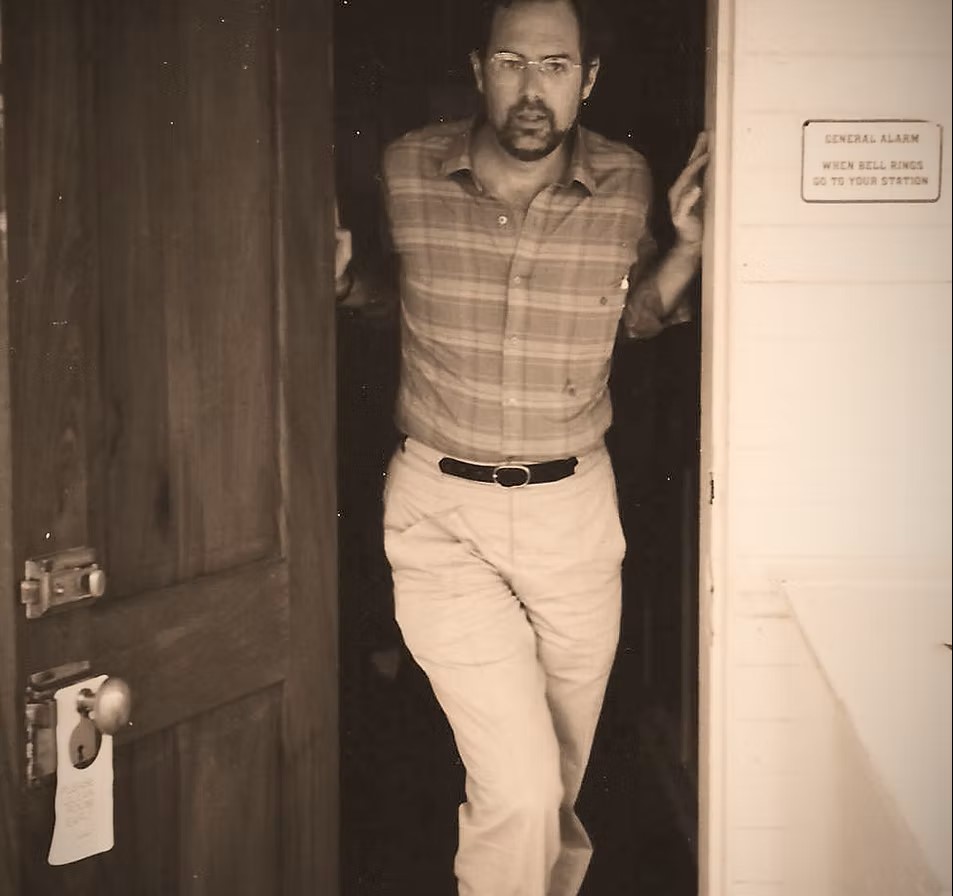
Author / Theater Critic / Publicist / Screenwriter / Playwright / Newspaper Writer / Teacher / Sometimes Actor
My story as a writer began in January 1970, when I sold my first piece – a profile of Jay Fox, a friend from Illinois Wesleyan University who was touring as the eerie M.C. in Cabaret – to the St. Louis Post-Dispatch. I held that $75.00 paycheck in my hand and thought, “This is a fun way to earn money.” I’ve been writing ever since. For the next 22 years, I reviewed 600 books for the Post-Dispatch. I wrote for the New York Times, LA Times and the Post-Dispatch and later joined the CBS Network as a publicist where I met and befriended many actors. Over another 12 years, I wrote more than a half million words about theater for The Riverfront Times.
My adaptation of William Inge’s novel, My Son is a Splendid Driver, was staged at the William Inge Festival in Kansas. My adaptation of Jared Brown’s biography, The Fabulous Lunts, was staged in New York City. I also adapted a short story, The Perfect Tribute, for television (the TV movie starred Jason Robards as Abraham Lincoln). In 2017, I wrote The Muny Saga, a history of the St. Louis Municipal Opera in Forest Park, which can be found here. Most recently, I wrote a one-man play for my college roommate at IWU. My Life with Will: An Evening with Will Shakespeare and James Sutorius was triumphantly staged at North Coast Repertory Theatre in Solana Beach, Ca. In between time I have managed to write four books with another on the way. So, in a nutshell, this has been my writing story – up till now.


