Amazon Music

 Apple Podcasts

 Audacy

 Castbox

 Castro

 Deezer

 Goodpods

 iHeartRadio

 Pandora

 RSS Feed

 PlayerFM

 PocketCasts

 Podchaser

 Overcast

 Soundcloud

 Spotify

 TuneIn

 YouTube
Outwitting the KGB: A Klezmer Quartet's Cold War Odyssey
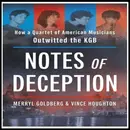
Dr. Merryl Goldberg tells the uncanny story of how a klezmer quartet used a musical cipher to smuggle information out of the Soviet Union and help refuseniks and dissidents — literally encoding names, addresses and escape directions into sheet music to outwit the KGB. We discuss her new book Notes of Deception: How a Quartet of American Musicians Outwitted the KGB and her upcoming St. Louis Jewish Book Festival appearance.
We get old-school spycraft and new-school lessons from Merryl Goldberg, and I promise—this is not your typical textbook history. The episode unfolds with a background history of refuseniks, why Soviet Jews were refused permission to emigrate, the risks of dissent, and how a ragtag ensemble from the Klezmer Conservatory Band decided to be part of the solution. Merryl describes intimate scenes—subway chases to lose KGB minders, apartments turned into concert halls, having her passport and belongings taken away, and a kid taught to blow bubble gum bubbles—moments that humanize the Cold War’s abstract geopolitics. These vignettes show how everyday joys can sustain resistance even when the KGB is watching. Read more in her book: Notes of Deception: How a Quartet of American Musicians Outwitted the KGB.
Beyond the thrills, Merryl offers four concrete takeaways that feel timely: resistance matters (even small acts add up), arts keep you human and resilient, advocacy can turn private suffering into political momentum, and humor is an essential survival tool. We link her work directly to real policy outcomes—information she smuggled boosted efforts by Amnesty, scientific and interfaith groups, and reportedly influenced the human-rights focus in Reagan-era summits. If you’re the kind of person who wants practical inspiration with a side of history (and maybe a klezmer beat in your head), Merryl’s story will make you feel empowered to act—one starfish at a time.
[00:00] Cold War Mission Setup
[00:36] Show Intro and Guest Tease
[01:44] Meet Merryl Goldberg
[03:07] What Is Klezmer Music
[05:48] Refuseniks Explained
[07:18] Recruitment and Phantom Orchestra
[09:54] The Music Cipher Trick
[12:53] Coauthor and NSA Connection
[15:08] Cybersecurity Fame Twist
[17:48] Finding the Phantom Orchestra
[21:44] Break and Sponsor Message
[23:36] Back From Break and Rapport
[25:22] Smuggling Stories in Scores
[28:29] Impact on Reagan-Gorbachev Talks
[31:05] Deported and Exposed
[32:19] Capitol Hill Fallout
[33:08] Humor Under Surveillance
[34:43] Bubblegum and Baseball
[36:31] Cipher Beats the KGB
[38:11] Four Lessons for Today
[41:38] Book Plug and Farewell
[45:50] Ads and Sponsor Break
[47:04] Hosts React and Debrief
[48:10] Holiday Bits and Banter
[49:35] Texting Code Comedy
[50:46] Final Sign Off
Takeaways:
- We learn that a klezmer quartet used music as a literal cipher to smuggle human-rights information out of the Soviet Union.
- Merryl created a musical code disguised as sheet music, and the KGB never suspected it hid addresses, names, and directions.
- You should notice how arts and advocacy teamed up: songs, jam sessions and humor kept dissidents resilient and deeply connected.
- Smuggled stories informed Western politicians and organizations, helping push human-rights onto summit agendas with measurable impact.
- If you're wondering about courage: a few determined musicians and dozens of advocates can topple policies and shift geopolitics.
- Arts skills translate directly to cybersecurity — creativity, risk-taking, and empathy matter when defending systems.
- Small compassionate acts — teaching a kid to blow bubble gum or sharing baseball — sustain humanity under duress.
- Humor became an operational tool, keeping morale high while the KGB tried their best to intimidate.
- Merryl Goldberg - Jewish Book Festival Speaker
- Showpass - Merryl Goldberg Event
- Merryl Goldberg - Official Home Page
- Merryl Goldberg - NEC Alumna Recounts Spy Mission
- Merryl Goldberg - Harper Collins Author Page
Other Shows You May Enjoy After Listening Today
The Holocaust's Hidden Hero: Fritz Bauer
How Irena Sendler Saved 2500 Children During the Holocaust
The High Stakes of Global Hostage & Prisoner Negotiations
This is Season 9! For more episodes, go to stlintune.com
#nccstl #coldwar #reagansummit #NotesofDeception #MerrylGoldberg #KlezmerConservatoryBand #klezmermusic #refuseniks #StLouisJewishBookFestival
Thank you for listening. Please take time to rate us on Apple podcasts,
Podchaser, or your favorite podcast platform.
00:00 - Untitled
00:17 - Interview: Klezmer Quartet Member on Soviet Mission
01:52 - Introducing Dr. Merrill Goldberg — Klezmer Musician, Educator, Author
07:18 - Undercover in the USSR: How Musicians Became Operatives
14:59 - Amerl Goldberg's Soviet Union Experience (mid-1980s)
23:36 - Return & Author Spotlight: Meryl Goldberg on Notes of Deception
27:02 - When Music Became a Cipher: Operational Breakthrough and Political Impact
38:46 - Four Lessons: Resistance, Art, Advocacy, and Humor
41:38 - Closing remarks and musical interlude (introduction of Russian song)
47:03 - Return to St. Louis — Mark Langston Segment
49:35 - Texting Acronyms — A 70-Year-Old's Guide
Arnold
It's the height of the Cold war in the mid-1980s, and a Jewish klezmer quartet travels to the Soviet Union to play concerts.But that is not their only mission.They are going to exchange information, encourage and support dissidents, and help Soviet Jews find a path to freedom.We're going to talk to one of those quartet members on St. Louis in Tune.Welcome to St. Louis in tune, and thank you for joining us for fresh perspectives on issues and events with experts, community leaders and everyday people who make a difference in shaping our society and world.I'm Arnold Stricker along with co host Mark Langston.Mark's good to be back in the studio again.
Mark
Yeah, I like the studio.We.
Arnold
Took a little reprieve on election day.
Mark
Yeah.Oh, boy.We had to.Did you want to watch the results?
Arnold
Just a little bit.And then I know I was too tired.
Mark
It gets.I don't know if I want to watch this or not.It's even worse than watching my favorite sports team that never wins.
Arnold
There you go.
Mark
But yeah.Okay.I.
Arnold
Want to thank our sponsor, Better Rate Mortgage, for their support of the show.And folks, I want to thank you for joining us today.We have a great guest.You can listen to previous shows@stlntune.com where you can follow us and leave a review.Our thought to ponder.com deals with life versus existence.Are you actively choosing how to spend your time and energy or are you just letting the days pass on autopilot?Oh,.
Mark
I do a little bit of both once in a while.I.
Arnold
Think everybody does to some degree.
Mark
They could then abnormal.
Arnold
Yeah, I think so.Okay.Our guest, she did not spend her time and energy just letting life pass on autopilot, that is for sure.Dr. Merrill Goldberg is currently a professor at the School of Arts at California State University, San Marcos and the executive director of Center Arte, a university center dedicated to restoring arts to education.She toured internationally for 13 years with the Klezmer Conservatory Band and has recorded over a dozen CDs with major labels.She received her undergraduate degree from New England Conservatory of Music and her doctorate in teaching curriculum and learning environments from the Harvard Graduate School of Education.She was the saxophonist and cipher creator for the kcb, that's the Klezmore Conservatory Band Quartet that entered the Soviet Union in 1985.She's also an author and she's going to be speaking at the St. Louis Jewish Book Festival, where she's going to have a conversation with Josiah Schmidt, the literary arts Director of the St. Louis J. Thursday, Dec. 17.That starts at 7pm at the St. Louis County Library, Clark family branch.She's talking to us about the book Notes of Deception.Get this title, Mark.How a Quartet of American musicians outwitted the KGB.Mira.Welcome to St. Louis in Tune.
Merryl
Hey, thanks so much for having me.I'm absolutely thrilled to be here.
Arnold
Wow, this is going to be fun.And before we kind of set the stage for folks, there's a couple definitions that we need to get through.Number one is klezmer music.Would you define klezmer music for those listeners who don't know what that is?
Merryl
Yeah, absolutely.Klezmer is folk music.It's like an upscale fiddler on the roof.Klay zemer means instrument of song in Hebrew.But it was the music.It was and it still is music of mostly Ashkenazi Jews.And to give you a sense of it, it can be very peppy.It could be very solemn.Sounds something like this.Ya ya ya yai ya ya ya ya ya da da da da da da da da da da da.You can dance to it.It's a pretty fun kind of music.
Arnold
Very energetic, like you said, when it's fast played at Jewish weddings.Yes.
Merryl
Yeah, weddings, bar mitzvahs, parties.Back in Eastern Europe, before they had microphones and amplifiers, the Jewish musicians would gather with musicians in wherever they were playing.So.Wherever, whatever country.And they would use more musicians to amplify the sou, especially if they were playing at a party or a big event.Western musicians were usually itinerant musicians going from this village to that village.And the music really died out a little bit during the early part of the 1900s, when there was a mass immigration of Jewish people to the United States, and a lot of people immigrating wanted to forget the old country.But then there was a huge revival of the music starting in the 80s, and was part of that revival with the klezmer Conservatory band out of Boston.
Arnold
And what's the instrumentation of a klezmer band?I know it varies, but there are some basic instrumentation.
Merryl
Yeah, a basic klezmer instrumentation would be probably a clarinet, a violin, a bass, an accordion, or a piano, mandolin.There was an instrument called the cymbalum, which is like a hammered dulcimer, which was played in Europe when it came over to the United States and mixed a little bit with jazz.Saxophones, which I play, were introduced, as well as banjos.And.And there's also a tradition of Yiddish singing, so there's often you'll have a singer singing Yiddish songs as well alongside playing klezmer.
Arnold
Now, there's another word that you use in your book.It's called refuseniks.And, folks, it's R E, F U, S N I K S. What is that?What's the definition of that?So our listeners can be based.When we start really getting into the book.
Merryl
Yes.So a refusenik is a person in the Soviet Union who asked to leave the Soviet Union but was refused by the government.And someone who asked to leave but was refused end up being called a refusenik.
Arnold
And they suffered quite a bit of what I would say,.
Mark
Persecution.
Arnold
Yeah, persecution.Deteriorating circumstances over there.
Merryl
Oh, God.Yeah.So in 1985, things were really terrible.It's the height of the Cold War.There are a lot of people who want to leave the Soviet Union because they're denied human rights.They're denied the ability to practice religion, whether it be Judaism or Catholicism or other kinds of religion.And, yeah, the situation was just really terrible.And so all these people who wanted to leave ended up being called refuseniks.And what happened was, as soon as someone asked to leave, the government refuses them become a refusenik.They lose their jobs, they are harassed, they might get in, be beaten, even put into prison.It was a pretty awful situation.
Arnold
Now, how did you get into this clandestine work?You were like an operative, but you didn't have any formal training.Your training was in music.And now you're trying to be, my words now, quote, unquote, spy.How does that work?
Merryl
Yeah, exactly.There were people going in and out of the Soviet Union, including journalists, who were starting to document what was going on with people who were refused nicks and also people who were dissidents, like Sakharov or Sharansky.These are some famous dissidents.And in about 1984, a journalist from England, Martin Walker of the Guardian, went all the way to the country of Georgia, which is pretty far south of Moscow, and discovered that there was this group of musicians called.That they were calling themselves the Phantom Orchestra because they weren't allowed to really exist.And it was a group of refuseniks of Jewish refusenics, Catholic refuseniks, poets, dissidents, Helsinki monitors, human rights activists.And they had literally banded together in order to get their story out to the west through music.Now, the importance of getting their story out to the west can't be understated because if you could get your story out, and basically people had to smuggle their stories out, but if you could get your story out, then people on the west could advocate for you and try to help your circumstances get better.And Help you get out.After this story break in the Guardian, people in Boston, where I grew up and where the klezmer band was located, had noticed and thought, oh, my goodness, wouldn't it be really cool if we could send some musicians in undercover, go in, meet with them musician to musician.We'll send in some questions with them to find out, and they can smuggle out, meaning me and my colleagues smuggle out information to tell their story.And so I agreed to this crazy thing to do to go in undercover.And then we got minimal training.And this was from just activists here in the United States telling us that we different things, how to avoid getting known or this or that.But one of the things that we had to do in order to get in was to come up with a cipher.At the time, I called it a secret code, because the KGB would never, on any level, let you bring in names and addresses because they would confiscate all that, and the people that you were going to meet would get in trouble.And so I'm thinking, all right, here we go.We're on a tourist visa.I'm carrying a saxophone, Hankus is carrying a Casio piano, Rosalie is carrying a guitar, and Jeff is carrying a mandolin.We are not inconspicuous, and usually tourists don't carry their instruments.But we said we needed to practice.And so I thought, what would be hidden in plain sight?So I created a cipher.I know this is.It's crazy, but it worked.I created a cipher that's in music.I had learned as a student at the New England Conservatory that there were many composers who would put their names or their girlfriends names in music by using the letters of A through G. Like Bach put his name in his math very famously.And then I thought, I can expand upon that.And what I did is I created this cipher that looks just like piano music, but the letter A is the letter A.The letter A sharp is A sharp, B is C. So on.I just assigned letters to notes, and then I disguised it with clefs and rhythms.And you look at it, and in a million years, even a musician would never, ever suspect that it was a code or a cipher.And it worked.When we got to the Soviet Union, the KGB was tipped off.We underwent this crazy interrogation, and they searched everything in our suitcases, opening up makeup, opening up everything that could be opened up.And they went through my music book and they went page by page.And guess what?They handed it right back to me.That was Score Freeburn, KCB Klezmer Conservatory Band versus kgb.That was score one for kcb.
Arnold
I was wondering whether you used various clefs or not.Just and different note values to determine what was coming after it.But I'm glad they didn't ask you to play any of that.Right?
Mark
Oh, that's a good.Yeah.
Merryl
Here's the thing.It sounds like 12 tone music, which is a real thing, but it sounds terrible.It really does.It's a little bit fun to play, but oh my gosh, you wouldn't want to be a audience member and listening to it for an hour.
Arnold
Your descriptions in the book, I haven't finished it thoroughly, but you get into.And you give background on things.You gave background on how refusenics and how Jews back.Way back in the.When it was, gosh, Peter the Great and Catherine the Great and even before that, who was the.The original Ivan the Terrible.You went all the way back to Ivan the Terrible and you traced some things which I thought was very fascinating to lay down groundwork of an understanding because you're not assuming that people know the history.And I appreciate that.
Merryl
Yeah, exactly.And I've really got to give credit to my co author, Vince Houghton.He's.He's a top gun over at the nsa and I was so lucky to hook up with him.He's the head of the cryptological Museum at the National Security Agency.And when he heard this story, he was like, this can't be true.Plus I should have known about it.And then when he realized it was true, he called me up, he's like, I gotta talk to you.And we ended up putting up.They put up an exhibit at the museum there.And then when I decided to write the book, I asked Vince if he would co author.And he's a Cold War historian, he's just a fabulous writer.And he also had the awesome job of becoming me in the book because we made a decision early on that the book, aside from the forward, would be written in one voice.And but kudos to Vince because not only does he put in all that history, which you're right, it really sets you up to understand what we did and the whole context for our visit.And then he also was able to interview all these intelligence folks because he could make a phone call and just speak to them as well as code breakers and talking about all that.So that part of the book too is just fascinating.
Arnold
We're listening to Amerl Goldberg describe her experience in the Soviet Union in the mid-1980s.And this is Arnold Strick with Mark Langston of St. Louis in tune, Meryl.So you had this story and was it.You were at a party and you were sharing this information, and that's where.That's where the.Your co author also got this information.
Merryl
Yeah, Vince wasn't at that party.But what happened was I'm at.I live in Southern California now, so I'm at a party in La Jolla, which is a beautiful town right on the ocean, and I'm sitting with people I don't know.And you do the party thing.What do you do?What do you do?And I'm talking to a couple, Chuck and Kim, and.And they say to me, oh, we're in cybersecurity.Trust me, I did not have a clue about cybersecurity.And I'm sure they looked at my face like, oh, my God, we got to give her the 101 of cybersecurity.And cybersecurity is about.Actually, it's about coding and preventing bad guys from doing bad things and bad gals, too.Being creative, more creative.And so I listened and I said, you know what?It's not cybersecurity, although it actually is.But I have a story.I started telling them this story, and their jaws dropped.They look at me and they go, you're going to be famous.And within three months, I was a keynote at the biggest cybersecurity conference.They have like 10,000 people and keynoting.I was just dumbfounded.And Wired magazine featured me.And then Jen Easterly, who unveiled Biden, was the infrastructure, cybersecurity and infrastructure agency, security person, $3 billion agency.Jen and I are back to back keynotes.And she goes, I'm really.I've heard about you.I want to get to know you.And so then she, we've become friends, and I did all this work for cybersecurity, and I'm still doing it, actually.And it makes sense because cybersecurity, in order to be good and protect folks, you've got to be creative.You've got to work, think outside the box.You have to be able to think in ways that the arts teach you.So work well with each other.Be creative, take risks, have empathy, which is you don't think about that in cybersecurity.And so we realize that the arts have so much to do with that field.And so it's interesting that one of the audiences of this book is people in cybersecurity.
Arnold
Wow, that's crazy.That is absolutely crazy.
Merryl
Yeah.
Arnold
Now, the music that you guys did over there, you were playing.Were you playing concerts you played with the Phantom Orchestra?
Merryl
Yeah.So we went in on tourist visas.So we did not have any concerts that were anything official by any stretch of the imagination.Our goal was to meet with the Phantom Orchestra and play with them in a setting that was an apartment, not in a concert hall or anything like that.And so we did.We managed to find the Phantom Orchestra, which was not easy.And in fact, I had enciphered into my music directions on how to get to them.Because as refusenics, their phones had been disconnected, and the only way to find them was to do things was to follow directions.So in my music, coded in my music, were instructions like, get on the subway.Get off at this stop.Get.Go up, take a right.Take a left at a jewelry store, take a right at a building, go up the stairs, look for number xyz.And with.It's incredible that we actually did it.Plus, we were being followed the whole time.And we thought.Rosalie and I thought we had lost our minder, our KGB minder.And we had, with Hankus and Jeff, came up with this crazy scheme.We'd all get on the subway, then we'd all get off, and Rosalie and I would jump on, and our minder would go with Hankus and Jeff.And in fact, that worked.But when we got to the first apartment we got to was family of the Goldsteins.We knock on the door and we say, we're here.We're musicians.We want to meet with you, but we've been followed.We think we've lost our KGB minder, but if you want us to leave, just tell us, because we've already been interrogated and blah, blah, blah.So Gregory Goldstein tells us, please come in.We know there'll be consequences for your visit, but your visit is our lifeline.And you thought you lost the case.KGB come to the window.That's kgb.He points out all these agents down on the street.He says, kgb does what they do, we do what we do.We are so happy you are here.And then that evening, we had our first music gathering together.Kind of a jam session.And, oh, my God, listening to the Refusenix play.Bach, Beatles, Jingle Bells, John Brown's Body, Somewhere over the Rainbow, Russian folk tunes.And we were singing Yiddish songs and singing with them, and the courage and the inspiration was just mind blowing.And then poor Hankison, Jeff, who are leading this other KGB agent all over Tbilisi, go back to the hotel.We don't get back till after midnight.And they are terrified that we been arrested and put into jail.But we get back.And because our rooms are bugged, we knock on their door and we mime that we've been playing music.And they were so excited and they were so relieved to see us.And then the next day, the four of us spent the entire day with the musicians of the Phantom Orchestra and then at night had the most amazing jam session concert together that.Oh my gosh, I can't even tell you, playing music together was absolutely one of the most transformative times of playing music in my entire life.Really remarkable.
Arnold
That's amazing.We're going to take a brief break.But Meryl, I want, I'm going to pose a couple questions here.To think while we take our break is what information did you exchange?And then were you writing that in a score?And what were these?How did you communicate?Did they do those, did refuse to speak English or what was going on there?So we're going to take a brief break and we're going out with some, some.Oh, we're going out with James Bond music.Oh, my goodness.This is Arnold Stricker with Mark Langston with Saints Don't Go Away.As strange as it may sound, at Better Rate Mortgage.We love talking to people about mortgages.Everyone in St. Louis promises a better mortgage rate.But what you really need to turn that perfect house into your dream home is a better mortgage.At better Rate mortgage, we open the door to so much more.So where are you in the home buying process?Researching, maybe wondering how much you can afford?House hunting.Get a pre approval from Better Rate Mortgage Ready to buy.Our team is ready to make your mortgage process fast and easy, whether you're purchasing your first home or taking cash out to make your dream home even dreamier.Our door is open.Come on in and get started.Today we'll show you how.Call Sean directly at 314-375-3293 or online@betterratemortgage.com Remember, at Better Rate Mortgage, a better rate is just the beginning.Betterratemortgage.com and MLS High Beach 401335 and Equal Housing Lender.Welcome back to St. Louis in Tune.This is Arnold with Mark Langston.We're listening to some klezmer music right now.And our guest is Meryl Goldberg.She is author of a book that's entitled Notes of Deception, How a Quartet of American musicians outwitted the KGB.She's going to be appearing here in St. Louis as part of the St. Louis Jewish Book Festival and going to be speaking with Josiah Schmidt, literary arts Director of the St. Louis J.And that's going to be taking place Thursday, December 17th, at the St. Louis County Library, Clark Family Branch from 7 to 9pm Go to jccstl.com for ticket information.
Mark
What a great place, too, the Clark branch.
Arnold
Yes.
Mark
What a big room they have.It's a wonderful place for this.
Arnold
Merrill.Welcome back to St. Louis in Tune.
Merryl
Well, I thank you.And I love the James Bond and the klezmer music.
Arnold
Are you Jeanette Bond or.
Merryl
I guess I am.I never thought of it that way.
Arnold
What would your numbers be?You've not killed two people, so you can't claim double low.
Mark
Is that what that means?
Arnold
Yeah.
Mark
I had no idea.I learned something new on the show today I didn't know.Is that what I didn't know?
Merryl
Yeah, maybe.I'd have to go with 18 or 36 lucky numbers in Jewish.
Arnold
They're going to.What strength reads do you.
Merryl
Play?
Arnold
What strength reach do you play?
Merryl
Oh, on my soprano I play 3.5.
Arnold
There you go.You could be agent 3.5.Oh, mercy.So were your.Was the Phantom Orchestra, did they speak English or how did you guys communicate?
Merryl
Yeah, great question.So a bunch of the folks who were refused nicks did speak English.And the folks that spoke English would translate for the people who didn't because other folks spoke Russian, mostly Russian, some Georgian.And so they would just translate.Yeah, but we communicated in English and also in music.When we played music, it's a language.And no matter what language you speak, boy, the music of language is just really bonding.
Arnold
Now, you were exchanging info, you were giving them information, but you were also gleaning information from them.And my question before the break was, did you write that down then in a score or what did you do with that information?So what information did you get and then what did you do with it?
Merryl
Yeah, exactly.So the information that we got was really important information to bring out to the West.So it was documenting what had happened to these refuseniks, their family stories, like if they were scientists and they lost their jobs or were put into prison or beaten, what the Soviets were charging them with, how long they had been in prison, if their homes had been raided, what was taken, all that kind of things.And so we would gather those stories as best we can during the time we met with them for that whole day.And then at night we would put it into our musical score so, you know, actually code it so that we could take it out.Now, what was interesting operationally is from what we know, music has never been used in this Way before.And because once you create a secret code or a cipher and you use it, it's very easy to do.So we could quickly translate words into our music.And we were able to take out quite a bit of information that ended up being super useful to not only politicians here in the United States, especially Ted Kennedy, Ronald Reagan, and in their use of a summit, we can get to that in a bit.But the Gudava brothers, who were a Catholic family, were doctors, and they were fired from being doctors.And so we could bring out the information.And people in the west, like Amnesty International, Interfaith Council, Action for Soviet Heweri Group Catholic, the Archdiocese of Boston, used the information to get other doctors to be on board.The goldsteins were scientists.And so the scientific committees were engaged to help with the goldsteins.Musicians were encouraged to help.So this information that came out really was used in advocacy to help folks.And ultimately the information that we were able to smuggle out through our music was used by Ted Kennedy with Ronald Reagan and George Schultz in their summit with Gorbachev.And it led directly to the opening of human rights and the ability the the Soviets letting people emigrate.It really is quite a story.And here's something that most people don't know.But prior to Ronald Reagan, most presidents when they had summits with countries or Soviet Union, they would be talking about arms and negotiations on this.And that nuclear and human rights should be an add on.But not so with Reagan and George Shultz.They actually insisted that.That a discussion of human rights had to be number one on the agenda.And to me, that's just remarkable.So.
Arnold
That is very unusual because that one would think exactly what you said, that arms.Because it's like, okay, we're all always trying to prevent war.We're trying to prevent engaging with one another and rather than trying to fight each other.But it sounds like your information was one of the tipping points to really push the Reagan administration and others involved in helping dissidents really open up the Soviet Union.As you were talking about that, I was thinking to myself, Merrill is someone who helped tear down the Berlin Wall and end the Cold War.Now, have you ever thought of it like that?I'm not trying.
Mark
To.I'm thinking the same thing.I'm.
Arnold
Not trying to put you on a pedestal.But these are the stories we don't hear.And I think why your book is so important, because this is the background.You hear what happens at the presidential summit.You don't hear what was the push or the tipping point.Behind it that actually got Gorbachev to go along with that.
Merryl
Yeah, there were so many people working at the time and doing what we did, which was going in as tourists and taking in information or taking out information, even little things like people's names and addresses and birthdays so that they could ask for a visa to leave.And so when you add it all up, the amount of people behind the scenes, that really helped.Now, in our case, what happened was we were put under house arrest in the Soviet Union.We actually were interrogated three times.We were disappeared twice.They took away our passports.They really did quite a lot to intimidate us, but they never, by the way, ever figured out the secret code.But here's the thing.Once we knew we were being deported.Deported, we were actually already in Armenia.We told refuseniks that they had told us we're going to be deported.And.But the Armenians did not care for the kgb, and they let us out of our house arrest, which was just in a hotel.And the refusenik called Reuters.Reuters broke the story that there were four American musicians under arrest in the Soviet Union.It became this international story.Our State Department became involved.And then.And my poor parents get a call from the State Department.You can't find your daughter or the other three.Oh, my God, my poor parent.But ultimately, obviously, we were deported when we got out.But because the Soviets basically, I think, made a big mistake in harassing us so much, it became this international story.We get back, and Ted Kennedy, who's our senator, so this is a great coincidence, right, that we're from Boston, Ted Kennedy is our senator, makes a big fuss.And then on the Hill, every single congressional office shows up to a concert we give in honor of the 10th anniversary of the Helsinki Accords, which coincided basically with our return.And then, so the plight of the refuseniks and the dissidents get heightened politically.It gets heightened in the, like, scientific committee, gets heightened in interfaith councils and everything else.And all these pieces come together and ultimately it becomes a big deal at the summit.And so it does lead to it.I'll tell you one other really quick story you would never know.I did a podcast with the dia, the Defense Intelligence Agency, and they told me that Ronald Reagan became friendly with Jakob Smirnov, who was a comedian who performed at one of the presidential dinner.And Reagan loved jokes.And so before the summit, another thing he did is he talked to Yakov Smirnov, and he said, what joke can I tell Gorbachev that will help me open up the break the ice.And he.And I just think it's so fascinating.And one of the things that kept us going on our trip and kept the Reschusniks going was a sense of humor.Because even in these horrible situations, if you can't keep a sense of humor, you can't feel human.We would, we were followed all the time.And every time a new person would be following us from the kgb, we would say, ah, there's another Carol.And we said carol for the Carole King song.You've got a friend, right?
Mark
Oh, come around.
Merryl
I'm not kidding.And I'm not kidding when I told you we kept score.KCB versus the kgb and of course we won.And even when we were playing with.Thank you.With the Phantom Orchestra, at a certain point KGB infiltrators come in and we stop playing and ultimately we continue playing music and we ignore them.But we also brought over presents.So there was an 11 year old kid in part of the Phantom Orchestra, the son of the Goldsteins, and he had a pen pal who by the way, his name is Josh.This is a spoiler alert in the book.Josh Shapiro, who's now the governor of Pennsylvania.He was an 11 year old kid and his family, I know his family had been to Tbilisi, his parents.And he was pen pals with Avi.There was like a twinning thing of bar and bar mitzvahs going on back in the 80s where young kids here would be twins with a kid there.And sometimes letters would get through.Josh sends me in with bubble gum and baseball stuff and Ozzy doesn't know how to blow bubbles.So we teach him how to blow bubbles.And we are hysterical.And then he says to me, what's this game?Baseball.Josh is always talking about baseball.And so we set up a game of baseball using a glove that he had and a ball.And we made a bat from a piece of wood and we made plates for running the bases.And it was just this moment of unadulterated joy.And having that in the midst of being constantly harassed and being essentially feeling under siege made life a reminder of that.You can have joy, you can feel good, you can feel human.And those moments are just so important.
Arnold
They are.And they are moments that when you put them all together, you come up with the result of where we are in history right now.Now.And if you hadn't gone, if you had said, no, that sounds a little too out there for me.Or if you had, the KGB had decided, yeah, we're going to send you to Siberia or you get exchanged for somebody 20 years down the road and all that's just amazing to me, Meryl, that you have that endurance and that bravery to do that.
Mark
And what if they had deciphered your music?What would have happened?
Arnold
Oh, God, my.
Mark
You're talking about the kgb, for crying out loud.
Merryl
Yeah, I had confidence in this cipher.And in fact, when we were being deported, they head to toe, searched everything we had and they went through my music again, and lo and behold, just handed it right back.It absolutely, absolutely worked.Were.
Mark
You nervous when they were going through.Were you nervous when they were going through your music?Did you think, oh, my gosh, maybe this time they're gonna figure it out?
Merryl
I was a little nervous, but you can tell by the fact that they're just flipping through the pages that, ha, you don't know what this iceberg.
Arnold
Obviously, they didn't have any musical background to try to sing one of the melodies or.
Mark
Something.
Merryl
Yes, again, if.If even if they had a musical background, it still looked like real music, it would be difficult to know that it wasn't.They would look at it and think, this is not going to sound good, but they wouldn't leap to, this isn't real.
Arnold
Can you give our listeners encouragement from your experience?You've kind of done that along the way here in our.In our.In our conversation.But why people need to.These are my words now.You kind of went with the flow.You had your upbringing, there was music in.In your family, there was activism in your family.So that was something that I think was a part of who you were and another reason of why you went.But can you speak to the general community out there about how little things like this make big differences?
Merryl
Yes.There are four big lessons, I think, in this that relate today as much as any time in history.Resistance to authoritarianism or resistance to people who are trying to put you down is really important.It's not easy, and there can be consequences, but it matters.So having a sense of resistance, music and the arts really help keep you sane and feeling like you can make a difference.And when you're playing music or making art, you can be free in your brain and no one can ever take that away from you.So that's a real tool.Being advocates is.So when we came back and we did so much advocacy, it makes a difference.And when you think about today, how people are advocating for change or what happened in this recent election, advocacy makes a difference.And humor also grounds us.So that's important.But there are two little stories.One is, one termite by itself might not make a big difference in destroying a house, but a whole bunch of termites working together can bring down Notre Dame.And I think about that a lot.And I also think about this other little parable of a young girl.I make it a young girl in the story on a beach, and she's noticed that, oh, my God, thousands of starfish have.Have beached themselves.And she starts throwing them back one by one because she's just horrified.And this grumpy old guy comes by and he's, what are you doing?You're not going to make a difference.There's way too many of them to make a difference.She looks at him, she picks up another starfish, she throws it back, and she says, it made a difference to that starfish.And then in my telling of the story, I like to say, then he started helping her, and everyone else on the beach started throwing them back, too.But the.The thing is that each of us can make a difference.It can be a difference in one person's life.It can be a difference in many people's lives.But throughout our community and our.The where we travel, here and there in life, we can always do something that's going to be helpful to someone.An elderly neighbor, someone who's my students here under terrible conditions of ice, being around our campus, or there are ways to resist, there's ways to help, there's ways to advocate, there's ways to feel good and do things.So I think the lessons are just have a life and are part of who we are.
Arnold
Don't go through on cruise control.
Mark
Wow.Wow.
Merryl
Yeah.
Arnold
I want to thank you for your time today, Merrill.
Mark
We do have a.We do have a song from a Russian.
Arnold
Plesmer band,.
Mark
A Russian singer, because he had gotten and deciphered some of her music.And I don't know if you've ever heard of this guy before, but.But it's.His name is Edward.Edward kill, I think is his name.K h I l. Here it is.It's okay.That's enough.He deciphered her stuff, though, and put it to music.This is what it sounds like.Decipher.Okay.
Arnold
There we go.Meryl, thanks for taking time to come on the show.
Mark
Okay.I'm sorry.I'm sorry.
Merryl
Arnold and Mark, you are the.You're great.Thanks so much.
Mark
It's been a long day.
Arnold
It's been a long day.It's only 10:45 here up in the morning, and Mark's already up.Mark's having his humor moment.Like you were talking about.
Mark
You didn't know you wrote a hit for Russia?Wait, who is it?
Arnold
Do you listen to that all the time?
Mark
No, I'm just like, what are they doing in Russia?
Arnold
Drinking vodka, singing.
Mark
My goodness.Okay, sorry,.
Arnold
Folks.If you get an opportunity, get the book, Notes of Deception, How a Quartet of American Musicians Outwitted the kgb.Great read.I'm sorry, I haven't finished it yet.Meryl, I'm on my way.And you can see her at the St. Louis County Library, Clark family branch on November.Excuse me.December 17th, December 17th, at 7:00pm she's going to be speaking as part of the St. Louis Jewish Book Festival and going to have a conversation with Josiah Schmidt, who's the literary arts Director of the St. Louis J. Muriel, I want you to please give Vince our best about the book that both you and he wrote is tremendous.And it's just that it's.It's what you're talking about, the termite I'm thinking about.It's one of the bricks in a wall that is built that gives us where we are today.And thank you very much for having the courage to go with your three other colleagues to the Soviet Union in 1985 to be a covert agent and get some information, pass some information back and forth.Thank you for doing that.
Mark
And thank you for.Yeah.The service and not getting caught.
Arnold
Yes.
Merryl
Thank you so much.It's been a delight being on the show.
Arnold
We've enjoyed having you on.Thank you.Take care, Meryl.
Merryl
Yeah.Back at you.
Merryl
In time.
Arnold
Arnold Stricker and Mark Langston will be right back.Everyone in St. Louis promises a better mortgage rate.But what you really need to turn that perfect house into your dream home is a better mortgage.At Better Rate Mortgage, we open the door to so much.Whether you're purchasing your first home or taking cash out to make your dream home even dreamier, our door is open.Come on in and get started.Today.We'll show you how.Call Sean directly at 314-375-3293 or online@betterratemortgage.com Remember, at Better Rate Mortgage, a better rate is just the beginning.Betterratemortgage.com and mls.id 2401335 an equal housing lender.The United States has a strong tradition of welcoming newcomers and refugees.The welcome Corps is a new service opportunity for Americans inspired to welcome those seeking freedom and safety and in turn, help strengthen their communities.Welcome Corps is a public private partnership that is inspired by what Americans represent to so many around the world.A beacon of hope and refuge.All it takes is a helping hand.Are you ready to learn more?Contact the International Institute of St. Louis at infoistl.org or call 314-773-9090.That's infoiistl.org or call 314 203-77-9090.Go back to St. Louis and tune this Arnold Stricker with Mark Langston.What a great job Meryl has done.And this book is very fascinating.I love the historical background and I love her story as it weaves in and out of it.
Mark
What a patriotic lady.
Arnold
Oh, my gosh.Oh, my gosh.
Mark
I was scared of one.I.That was.That took nerve.Oh,.
Arnold
Yeah,.
Mark
It really does.
Arnold
And they get there.Part of the book.At the beginning of the book, they get there and they're in a room.You know how you see on the movies?Yeah.And they compare.Oh, we're in the movies, and it was good cop, bad cop.And one guy was yelling at him in Russian for half an hour.And then some other KGB guy comes in and he sits down and Mr.Cool.And so they're thinking, this is just like in the movies.Oh, yeah.But it's real life.
Mark
Yeah.That's pretty scary.
Arnold
Yeah.
Mark
But what a great things that they did.
Arnold
Oh, yes.Oh, yes.
Mark
Wow.How.It's just one.It's just amazing.And if they took your.All of your documents away, your passport and everything.She had it done three times, I think she.
Arnold
Said.And they opened up all their luggage and took everything apart.
Mark
Oh, my gosh.
Arnold
Crazy.
Mark
That's good for her.Thank goodness for people like her.
Arnold
Yes.Is this.Is this International Day of the espionage or something?
Mark
Actually, it is the.Where did it go?Here it is.The International Accountants Day, Marine Corps birthday.So that's kind of a patriotic thing that goes with it.
Arnold
Absolutely.
Mark
National Vanilla Cupcake Day.Do you like cupcakes?
Arnold
I do.I like vanilla cupcakes.
Mark
Okay, here's one that goes with your grandson, which you're.You've been watching.I know.It's Sesame street day.Have you guys started watching Sesame Street?
Arnold
Hanging off the visual stuff.Stuff as long as possible.
Mark
And this one gets more confusing with me as they add them.It's area code day.
Arnold
Oh, gosh.
Mark
What is what area code goes to What Anymore?I can't figure.They're.
Arnold
Out of numbers for 3, 1, 4 now.
Mark
Yeah.Are they?
Arnold
Yes.
Mark
Is that right?
Arnold
Yes,.
Mark
Because they did six.Six,.
Arnold
Three, six.Yeah.
Mark
573.I thought they came up with a new one.Four,.
Arnold
One, seven is here and the other I think it's five.Seven something.Five, five, six or five, six, five or something.
Mark
Yeah,.
Arnold
I don't have that number, so I don't.
Mark
Ran out of numbers.Yeah, I guess that's because of cell phones.
Arnold
Yeah, we all have cell phones.
Mark
I know.Forget me not day.Oh, this one is Robert Kennedy.It's World Immunization day,.
Arnold
He says with tongue in cheek.
Mark
And the last one is World Science Day.That kind of goes with him too.Yes,.
Arnold
It does.
Mark
So that's what we got.
Arnold
So there's acronyms in texting.Sometimes I have to look these up.You know what they are?Seriously?But Here is the 70 year old texting code.Folks.ATD at the doctors.BFF is best friend forever.For a 70 year old, it's best friend fell.And then there's BTW, not by the way, it's bring the wheelchair BYOT.Bring your own teeth.FWI forget where I was.Oh,.
Mark
Yes I do.
Arnold
GGP bl gotta go.Pacemaker battery low.LMDO laughing my dentures out.OMSG oh my sorry.Gas and TTYF talk to you louder.
Mark
Okay, that's.What'd you say?Huh?What was that?
Arnold
Do what.
Mark
My guy.
Arnold
My grandmother used to say.Do what?
Mark
Maybe I should think of that one too.It's not bad.
Arnold
Oh my.Folks.Thanks for listening.This is all for this hour.If you've enjoyed this episode, you can listen to additional shows@stlintune.com where you can follow us and leave a review.I want to thank Bob Berthisel for our theme music, our sponsor, Bettering mortgage, our guest, Dr. Merrill Goldberg and co host Mark Langston.We thank you for being a part of our community of curious minds.St. Louis in tune is a production of Motif Media Group and the US Radio Network.Remember to keep seeking, keep learning, walk worthy and let your light shine.For St. Louis in tune, I'm Arnold Stricken Sam Sa.

Professor / Musician / Author
Dr. Merrill Goldberg is currently a professor at the School of Arts at California State University, San Marcos, and the executive director of Center Arte, a university center dedicated to restoring arts to education. She toured internationally for 13 years with the Klezmer Conservatory Band and has recorded over a dozen CDs with major labels. She received her undergraduate degree from New England Conservatory of Music and her doctorate in teaching curriculum and learning environments from the Harvard Graduate School of Education.
She was the saxophonist and cipher creator for the KCB, that's the Klezmer Conservatory Band quartet that entered the Soviet Union in 1985. She's also an author, and she's gonna be speaking at the St. Louis Jewish Book Festival where she's gonna have a conversation with Josiah Schmidt, the literary arts director of the St. Louis J, Thursday, December 17th at 7:00 PM at the St. Louis County Library, Clark Family Branch.