

 Amazon Music

 Apple Podcasts

 Audacy

 Castbox

 Castro

 Deezer

 Goodpods

 iHeartRadio

 Pandora

 RSS Feed

 PlayerFM

 PocketCasts

 Podchaser

 Overcast

 Soundcloud

 Spotify

 TuneIn

 YouTube
Brothers in Blood: Black in Vietnam
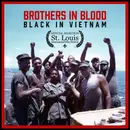
In a world where stories are often left untold and experiences overlooked, an exceptional documentary gives voice to those whose stories have largely remained unheard. "Brothers in Blood: Black in Vietnam," directed by acclaimed filmmaker Joseph Puelo, is set to premiere at the 35th Annual St. Louis International Film Festival on November 14. The film explores what black veterans experienced during the Vietnam War, offering a fresh perspective on a significant yet underrepresented piece of American history
We welcomed filmmaker Joseph Puelo and Vietnam veteran Edward Drew to the studio to introduce Brothers in Blood: Black in Vietnam, a documentary that grew out of an unexpected conversation while getting tires fixed at a Costco. Joseph, a Lindenwood University graduate and Emmy-nominated documentarian, organized the documentary as a layered film. He combined: first-person interviews with veterans of varied roles (medics, therapists, combat and support personnel); historians, scholars, and authors like Dr. Gerald Early and Dr. Christopher Tinson who contextualize the larger black Vietnam narrative; and lastly, archival photos.
We discussed how the project was structured to include both volunteered and drafted perspectives, and how funding and outreach — including the Better Angels Society Levine fellowship and ongoing PBS conversations — have shaped distribution hopes. The film will premiere at the Hi-Pointe Theater during the 35th St. Louis International Film Festival on Saturday, November 14 at 4 p.m., followed by a Q&A featuring the living veterans, Gold Star family member Estella Shockley, and moderated by Dr. Tinson. This screening aims to connect veterans and community members for a direct conversation about hidden chapters of American history.
[00:00] Intro
[00:52] Costco Tangent
[01:17] Hitchcock Quote and Guests
[02:33] Costco Meeting Sparks Film
[03:27] Edward Drew Vietnam Background
[06:11] Building the Documentary Team
[09:02] Black and White Experience in War
[11:42] History Context and EO 9981
[15:46] Draft Lottery and Youth in War
[17:57] Drafting the Poor
[19:05] Finding the Film Story
[21:29] Veterans Finally Heard
[23:34] War Aftermath Revealed
[26:52] Healing Through Screenings
[28:18] Festival Details and Links
[30:07] Sponsor Break
[31:58] Reflection and Close
Takeaways:
- We introduced Brothers in Blood, Black in Vietnam, a documentary by Joseph Puelo that centers around black veterans' firsthand experiences in Vietnam.
- Many black servicemen fought and bled alongside white soldiers in combat but commonly experienced social separation and loneliness afterward.
- The Vietnam experience is connected to a longer American pattern: black soldiers repeatedly fought for freedoms abroad yet returned to systemic inequities at home in housing, education, and benefits.
- Draft systems and socioeconomic pressures disproportionately pushed poor and black young men into frontline service during the Vietnam era.
- Many long-term consequences for veterans, including higher rates of PTSD, homelessness, substance misuse, and enduring family trauma that persisted for decades.
- Community screenings and post-film Q&A panels, where veterans and historians speak directly to audiences, can begin a process of public recognition and healing.
- Emphasis on the film's careful structure: historians provide context while a diverse set of veterans—drafted, volunteers, medics, and therapists—share varied personal perspectives.
- Viewers are encouraged to attend the St. Louis premiere and engage in the discussion, because listening to these stories helps the public understand historical injustices and supports veteran voices.
- Caleo Productions
- TICKETS - Brothers in Blood: Black in Vietnam
- Brothers in Blood: Black in Vietnam - Instagram
- Brothers in Blood: Black in Vietnam - Facebook
This is Season 9! For more episodes, go to stlintune.com
#brothersinbloodblackinvietnam #vietnamwar #blacksoldiers #premieremovie #vietnamveterans #soldierswithptsd #warinvietnam
Thank you for listening. Please take time to rate us on Apple podcasts,
Podchaser, or your favorite podcast platform.
00:00 - Untitled
00:22 - Program Introduction: Welcome and Episode Overview
01:37 - Introducing Joseph Palayo — Filmmaker of Brother in Blood
11:42 - Historical Patterns: Black Soldiers from the Revolution to Vietnam
19:05 - From a Costco Chat to a Documentary: Origins of the Film
30:07 - Sponsor Break — Better Rate Mortgage
Arnold
What does President Truman's Executive Order 9981, Costco and the Vietnam War have in common?Well, you're going to find out on St. Louis in June.Welcome to St. Louis in tune and thank you for joining us for fresh perspectives on issues and events with experts, community leaders and everyday people who make a difference in shaping our society and world.I'm Arnold Stricker along with co host Mark Langston.Greetings to you, Mark.
Mark
Howdy, Arnold.
Arnold
We have got a wonderful show today.
Mark
I know your opening there is like Costco.What is that?Costco and what Costco.
Arnold
President Truman's Executive Order 9981 and the Vietnam War.
Mark
Oh my goodness.Did you know that there's just a, just, just take aside an exit ramp here.I guess that now people are buying houses based on whether or not they're close.Costco, really?It's a big deal.Yep, it's a big deal.
Arnold
Now they don't like to drive.
Mark
I don't know.I, without Sam drive pretty far.I don't know about Sam's.
Arnold
I don't know about that.
Mark
Okay.Yeah.Okay.
Arnold
Okay.
Mark
Just thought I'd throw that in there.
Arnold
Okay.
Mark
Why not?
Arnold
Our thought to ponder today, if it's a good movie, the sound could go off and the audience would still have a pretty clear idea of what was.
Joseph
Going on.
Arnold
By director Alfred Hitchcock.
Mark
Oh, I was always a fan of Alfred.
Arnold
Yeah, he's.He is the expert at it.And we have some experts in studio today.We have Joseph Palayo and he is a filmmaker.He's an award winning documentary filmmaker from St. Louis.He's a graduate of Lindenwood University's School of Film and he's done documentaries on America's Last Little Italy, the Hill, A New Home about Bosnian war refugees, Percy Green, man of action and many of those have.The last two have won Emmy award nominations and he's also been nominated as the what best editor for a short form or long form content.And also is Edward Drew.And Edward is a Vietnam veteran.Thank you for your service, Edward.
Edward
Thank you for thanking me.
Arnold
And he is in this documentary that Joe has put together which is going to be folks, it will going to be played at the High Point Theater as part of the St. Louis Film Festival.Nov. 14 at 4pm this is one that you can't miss.It's called Brother in Blood, Black in Vietnam.Gentlemen, welcome to St. Louis in Tune.
Joseph
Thank you for having us.
Arnold
What's.What was the.I guess the impetus was Costco when you were talking to Edward Waiting for tires to get put on or something like that.
Joseph
That's exactly it.Yeah.It was September 2022.Had a flat tire, went to the Costco, sat in the outdoor waiting area across from Mr. Drew, and we just struck up conversation.And over the course of an hour, we talked about how I'm a documentary filmmaker.Mr. Drew told me about that.He was a Vietnam combat veteran.And towards the end of that hour, Mr. Drew basically just started pitching me on the fact that this should be the next documentary.
Arnold
Good for you.
Joseph
We exchanged numbers, and about a week and A half later, Mr. Drew called and he said, how's that documentary coming along, Joseph?So I knew that this was gonna be the next film.
Arnold
That's great.And you were just telling him about your experiences in Vietnam.Tell us a little bit about you now, because I didn't get a lot of background about you.What are you?You're retired now?
Edward
Yes, Retired from the military.
Arnold
Okay.
Edward
Retired in 1987.Long, long time ago.And while we were sitting there just shooting the breeze, the safe way to say it, I just started talking about me being a veteran, some of the things that I had experienced.And then when we got to the point.I don't know how we got to the point about him being a filmmaker or whatever, but it just so happened that I had saw the film.
Arnold
Really?
Edward
Yeah.
Arnold
Which one?The Bosnian one?
Edward
I saw both.
Arnold
Oh, and the.Percy Green.
Edward
Yeah.
Arnold
Yeah.
Edward
No, not Percy.
Arnold
Okay.
Edward
Percy wasn't made it.
Arnold
Okay.Okay.
Edward
Percy came about a little afterwards.Okay.Joy can talk about that.But we just went back and forth.I told him, people like me, we're getting older, almost 80 years old, and Vietnam veterans are dying every day.And it's just some things that I felt like I wanted and needed to say to people in general.
Arnold
Sure.
Edward
And we just went back and forth and he put it together.
Arnold
Which branch of the service were you in?
Edward
I was in the Army.
Arnold
In the Army.Okay.Stationed where in July?
Edward
Vietnam.
Arnold
Okay.
Edward
1968 To 1969.
Arnold
Again, what was your specialty?Were you infantry?
Edward
No, I was not infantry.But nevertheless, I had, unfortunately, had firefighter experience.
Mark
Yeah.
Edward
As a result of it being on an lz, we got what they call a hit.
Arnold
Yeah.
Edward
At that time.And everyone was assigned to a certain area, went to my area to protect the perimeter, and it was a firefight.So now I'm considered a combat veteran.In fact, I was involved in firefighting.
Arnold
People don't realize the effects of war.I think when they saw the Private Saving Private Ryan, they got a little clue as to what happens in wartime.It's not this glamorous thing.It's a very horrific kind of experience in life that really no one should have to go through.I love something that's on the.Is it Kaleo or Kaleo production?
Joseph
Kaleo.
Arnold
Kaleo.I see.I didn't have it right, Mark.The third time's a charm, right?You have your films explore overlooked stories from American history and communities whose experiences have shaped the nation's cultural landscape.The purpose of this show is to broadcast things just like you're saying things that are unknown.And I would say to the audience, if anything that we say on the show does not move you or cause you to reflect or think, then we've not done our job or you're not listening.And so I'm going to leave it at that.So let's talk a little bit about the film, because you have other people besides Edward in the film, in the documentary, and kind of lay it out for us.So when we do see it, we can kind of have.Okay, I know this is the direction we're going.
Joseph
Yeah.One of the things for us that was important was I wanted to get the interview subjects, people who had done different jobs in the military.And I also wanted a mixture of veterans that had joined the service voluntarily versus those that were drafted.So Mr. Drew was drafted out of college.One of the other people.The second veteran that we got was James Protein Williams, who.James Protein Williams actually went to high school with Mr. Drew.And we didn't know that this protein came about.My wife was talking to a coworker who said, oh, my next door neighbor is an African American Vietnam veteran.So she set us up with protein.Then protein got us McKinley Hubbard, who, Mac was a veteran, but then became a veteran affairs therapist.So he had that background of understanding and being able to explain PTSD in depth.And then McKinley Hubbard then got us John Skates.So it was a domino effect into how we ended up with the veterans.One of the other things, Clayvon Wesley, who's in the film, was in the Air Force, and he was a medic.So he had the opportunity to talk to us about what it was like being a black medic and then dealing with, after the firefights, guys coming in with horrific injuries and things like that.That's.He has one incredibly powerful story, specifically in the film.So that was really important to us was to get these different perspectives.Then one of the other things that happened for us was I wanted to get historians to be able to Contextualize, explain, and then go to the veterans for that firsthand.Those firsthand experiences.So we were very lucky that Gerald early from Washington University, who's in multiple Ken Burns films, was willing to be in the film as one of kind of the lead historians and experts for us.Dr. Christopher Tinson from St. Louis University, Priscilla Dowden White from Amsul.So then we also got authors that came in from.We had one come in from New York, one coming from la.They had written books on the black experience in Vietnam, Specifically, Selma de Saigon was Daniel Lux.And Gerald Goodwin had written a book, and he came in as well.It was really trying to get as much of those different perspectives, but also those historians to give us that contextualization, really to go into the history of how kind of all this came about.
Arnold
Interesting.What was your experience in Vietnam just laid out for us?
Edward
Oh, my goodness.
Arnold
And I'm talking about the black white experience.The war experience is a whole nother thing where everybody is together.But then it seems in the movie you say about.I saw part of the movie when it was done.
Edward
Let me give you an example.I talked about a time when the LZ I was on LZ West Hill 889 in the Chuli area.We got.The expression is we got hit by the enemy.Firefight ensued, lasted, let's say, however long it lasted.Could have been a minute, but it felt like an hour.Could have been an hour, felt like a minute.Just depends.I go on the line, do my job, defend my area.Because that's what you did.You were assigned to a certain area.You go and you do whatever you're trained to do to survive.You do that and I'm next to you.We're doing the same thing.You're a white guy, I'm a black guy.Firefight is over.A day or two later, we're in the rear area.You and I would walk past each other and wouldn't say a thing.Wouldn't say, how you doing?That's an experience.That's real.
Arnold
And that.You multiply that by that might be one day.You multiply that by a year of a tour.
Edward
Yes.
Arnold
That could make things very lonely.Did you have.How many other black servicemen were in your unit?
Edward
Oh, heck, I don't know.It was.
Arnold
But you weren't by yourself.
Edward
No.But the only time you had an opportunity to be with people who were like you was in the rear area.
Mark
Okay.
Edward
And we were always rotating in and out, so you didn't see the same people all the time.You were in the same unit, even in the same company, may have been in the same platoon, but you didn't see each other.But occasionally when you rotated in and out of the LZs, did that make.
Arnold
Things lonely for you?
Edward
Absolutely.Absolutely.But when you did have an opportunity to go to the rear, it didn't seem to matter who was there at the time you were.You would just get together because that's what you did.And you'd hang out and you play cards.You.Some of the guys that played dominoes or whatever, you play games, horseshoe, whatever.But you would just be together until it was time to go back to the field.
Arnold
Gotcha.Something that Dr.Early brought up in the film, which I thought was.It's indicative of war.As you look back, there's a pattern here.You go back to Civil War time.You could even go back to the Revolutionary War.And I'm sure this happened where you had blacks and whites fighting together, because there were blacks and whites fighting together in Revolutionary War in the North.And then what happened after the war?Okay.And then Civil War he brought up.And you had black soldiers who weren't allowed to be involved.And then they were allowed to be involved.And you move forward to.Then what happens after that?You have reconstruction, deconstruction, I'm going to say the election of 18.1872, 1876.I can't remember which one.Rutherford Hayes.Then you come to the World War I where black soldiers are fighting.Then they come back.I fought in Europe.I wasn't profiled or I wasn't prejudiced.And now I come back and now we have conflict.Okay.And you had the same thing that happens in World War II and Korea.And I mentioned Executive Order 9981 because President Truman signed that to integrate the military, but the military was not so interested in integrating.That is, we come to Vietnam.
Mark
We.
Arnold
We're still talking about this.I'm sure we're still talking about it today.
Edward
Yes.
Arnold
So do you trace that history?Because I haven't seen the movie all the way through.Do you draw that statement out or.
Edward
Yeah.
Joseph
At the beginning of the film.That's one of the things that we get into.But then it quickly progresses into Vietnam specifically.And then we get into the.The volunteers versus drafted and kind of that mentally where they were at McKinley.Hubbard mentions that after the Kennedy speech.That's not what you can do for your country.That was the impetus for him to join the military.And then we kind of transition into kind of that thought process into Mr. Drew being drafted out of college, Protein got in trouble while he was in college for just a very minor offense.But he was only gone a couple of weeks into the semester, immediately drafted.That was one of the things that I really wanted to show was these different experiences that they were having and the different reasons why they were joining the military.John Skates mentions the fact that his sister was already in college and his father came to him and told him, you either have to go to get a job or join the military.So he joined the military and then a couple of weeks later, he's in the 101st Airborne Division and he's in Vietnam.And I think one of the things that I want to mention, it wasn't until we saw the photographs of these veterans at the time that they were in the military.It's very different to see them now, mid-70s, hearing these stories.When you see these high school yearbook photos, 17, 18 years old, to then think of, to then listen to their experiences and the stories that they had to then put yourself in those shoes.At the time, I was 30 years old when we began filming.I would then think to myself while doing these interviews or listening back to the interviews at home while I was putting the sound bites together, to think about myself at 17, 18 years old and what they were going through.And then to know Mr. Drew, to know these men now, and to see the effects that this war had on him, it's just incredibly powerful and kind of devastating, honestly.
Arnold
We're going to pick up more on that.This is Arnold Stricker with Mark Langston of St. Louis in Tune.We're talking about the film that's going to be shown at the High Point theater on Saturday, November 14th at 4:00 clock as part of the 35th annual St. Louis International Film Festival.The film is entitled Brothers in Blood, Black in Vietnam.And our guests are filmmaker Joseph Palayo and Edward Drew, who served in Vietnam and who is in the film.When I think back of people getting drafted, like you were in college, you got drafted out of college.A lot of times people would say, why didn't you get a deferment?And if you think back, folks, to what Joe is just saying, that it seems like there was also almost an intentional kind of.Of rationale and reasoning to pull black Americans into the military to serve.
Mark
Mr. Drew, were you.I was.Did they have the lottery when you joined or how did you know?How did you get drafted?I mean, I was part of the lottery.
Edward
I just went home one day and there was a letter Reading.
Mark
Wow, that's tough.That.Yeah, that's really tough.I was part of the lottery.I'm in my early 70s, so it was on for a while.
Edward
I'm 80.I'm 10 years.
Mark
Yeah.
Joseph
Older.
Mark
And I'm 71.And then.And I got number 54.And I remember it was like, okay, if you're from 0 to 113, you're going.And then the next year, I was lucky enough that it.That they had ended the war.But I just.I don't know how long they had the lottery going on.But I can't imagine just coming home from school like you're talking about.These are kids in high school.All my brain was not connected.When I was 17 years old, I hardly knew what was going on.And now they're gonna see if I.
Edward
Can make a point here.I can remember and I had an older cousin who was in the Marine Corps.And it was back in the 19, in the 50s.This guy had actually been to.He called it Indochina back in those days.I can remember growing up as a kid talking with my cousin Barry, and he was telling me that cousin, by the time you get old enough to be in the military or army, because I always wanted to be a marine like my cousin.That is pretty uniform.Oh, we.I want to be one of those.There's going to probably be a war.Now.I'm talking about 1958.59.Okay.Junior high age.Then I started to think as I started approaching high school, by the time I get old enough, that stuff would be over.Didn't happen.
Arnold
I see.At the end of the war, it seemed like there were more black Americans being drafted or forced to go than there was at the beginning of the war.And I don't know if you have a familiarity with that.
Edward
It seemed that there were a lot of blacks, but not just blacks.But if you were poor, go to poor.Not just black.We were poor no more.Seems to be more people of the black or poor people, but it didn't matter if you were poor.You got drafted.We couldn't get to the firmware.We couldn't run to Canada.We.We couldn't buy a tank of gas.But we were able to raise our right hand and get sworn in and put our prison.
Arnold
Yeah.
Edward
And nobody wanted to go to prison.
Mark
Yeah.
Arnold
What I know this kind of just developed out of a conversation at Costco with that tire when you're waiting to get your tire fixed.But I'm sure a lot of these things are developing in your brain, especially after Your other documentaries and films, you're always looking for some kind of story.Is that how your mind's rolling around up there?
Joseph
For sure.And one of the things is we're always looking for a story that we feel is going to resonate with an audience.And I. Mr. Drew's stories resonated incredibly just in that first encounter, to which it was a foregone conclusion at that point that this was going to be the next film.And so I never would have expected after A New Home about the.The Bosnian refugees, that the next film was going to be about the black experience in Vietnam.It just.That's how it came about.And then after that.So this was actually filmed prior to the Percy Green film, really.And this has taken a process to get here.Once we got the Better Angels Society, the Levine grant, the fellowship, which was a really big deal for us, to put us in conversations with pbs.And those.Those talks are ongoing, but there's high hopes that we're gonna have distribution via them.But Mr. Drew actually is the one that set me up with Percy Green.
Arnold
Really?
Edward
Yeah, he.
Joseph
Mr. Drew actually was in.Percy's protest organization was action.Once he came back from Vietnam, he actually was a part of action and stayed friends with Percy all those years, so set that up.But.And that was another thing that going through and seeing Percy's life and scaling the arch and cointelpro with J. Edgar Hoover felt like that was going to resonate with an audience.But this film, specifically, the angle that we wanted to take it, Vietnam being obviously such a widely covered documentary topic, there were thoughts, is this just going to be another Vietnam film?Once I started doing the research and really getting into it, this film that we were making has never been made before.You'd never heard a Vietnam documentary strictly from the black perspective.And that was one of the things that Mr. Drew was really stressing that they needed this opportunity.And I'm just very grateful that he trusted me in making this film and telling the story.
Arnold
What did you learn about yourself or about this whole situation that you've been through in going through this documentary that you're in?
Edward
Oh, geez.I guess one thing that I learned is that after almost 60 years, I feel like now I'm finally home because I got an opportunity to say what should have been said or what I couldn't say a long time ago.
Arnold
Right.
Edward
I wanted to say it to somebody, tell it to somebody.And the only people that I would talk to was another veteran.And we would talk and we'd have our little Community, but nobody else would listen and gave a hoot about what we were talking about.But now, thanks to Joy, we have an opportunity to have this stuff out and people will hear it and we just happen to be the guys who are telling it.But our story is not unique, not at all.
Arnold
It still continues.
Edward
Absolutely.
Arnold
Which is heinous, Mark, because it seems like, as I said, when you get information, are you processing it?Are you reflecting on it?Are you thinking about it?How does that impact me?What can I do?Where do I stand with all this?How do I approach knowing that these inequities are going on?They go back to World War II, where the GI Bill was a big thing to veterans coming back and a lot of black veterans couldn't access that or the fha, the housing.And then you had redlining.And we are all familiar with that in St. Louis about what's going on with that.So it's these kinds of things that the reason both of you are on the show, it's really important to let this information be out.What else do you want to say to people that you haven't said that maybe didn't make the film or you're like, man, I wish I would have said that.Do you have anything else to say?I'm giving you an open mic right now.
Edward
I don't know that I have, but pretty much anything that I think that I want to see it or that I might have missed personally or one of the other guys said it, it's in there.
Arnold
Got it.
Edward
It's in there.
Joseph
Good.
Mark
Okay.
Arnold
Okay.Joe, how has this changed your perspective on some things or did it reinforce some things or what did it do for you?
Joseph
It was just completely eye opening.Never.I watched all, obviously watch tons of Vietnam films and then Ken burns documentary, the 10 part series.And in the research for this, I tried to get my hands on every documentary I could.I think one of the things that was really eye opening was just the effects that the war had on these men.Specifically black veterans coming back, more likely to have ptsd, more likely to be homeless.That was one of the things when we.I didn't do a lot of pre interviewing.I would just kind of get their.Where they, what their job was in the military, some minor experiences and things like that.But then on the day we would really get into it and in the midst of the interview process, two of the veterans were actually homeless at one time.One came back dealt with a very serious drug addiction.Was.Was luckily able to come out of that on the other Side, but to see just the effects that they had.And then one of the things was the Shockley family, specifically, it's a gold star widow that is featured in the film.And her brother in law is in the film who was also in Vietnam as well.And just that family kind of representing the black experience.John Shockley, who was in the film, is the brother of Bobby, who was killed in action.John was in a wheelchair suffering with.He was blind, major Agent Orange complications.And just to see this family as a representation of what this war did to the black community.And then, as John eloquently put it, what was the point of all of this?And that was one thing that really resonated with me, is the whole time we were making it, that kind of became a mantra throughout, is what was all of this for?Why did this have to happen?And then to see the effects these.These men are mid-70s, Mr. June, now 80.Just to see the effects that.That they dealt.They deal with to this day.And it's really a tragedy.
Mark
Were you ever able to answer that question?What was that thing for you?I can't imagine.I just don't.
Edward
I still ask why.
Mark
Yeah, yeah, I get it.I wish someone had an answer for you, Mr. Drew.I really do.My dad was in World War II.I understood that war.He cried all the time.He would come back and he'd tell stories and show me photographs that he had taken from the war.And he cried a lot.I'm gonna cry just thinking about my dad.But what an effect it has on it.Mr. Drew, I don't think anyone can thank you enough for what you've done, your service and those.Those guys that were on the front lines.I met a gentleman once who used to go.They'd throw grenades down in the tunnels.And he was the guy that had to go in the tunnel.
Edward
Tunnel.
Mark
I can't.Yeah.I can't imagine putting anyone through that.Anyone.It's just amazing to me.So again, Mr. Drew, thank you.Bless you.Only the best for you.
Edward
There are Hundreds, thousands of Mr. Drew's out there that needed to be thanked.
Joseph
Okay.
Arnold
And maybe the release of the film will be a healing for some people, or the beginning of a healing for some people.
Joseph
If I could touch on that.We actually protein one of the veterans in the film.He accompanied me to Cleveland where we showed the film.And afterwards two.Two people specifically came up to us.One of them was Walt Collins, who was a Vietnam veteran.He was a tunnel rat, just as Mr. Jew was talking about.He's only about probably five foot three, five foot four, really small guy.And came up to us and was just could not be more thankful for telling the story.He kept saying, this is us.This exactly what these guys are talking about is what we dealt with.And so that was incredibly powerful for us.Then a widow came up to the two of us and started talking about her husband had just passed away in 2023, Vietnam veteran, never once spoke about his time in Vietnam.Refused to talk to his own wife about it and had tears in her eyes, explaining to us she now, after seeing the film, cannot have a better understanding of what her husband went through and why he was the way that he was.As you hear stories like that, this is what it's all about, is the ability to tell the story.And to have this resonate with an audience is the greatest gift that we can have.
Arnold
And there'll be a Q and A session after the film.Where are both of you going to be there for the Q and A session?
Joseph
Yes.All of the living veterans that took place in the film will be on the panel as well as Mrs. Shockley.It's going to be moderated by Dr. Christopher Tinson from St. Louis University, who's one of the experts in the film.
Arnold
Folks, if you want to see that, you can go to the High point Theater.That's November 14th.That's Saturday, 4pm The 35th annual St. Louis International Film Festival.The film is Brothers in Blood, Black in Vietnam.I'm sure that you can get tickets at the film Festival's website.That's SL.I don't want to say it.It's a St. Louis International film Festival.You can, you can do a Google, look that up.Yeah.Don't get it wrong or Firefox it or whatever you want to do with it.Yeah.
Joseph
The link is on our Facebook page as well, which is Brothers in Blood, Black in Vietnam.As well as the Instagram page, which is at blackinvietnam.
Mark
Doc, would you do that one more time?One more time.
Joseph
Facebook.com is brothers in Blood, Black in Vietnam.And the Instagram is @blackinvietnam.doc.
Arnold
And I will put those links on the podcast page.So, folks, you can go right there.Gentlemen, thanks for coming in today.What a powerful story.
Edward
Thank you for having us.And thank you for.
Arnold
And congratulations on your courage to.To go through what you've gone through and to continue and letting everybody know.I didn't give what you guys went through.
Mark
Didn't give you a choice, did they?
Arnold
No.
Mark
You had to step up or not.Yeah, let's just.Thank you.
Arnold
We're going to take a brief break and we'll be right back.This is Arnold Strip with Mark Langston of St. Louis in Tune.
Joseph
Don't go away.
Arnold
As strange as it may sound, at Better Rate Mortgage.We love talking to people about mortgages.Everyone in St. Louis promises a better mortgage rate.But what you really need to turn that perfect house into your dream home is a better mortgage.At Better Rate Mortgage, we open the door to so much more.So where are you in the home buying process?Researching, maybe wondering how much you can afford?House hunting.Get a pre approval from Better Rate Mortgage Ready to Buy.Our team is ready to make your mortgage process fast and easy, whether you're purchasing your first home or taking cash out to make your dream home even dreamier.Our door is open.Come on in and get started.Today we'll show you how.Call Sean directly at 314-375-3293 or online@betterratemortgage.com Remember, at Better Rate Mortgage a better rate is just the beginning.Betterratemortgage.com and MLS ID 401335 and equal housing Lender.This is Arnold Stricker of St. Louis in tune on behalf of the Dred Scott Heritage Foundation.In 1857, the Dred Scott decision was a major legal event and catalyst that contributed to the Civil War.The decision declared that Dred Scott could not be free because he was not a citizen.The 14th Amendment, also called the Dred Scott Amendment, granted citizenship to all born or naturalized here in our country and was intended to overturn the US Supreme Court decision on July 9, 1868.The Dred Scott Heritage foundation is requesting a commemorative stamp to be issued from the US Postal Service to recognize and remember the heritage of this amendment by issuing a stamp with the likeness of the man Dred Scott.But we need your support and the support of thousands of people who would like to see this happen.To achieve this goal, we ask you to download, sign and share the one page petition with others.To find the petition, please go to dredscottlives.org and click on the Dred Scott Petition drive on the right side of the page.On behalf of the Dred Scott Heritage foundation, this has been Arnold Stricker of St. Louis Intune.Welcome back to St. Louis in Tune.This is Arnold Stricker with Mark Langston.Mark, what a powerful film was able to get.And I'll send you this.A kind of little preview.Yeah, and unfortunately I'm Going to be.Not able to be there.At the high point.November 14th at 4:00pm, which is the St. Louis premiere of Brothers in Blood, Black and Vietnam at the 35th annual St. Louis International Film Festival.Powerful film.
Mark
It just blows me away.And the contributions that the African American community has made, selfishly, I guess, is hard for me to say.And the credit that they don't get.And I know I don't want to talk about the battleship that was just recently going to be named after a African American sailor.And now they're not going to.I think that's just terrible.Just terrible.
Arnold
What has always gotten me is this is something that you ask people to fight for freedom and to defend their country, and then they come back and they don't have that freedom that they were supposedly quote, unquote, fighting for.That was especially noted in World War I.World War II.Here we go again.Let's.Have we learned anything along the way?Obviously not.And Vietnam was its own thing.And then when you add the aspect of race in there, it just amplifies things.
Mark
Yeah.And then Mr. Drew saying he just came home one day and there was a letter in the mail.I remember the day I was like on pins and needles when they did the lottery and My number was 54.And.Oh my.Just what came over the emotion.And.And I couldn't.I had no.I couldn't handle that.I had no.I don't.My constitution was like, what?
Arnold
And I mentioned driving.Not there.
Mark
No.I just started driving a year ago.
Arnold
Yeah.And now.
Mark
And I can't even drink beer.And you're telling me you want me to go to Vietnam where 50,000 young men have been killed for.And he's.They said it for what.What was that war all about?Why?
Arnold
Yeah.
Mark
And just.And I don't know.And he's right.I think, unfortunately, and I think we see it today too, a lot of low income families are the ones that are signing up to be in the military and they're the ones that are going off.
Arnold
And there are good reasons to do that.
Mark
Yeah.No, there are.Yeah.
Arnold
I don't want to say better yourself.Develop a skill or a trade.
Mark
It's a tremendous sacrifice.
Arnold
Right.But if you're just going on there.Here's a rifle and here's some ammunition.And now you're at the front line.That's a whole nother thing.
Mark
And I can't imagine being an African American and being in that situation where it's just.I don't know.I like you.I hope it's better.We just hope that every year it gets better and better and it should have been better a long time ago.We shouldn't still be talking about it and we still are.
Arnold
We shouldn't be a selfish society because.And culture.Because we have a lot.Our poorest are richer than the poorest in other countries.
Mark
That's a whole other thing.Arnold.There's about 30 million poor people here and 300 million.And we just get over it.Help the people, will you please?Don't tell me we don't want to.They can pull themselves up by the bootstraps and people need a helping hand.Help them out.Help them, for crying out loud.There's not that many of them and we can help them.
Arnold
And yeah, could be your neighbor.Be somebody in your neighborhood.Could be.Or your community.Brothers in blood.Black in Vietnam St. Louis premiere 35th annual St. Louis International Film Festival Saturday, November 14, 2026 at 4pm at the High Point Theater.And then there's a Q and A afterwards.We'll post the links so that you can get tickets to that, folks.And that will be on the POD page.Go to STL and Tune.com where you can find that.Let's kind of close it out.Mark, let's.That's a little heavy topic.
Mark
It was.
Arnold
And we want folks to think about it, reflect on it and what would they change in their lives based upon what they've heard and hopefully they'll get a chance to see the film.That's all for this hour.Thank you for listening.If you've enjoyed this episode, you can listen to additional shows@stlntune.com where you can follow us and leave a review.I want to thank Bob Berthisel for our theme music, our sponsor, Better Rate Mortgage, our guest Joseph Paleo and Edward Drew, and thanks to Mark Langston, our co host.Want to thank you folks for being part of our community of curious minds.St. Louis in tune is a production of Motif Media Group and the US Radio Network.Remember to keep seeking, keep learning, walk worthy and let your light shine.For St. Louis in tune, I'm Arnold Stricker.
Edward
Sam.
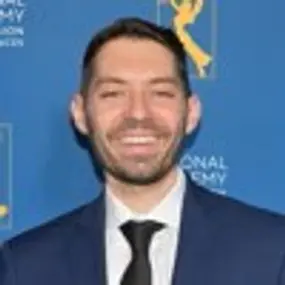
Documentary Filmmaker
Joseph Puleo graduated from Lindenwood University’s School of Film in 2014. His short film Top Son (2016) was a Top 5 finalist in Kevin Hart’s LOL Network's "Eat My Shorts" competition and screened at the Just for Laughs Festival in Montreal. His debut feature documentary, America’s Last Little Italy: The Hill (2020), about St. Louis's historic Italian neighborhood, aired on PBS stations nationwide. His second feature documentary, A New Home (2022), examines the experiences of Bosnian War refugees in St. Louis, home to the largest community of displaced Bosnians outside Bosnia and Herzegovina. The film won the Mid-America Emmy Award for Best Documentary – Cultural and was nominated for Outstanding Regional Documentary at the 2024 News & Documentary Emmy Awards. His Nine PBS documentary, Percy Green: Man of ACTION, received two nominations for the upcoming 2026 Mid-America Emmy Awards: Documentary – Historical, with Puleo also nominated for Editor – Short Form or Long Form Content.
In 2025, Puleo was awarded the Better Angels Society Lavine Fellowship in support of his documentary Brothers in Blood: Black in Vietnam (2026). In 2026, his documentary Percy Green: Man of ACTION (2025) received two Gold Telly Awards for General Documentary and General Biography and two nominations for the 2026 Mid-America Emmy Awards: Documentary – Historical, with Puleo also nominated for Editor – Short Form or Long Form Content. His films explore overlooked stories from American history and communities whose experiences have shaped the nation's cult…


