

 Amazon Music
 Apple Podcasts
 Audacy
 Castbox
 Castro
 Deezer
 Goodpods
 iHeartRadio
 Pandora
 RSS Feed
 PlayerFM
 PocketCasts
 Podchaser
 Overcast
 Soundcloud
 Spotify
 TuneIn
 YouTube
 Character: The Foundation of Personal and Professional Success

Character takes center stage in our conversation and why it matters—not just in ourselves, but in our friends, our families, our workplaces, and yes, even in those politicians we elect. Our guest, Mike Park, the CEO of Character Plus, brings some serious insights into how we can all be better individuals and build a better society where kindness, responsibility, and respect reign supreme! So listen up and reflect on the guidance from the largest and most successful community-wide character education initiative in the country. Oh, I almost forgot; grab your favorite beverage, kick back, and let’s get into it!
Character matters, folks! From the office to the classroom, character is the secret sauce that makes everything better. Our conversation is with Mike Park, the CEO of CharacterPlus®, the largest and most successful community-wide character education initiative in the country. He examines and probes the importance of character in shaping not just individuals, but entire communities. We begin with a thought-provoking quote: 'Character is like a tree, and reputation is like its shadow.' As we unravel this metaphor, we learn that while reputation is what others see, character is the deep-rooted essence of who we really are.
Mike takes us on a journey through his own life, sharing how his experiences as a military intelligence officer taught him the value of kindness and compassion in building relationships. He emphasizes that character isn’t just a nice-to-have; it’s crucial for families, schools, and workplaces. When people feel trusted and valued, they thrive—hello, happy families and productive workplaces!
So, whether you’re a parent, a teacher, or just someone navigating daily life, this episode is packed with nuggets of wisdom on how to cultivate character in ourselves and others. Let’s get "characterific", people!
[00:00] Why Character Matters
[01:25] Lincoln Quote and Guest Intro
[02:51] Mike Park Origin Story
[05:24] Defining Character and ABCs
[09:52] Reflection and Social Skills
[13:20] PRIMED and Micro Kindness
[15:26] Character Plus History
[21:46] What Schools of Character Do
[25:00] Integrity Recognition and Equity
[27:00] Character in Hiring and Life
[29:46] Better Rate Mortgage Sponsor
[30:30] Welcome Corps Invitation
[31:14] Businesses Need Character
[32:59] Professional Academy Launch
[36:45] Social Emotional Skills
[40:16] ROI of Character Culture
[46:01] PRIMED Personal Framework
[54:19] Closing Thanks and Signoff
Takeaways:
- Character is like a tree, while reputation is merely its shadow; let's nurture the tree!
- In today's fast-paced world, people often neglect the importance of character in their lives.
- Building positive character traits can significantly improve relationships and foster a sense of belonging.
- Schools that prioritize character education see notable improvements in student performance and behavior.
- Character Education & Resources | CharacterPlus
- CharacterPlus - Facebook
- CharacterPlus | Podcast on Spotify
- CharacterPlus - YouTube
- CharacterPlus® | LinkedIn
- Character.org - Home Page
- Character.org - Facebook
- Character.org (@CharacterDotOrg) / X
- Character.org - Instagram
This is Season 9! For more episodes, go to stlintune.com
#charactereducation #charactermatters #characterintheworkplace #charactertraits #buildingcharacter #characterandleadership
Thank you for listening. Please take time to rate us on Apple podcasts,
Podchaser, or your favorite podcast platform.
Arnold
Have you ever asked the question how important is character? Character in yourself, character in your colleagues, character in the politicians that are elected that lead us.We're going to talk about character today on St. Louis in Tune.Welcome to St. Louis in tune and thank you for joining us for Fresh Brew perspectives on issues and events with experts, community leaders and everyday people who make a difference in shaping our society and world. I'm Arnold Stricker along with co host Mark Langston. Mark, we've got a characterific kind of conversation today. If I can coin that new word,.
Mark
It's going to be a good one.
Arnold
It is. And it's something I think people maybe back in the day thought about quite a bit and maybe have not thought about a lot recently or they've let.
Mark
It slip through their fingers.
Arnold
That's a better, that's a better way to say it.
Mark
Kind of. What, what are you talking about, character?
Arnold
What kind of like water holding water.
Mark
In your hand and I don't know where. What happened? When did this happen? What was the thing that pivoted here?
Arnold
Some things gradually happen and then you wake up and it's, look how far we've come.
Mark
Oh, my goodness.
Arnold
Anyway, folks, we're glad that you've joined us today and we want to thank our sponsor, Better Rate Mortgage for their support of the show. You can listen to previous shows@stlintune. Where you can follow us and leave a review. Our thought for the day.Character is like a tree and reputation like its shadow. The shadow is what we think of it. The tree is the real thing.
Mark
Ooh, who said that?
Arnold
Abraham Lincoln?
Mark
Abe. All right.
Arnold
He is a man of character.
Mark
Yep. I don't want to take that exit ramp. Yes, that's true. Yes, he was. Yes.
Arnold
So character is like a tree and reputation like its shadow. The shadow is what we think of it. The tree is the real thing. Our guest today is Mike Park. He's the CEO of Character plus and character dot org.He served as an army intelligence officer in Europe and later as an executive for multimillion dollar international consumer retail companies.He's a graduate of the U.S. army Intelligence center and School, the University of Pennsylvania's Wharton School Executive Development program and the Go Tide Roll Tide Alabama. And his character education work spans kindergarten through 12th schools and universities, includes the United States Military Academy at West Point.Mike, welcome to St. Louis in Tune.
Mike
Thank you. Thank you for having me.
Arnold
Oh. So my first question is how does an army intelligence officer get to the business world?And then all of a sudden now he's in charge of a great organization. Character plus.
Mike
I've always said my professional life, I'm a bit of a mutt. Things carry you never had a grand plan in my life. But things that have been interesting to me are the things that I have followed.I was fortunate enough to have the opportunity to even be considered in college to go in the military as an intelligence officer. I often said, academically, I don't understand how that happened. I thought maybe somebody had stepped on my.At the time, that cobalt Fortran kind of card when you did computer science, put an extra few holes in it with their goth cleats is how I got selected.
Mark
So characters always been an interest of yours?
Mike
A young age. I moved a lot as a kid, and so I spent a lot of time watching in lunchrooms, other students and teachers and. Because you didn't belong, really.And one of the things I noticed earlier were those people that were kind and compassionate strangers and to me, that always mattered and stuck with me. That one of the things that you might not be able to control how intellectually gifted you are, but you absolutely control who you are as a person.And I've kind of learned early on that and saw that people kind of gravitated towards people that tried to do the right things and be the right kind of people.
Mark
And.
Mike
And that is.That's pretty much what kind of sustained my ability to go from school to school was that I understood if I just am as good a person as I can be, I'll get help. People will befriend me. It's kind of survivalist.But I think those skills have carried me through, certainly as an intelligence officer in the military in corporate America, and then certainly to this opportunity that came nearly eight years ago in an odd fashion, but the common thread for me has been this has always been important. It was important to my parents. It's always been important to me. And in the end, it's like what you started off with, the tree and the shadow.What you say as a person is one thing. The shadow you cast, who you are as a person, how you behave. The tree, what people see, that's what ultimately matters.And that role modeling and what you physically see and how people behave, that. That's where character and I want to.
Arnold
Take that apart a little bit more. We're going to talk about the organization here in a few minutes.Character+charchantplus.org and this may be a trite question to some people listening, but I really want to define this because there's a lot of folks out there who have no concept of this. And that's why the organization exists, for one reason. But define character. We've delved into it a little bit. That's the first question.And then the second question is, why does it matter?
Mike
I think ultimately there's lots of ways to define character.People can come to it from a religious perspective, from moral behavior, ethical behavior, but simply positive character is exhibiting what most people believe to be the basic kind of best human traits in society. We always joke that everybody kind of knows what good character looks like.A person that's kind, a person that's honest, compassionate, respectful, responsible, kind of all of those kind of character trait words. But the debate is how you help people get there.And in the end, for one culture or one community, what they value may be different than what others value. And how do you help people come to the realization of what good behavior and positive character looks like?And so I think the reason character often gets in the fray a little bit is that it has connotations beyond just being better people together.
Arnold
Why does it matter like people matters? People will say, so what?
Mike
You know, so what? Right? So think about this. Think about how a family could possibly thrive if the family itself was based on not being trusting with each other.That family having a sense where nobody felt they belonged in that family.They weren't valued for who they weren't respected, that they didn't have a voice in the family, that they weren't believed to be smart or competent enough to add value to the family and have some autonomy over your life where you're not being dictated to. And so we always talk about the ABCs, autonomy, competence, and belonging.It matters because those three basic elements are the basic building blocks to a successful humanity. You think about your jobs here, right? What you guys do, what I do. We have Roger on our board in the studio listening this morning.If we all had those three things in our lives and our jobs, where we felt like we belonged to, we felt like we had a say, and we felt like we were valued for our competence. Those are the three basic building blocks to being really happy in your job.We argue that it's the same three building blocks to be happy in your marriage, in your friendship, and your family.And in order for those three things to happen, you have to possess the positive character traits in order for those three things to flourish in humanity. You can't feel like you belong if you're in a community where there is racism. You can't.You certainly don't feel competent if somebody doesn't feel that your intellect is valuable as a voice at the table. So it matters greatly because if those three things don't happen, society begins to break down piece by piece.And so for us, that's an important part of helping school communities in particular classrooms work towards those three concepts. And what is the framework and what are the character traits required for those three things to flourish for everyone in a classroom, in a school?And now we're doing things in businesses. It's the same thing.
Mark
And once again, the ABCs are a.
Mike
Autonomy, autonomy, B is belonging and C is competence. So if you go about your day, it's really easy to take those three things and grade your own personal day in that. Right?Do I feel those three things in my marriage? Do I feel those three things in my job? Am I enabling those three things in my home as a parent? Am I doing that with my friends?And it's a real simple kind of self measure to see that for yourself.
Arnold
Reflection, though, is something that people don't do a lot of anymore.
Mike
You know what, it's hard to take time. We're busy. Thousands of things going on at once. Information being shot at us in all different directions.So that when you say things like meditation and reflection, you kind of think that's for other people or I don't quite know how to do that. But that's an incredible point you made.
Arnold
I think we reflect when something happens to us in a negative manner that hits us.And many times this is my personal experience and just observation is there is a comeback that's directed back towards the person, not necessarily what was said, but to the person. We're going to bypass the real truth here and we're going to go to the person. Because I can't deal with what you said because it's too truthful.
Mike
Yeah.Dr. Berkowitz, who's our kind of senior scholar advisor, he's for the last number of decades been the nation's sole endowed chair for character education at umsl. And I'm going to slaughter this. So if you listen to this, you'll have to forgive me, but when we talk about reflecting back and what you're.How you even myself, how you start to kind of decide how you're going to have that kind of conversation. Two schools of thought. People either have it internally and they respond based on kind of their DNA and their own and others is what they've learned.Watching and experiencing is what guides them in reflecting back. And I think of those two things often. How much of that is just Reacting.
Arnold
Right.
Mike
Because of what you're actually and how much of it is, who am I and how should I have this conversation with others? We spent a lot of time in Jefferson City over the last number of years as doing some programs throughout the the state. And it's really funny.Different, obviously, Republicans and Democrats and all kinds of different thought processes around policies and politics. But we were always able to get down to the one thing which was, how do you guys get in chambers and not break out in a big old mass fight?And so when the term social emotional learning kind of took a left where it was like taboo to say it.And all our comments were, where did you learn how to be socially conscious or emotionally equipped not to take your gavel and just throw it across the room. When somebody fiercely disagrees with you, how did you figure that out?When they go into where they learn to moderate their self and think, then you go, that's all kind of emotional, social, emotional intelligence that often can be taught. When you break it down to what all these things truly are, we find that very, very few people disagree. It's how you get there.
Arnold
That's exactly right.
Mike
Which is always a bit of the tempest for folk.
Mark
I agree with that. I think we all want the same thing, but it just seems to come out different. We seem to go in different directions.But when you get down to the base of it, I think a lot of us want the same thing.
Mike
Yeah, Ask any parent in America. Hey, how would you like to raise an entire family of jerk kids? I haven't run into anybody.We're working really hard to create a family where nobody likes my kids, my kids don't get along with anybody.
Arnold
That's very, very similar to that ad campaign that says, when I grow up, I want to be a drug dealer. When I grow up, I want to be a blah, blah, blah, blah. Fill in the blank. Which is a criminal kind of thing.
Mike
Yeah, yeah. And he always said, if I knew now what I knew as a parent, I would be a much better parent.Because character, like any skill, can be taught, polished and harnessed. And there are frameworks to help we as people think about, are we practicing these things?And then when we get into difficult decisions, taking a moment, reflect a little bit and go, now what am I going to decide here? Because right isn't often easy. And Dr. Burkarts wrote this book, prime. That's pretty hot today.It's kind of his life's work culminated in this book and the word Prime. The key parts of it, I won't Go on to it. But part of it is, do you prioritize character in your life and are you a good role model?The M in prime and the I for intrinsic. Do you do things for rewards or do you do things because it's the right thing to do?
Mark
Great question.
Mike
How are you in building. Building relationships?And when we think about relationships, it's like these big, huge relationships, but they're micro relationships all throughout the day. When the person serves you their coffee, can you take a couple extra seconds and go, how's your day? Are you coming off shift? You coming on shift?Or another one we always talk about is nice biking. You have two middle schoolers kind of come up together and park their bikes when they're taking their bike to school.And if one middle school turns on and goes, hey, nice bike, what that sets in motion for that other child for that day when that one child recognizes that you can't capture the value in that. That's true. Nice biking, people.For real reasons, not just for kind of gratuitous purposes, but kind of those things, there's frameworks to help us understand are we working on our own character? And I would have said my kids probably would have turned out a lot better, although I think they're pretty good, but I could have done a better job.And so you said earlier, this is. It's one of these kind of unknowns, and it kind of flies below the radar, but it's something. I think everybody values this Arnold Stricker.
Arnold
With Mark Langston of St. Lucian Tomb. We're talking to Mike Park. He is the CEO of Character Plus.And Mike, let's talk about Character Plus St. Louis and the state of Missouri, but specifically St. Louis is like the, my words, the hotbed of character in the United States as far as what is going on to educate not only students and teachers and administrators, but also business people and. And things like that. So get in. What's the history of Character plus here?
Mike
You know what? It's. It is a fascinating history and it goes back to one of the founding families our area, the McDonald's.For those that have been around St. Louis for a number of years. McDonald Aircraft Manufacturing, started by James McDonald, industry giant, father of modern aviation.His nephew, Sandy McDonald, when he got out of the military, went to work for his uncle James, who was the founder and chair of McDonnell Aircraft, started at the bottom and worked his way up to eventually become the chairman of what was then McDonnell Douglas as it moved from there into what we know now as Boeing. Sandy, for those that knew him.And for listeners out there that may or may not been part of McAircraft Corporation, the community knows he and his wife Chris was a man of character. Character was important to him as a leader of McDonnell Douglas aircraft.So much so that he instituted trainings and frameworks for his executives around character.I think he watched all of the academy graduates that they worked with, and I think he always appreciated what character was an important part of training and who they were. When Sandy retired, he decided to make his life's work around helping schools bring character back a little more formally into education.The original framers of public education in America had two primary intents for public education in America. The first was obviously building intellectual capacity, right?So that when young people left school, they had the intellectual ability to build on the society that they inherited, make things better, create. But the other part of that was their ability to responsibly inherit what was given to them in society. So you had two things.Being smart, but also being people of character. So that you did two things in society as a result of going through public education during the.I think it was probably the early Bush years when the US Recognized that we were falling behind in the sciences throughout the world. We moved into what was called the no Child Left behind act, right where, as we typically do even in our own lives, you take these kind of hard turns.And the hard turn there was, we're moving to hard sciences and we're going to focus on that, and we're going to score those things. And the social aspect, social emotional learning and counselors, and all of the things in and around that started to take a back seat.Those were all the soft things that children in schools then didn't have quite the opportunity that a lot of us had before them. I think Sandy recognized that. And here in St. Louis, he said, there's three things I want to do.I want to create an organization that can be the practical application helpers for helping schools re establish character in their schools. So essentially, we were the folks. Character plus were the folks that built airplanes.And then he said, I need somebody that knows how to design character frameworks and be the kind of forward thinker. Then he put his money where his effort was, and he endowed the Nations Only and still Nations Only endowed Chair for character education at UMSL.And Dr. Berkowitz was his first. First person in that. Dr. Berkowitz had been the H.H.Coors professor of Character at the Air Force Academy and before that at Marquette, an esteemed scholar in the world. Sandy got him to come to amsl. And then the third part was I need a voice and advocacy for this work in DC.So we funded character.org which was the organization that was going to bring character organizations and people to do this work together and make it a central focus with government and communities as well as recognize what schools are doing this best, which is the National Schools of Character program. And lastly, publish a framework that schools can use all over the world to go. If we do these sorts of things, then our school should flourish.So he did those three things, those three organizations, how it started and it happened to be this is where McDonnell Douglas Watts, this is where he lived. And so Character plus was started here, the endowed chair was here. And then character.org was in DC.And we recently, last year took over operations for character.org so we now manage what we do as practitioners in school as well as what Character.org does as the voice for character nationally and internationally. That's correct. A founding father, really.
Mark
When did this happen? When did it all start?
Mike
Character plus has been around almost 40 years. So 40 years ago started with seven school districts that said, okay Sandy, we'll take you up on it.If you help us kind of financially with the resources and how do we determine our school's values and who we stand for? We will, we'll start this with you.We recently a year ago had had the original seven school district leaders that were part of this that together some four years later. And we're very fortunate as a non profit. Linda McKay, who was the founding director when Sandy established St. Louis, she still serves on our board.So we have a tremendous connection to the history of this. So fascinating story folks.
Arnold
If you want to get a little bit more information, some really detail, we're just going to punch into some, I don't want to say superficial things, but we're not going to get into the weeds on this character plus.org or character.org and Mike, the what does this look like in a school Run us through. Like a school decides to do this or a school district decides to do this. What kind of things would they be expected to do on a regular basis?Maybe it's daily. Maybe I know there's character words of the month and things like that. So give us a little lowdown so people can understand.Hey, yeah, my kid was talking about something like that in school. Help that parent understand exactly what the program is.
Mike
Yeah, absolutely. To be self serving, I think every parent should ask themselves, do my children go to a school of character?And not that it's a character plus school of character or a national school of character. But just the basic question, are my children going to a school of character? And then ask themselves, what should a school of character look like?How should it behave?
Mark
There's a question.
Mike
And we, our work is primarily around helping leaders and teachers and the adults that are responsible and the stewards for these young lives to set up environments where character flourishes as a result of the frameworks they put in place in order for character to flourish. And so what does a school look and sound like? That is a school of character.It's a school where if you walk into the door and you take the first five students and you ask them one simple question, which is, who in this school cares about you?We have been in schools where students will go, yeah, my parent does, my mom does, but they can't name a teacher or anyone that they can say, oh, my math teacher, I really love my math teacher. And they ask me questions about my home line. And I want to put a caveat here. Teachers are insanely burdened with work.Probably the hardest working people out there with demands on their lives that those of us that don't teach, I don't think can even imagine.But I think it's imperative that a school of character, that when you talk to children that there's at least one person they know as an adult that cares about them at school. You'll go into other schools where I have asked that same question and had a couple students go, one. He goes, we have probably five.So that connection to somebody in that school that cares about you, which then drives your sense of belonging, it drives your sense of feeling valued, competent, that somebody spend that time. So that's number one. There are other things as well. How well does the community engage with the school?Do the parents in the community feel a part of that school when they do things? Is it a community to where parents feel like, this is my school, this is our school, this is our home, it's an extension of our family.And so the 11 principles, which is our character.org kind of framework for character education in schools that's used throughout the country and the world, gives you 11 kind of practical applications that it's available on character.org, you take a look at that. But what the practical framework that a school should have evidence around. Another big one is the intrinsic operations of a school, right?Are kids rewarded for behavior or are kids taught that you do these things because it's the right thing to do? Teachers do the whole environment why do you do this? Do you do it for recognition or do you do it because it's the right thing to do?
Arnold
The other, which really defines the word integrity. Doing things, the right thing when nobody's.
Mike
Around and we're all guilty of it, right? We all, as adults, we have to earn a living. Nobody.Burk would say, Dr. B. I used to laugh at him, go down his office and there's not a square inch that doesn't have some accolade. He's a brilliant guy and he's done incredible things over his life. And I just looked around and I went, this is the intrinsic value.And he goes, look, I don't seek it out, but I'm not going to turn it down. And I always thought, I love it. And you know what I thought that is the right answer, is that you don't do it because of that.But you know what, if somebody wants to recognize the effort and the things you're trying to do great in the world, then that's cool. So put that in perspective.
Mark
Everybody likes to be recognized. That's just all it is.
Arnold
Absolutely.
Mark
It's just the natural thing.
Mike
And try to do that with children in a way that doesn't say that this child is better than this child. Because in American schools, we have golden children and tarnished children.And golden children come from environments where they have great support and resources and love, caring, admiration.And then we have children here in our own city where the mobility rate in some of our schools, districts can be up to 70%, where the children that start aren't the children that finished and their lives are, for all kinds of reasons, have exceptional hurdles. And so one thing, I think about this a lot, just as me as a person. The one gift that we can give all children is the power of character.And you'll hear companies talk about this day in and day out. That character continues to be one of the biggest reasons employees don't work out. Google did a huge study on why their turnover existed.And it was never for technical ability. It was always for fit.Being able to be compassionate about other people's kind of lives and what they brought to teams and ability, work together, be respectful response to each other. And I think about that you always hear the term hire for character, train for skills. And I do. I think that's true.So schools are the perfect place to help young people, particularly those like myself who struggled academically. There's the second part of being a successful, thriving adult.I am in this job as a CEO, not because of my intellect if you pulled my grades in college, I ended up getting army intelligence. That's a whole other story.It was a default because the other two didn't get their clearance and I did because I was too boring a college student to get into trouble. So I ended up getting one of the two openings that the university got essentially by default. Wasn't my grade point average.The other folks were brilliant, but it was because when the FBI did their initial background investigation investigation, the smarter ones didn't get through it and I did.And so that story for me has been constant is that character can take you lots of places, including sitting here talking to you two gentlemen that I would have never in a million years ever thought that my life would ever turn out.
Arnold
It's an important conversation to have.We're going to take a brief break and when we come back, what you were hitting on Mike, is many times parents have not had that what I'm going to call the ABCs that they've seen they've had modeled in their home or they've experienced at a faith based organization or at their own school. And how businesses now Character plus is really getting in with businesses.And you talked about that and how at Google they were getting rid of some people who character was a situation. And that's the thing I remember at school, school hiring teachers, it's like I can teach you the things about teaching.I can't teach you to like kids and how that is the base that is the foundation of things. Character is really a strong stone foundation, stone cornerstone almost of individuals growth and individual who they are.So we're going to talk about that when we come back. SERNL stricker with Mark Langston of St. Louis and tune Don't Go Away.As strange as it may sound, at Better Rate Mortgage we love talking to people about mortgages. Everyone in St. Louis promises a better mortgage rate. But what you really need to turn that perfect house into your dream home is a better mortgage.At Better Rate Mortgage, we open the door to so much more. So where are you in the home buying process? Researching, maybe wondering how much you can afford? House hunting.Get a pre approval from Better Rate Mortgage Ready to buy. Our team is ready to make your mortgage process fast and easy.Whether you're purchasing your first home or taking cash out to make your dream home even dreamier. Our door is open. Come on in and get started. Today we'll show you how. Call Sean directly at 314-375-3293 or online@betterratemortgage.com.Remember, at Better Rate Mortgage, a better rate is just the beginning. Betterratemortgage.com and mls.id 401335 and equal housing Lender. The United States has a strong tradition of welcoming newcomers and refugees.The welcome Corps is a new service opportunity for Americans inspired to welcome those seeking freedom and safety and in turn help strengthen their own communities. Welcome Corps is a public private partnership that is inspired by what Americans represent to so many around the world. A beacon of hope and refuge.All it takes is a helping hand. Are you ready to learn more? Contact the International Institute of St. Louis at infoistl.org or call 314-773-9090.That's infoiistl.org or call 314 203-9090. Welcome back to St. Louis in Tune. This is Arnold Stricker with Mark Langston. We're having a great conversation with Mike Park.He is the CEO of Character Plus. You can get more information@charchantplus.org or character.org and that's the organization that is used for schools.But we were going to talk about businesses and folks, you might be listening and go, okay, that's great for my kids. That's wonderful. I don't have anything going on for me. My business doesn't do anything like this.Gee, I'm working at Burger King and I'm flipping burgers and the charcoal broil shameless plug for Burger King. They're not paying any money for that little tagline.
Mark
Free lunch today.
Arnold
Yeah. Just popped into my head. Home of the Whopper. I ate Whopper Jr. So it doesn't matter. Wow.But you know, people, people, the custodian, the person who's working, maybe a matron or somebody who's working on the line in the cafeteria.And you're going to these big businesses and there's people who are in the cubicles and maybe the, the male person and you're walking around and you maybe you had a bad day coming from home and everybody's coming with their baggage and it's great to leave the baggage outside, but it's hard to not unpack it sometimes. It's hard to not let it impact you. So what are you doing with businesses?So it's kind of, I hate to use the word, but I'm going to use it trickle down to individuals who then might bring that home and help their kids and maybe say to the custodian, wow, what a great. I always love coming into the bathroom here because it's always clean.
Mark
Yeah.
Arnold
Rather, who wants to go into a dirty bathroom or a dirty kitchen area where they're, you know, the coffee's kept. It's like they open the refrigerator, it's like, holy smokes. It's like a hazard zone in there or something like that.What are you doing for businesses, Mike?
Mike
So a few years ago, Dr. Peltzer, who is my partner in all of this, she's our chief programming officer, we started talking about how do we connect what we do better with the community.And my argument was our team does such an incredible job working with adult leadership in schools that they essentially run large, complicated organizations, no differently than others in the community that aren't in education, just a different industry. And I remember Dr. Peltzer, this is the authenticity of who they are and how they see themselves.They were like, look, we know education, we know educators. And I just would never be comfortable helping teach something that I didn't believe I had the expertise or could bring that value.And my argument was is that you absolutely do, and that there are people in the community that face the same kinds of organizational struggles and hurdles that we help school organizations work through with this ABC process. And what is the best framework to apply for your school that is meaningful to you?Not us telling you what that should look like, but helping you realize that for yourself.So last year, we were invited to speak to the St. Louis SHRM organization, which society of Human Resources Management here in the greater St. Louis area. A couple hundred people that morning. And I remember we started off the conversation with all of them with. Or I did by.By essentially saying, pretending like we were talking as a group at company where we had just interviewed this person past every possible hurdle and hired him. Loved them. Great. Everything on paper, they came off great in the interview. All the right answers, all of the that.And now we're six weeks into having this person been a junior management position and people about to lose their minds. Right. The person doesn't take full responsibility for when things and doesn't quite have the empathy for kind of this diverse team. And there's just.But they were perfect. What happened. And the sure participants you could see out in the audience, they would just put their head down.
Arnold
Everybody's experience.
Mike
Yeah.
Mark
Oh, ay yai yai.
Mike
So there's one part of this is how do you recognize what that looks like up front in people? Which is difficult. Requires a little more kind of introspective conversations.But what it opened up for us and for Dr. Peltzer in real time was like, here's the rest of our community that can benefit from what we. So we started the Professional Academy and Character Excellence had our first inaugural academy just completed.We had participants from the Cardinals, part of the Cardinals logistics team and consumer and ticket sales. They participated Petger Construction, which is I think nearly half a billion dollar construction company in multiple states.We had one of the major hospitals participate.And it was essentially taking what we help principals and superintendents and teachers understand about not only the ME work, your responsibility and what your character and how that models, but then the we work. What does this look like in your either your work group or your classroom or your school? Tremendously successful. Starts out again this fall.The second one and filling up. So we did it for two reasons. One, I know this is a need in businesses. They face the same thing.
Arnold
Everyone you've got a background there and.
Mike
I've seen it, seen it in my professional life. It continues.And young people today, and it is a bit sad, have had less and less experiences around face to face and relationship building and all of those things that our society, for all the good that has come from technology and efficiency has been a bit of a detriment to the human side. All of this. I grew up, you knew this, the druggist and the person that filled the gas and your friends and the teachers and all of that.Today those interactions are fewer and so that then impedes someone's ability to build lots of relationships and what those things look like. So businesses, I think today are the recipients of having a.A group of qualified, wonderful young people and older people come in, but not one with the character skill set that you're looking for to be ultimately successful.
Arnold
Is it more social, emotional or is it more like the character traits that you're talking the 11 principles.
Mike
Yeah, it's all in that we always talk about social, emotional and character skills, your ability to be empathetic, your natural predisposition to take responsibility. So those are two things.One takes a social emotional IQ in order to say this person I think is having a difficult day, or they're like you said earlier, they're bringing something today that they're struggling with. And I kind of sense that. And that's going to impede our ability to get this. So how do I help address that?But then the hard skills of you know what, you're either responsible or you're not. You either tell the truth or you don't.Those sorts of things are fairly understandable than the softer things are the ones that help us be better together. So I think about the two of you. You guys have been together, done this how long together?
Arnold
This is our 10th year.
Mike
Your 10th year.
Mark
Really seems so much longer.
Mike
You both look so young.
Arnold
I went to high school together too.
Mike
And you went to high school together?
Mark
Yeah.
Arnold
But I didn't know Mark very well.
Mike
Mark probably said at the popular he.
Mark
Was a bull, he was the bully.
Mike
But I don't know either one of you, other than having spent a little time with both.I bet if you were to write down the things that have kept this relationship wonderful and strong would be the exact sorts of things every employer would want with their team. Every school would want to hear and feel with their teachers and staff, down to their nurses and bus drivers.You too would probably simply come away with the vast majority of those things. Because at the end of the day, strong positive relationships require incredible character.
Arnold
That's correct.
Mike
My guess is you always don't agree on things.
Mark
And Mike, I gotta say, he cuts my grass.
Mike
So there you go. There's an intrinsic, there's a reward part.
Mark
Of this from the whole thing.
Mike
We're gonna have to take both of you back to school on that. But honesty, you get big points for honesty.
Arnold
Mark was very big in the boy Scouts, and they have a. Have had for years and years a huge, what I would call character development program.
Mike
Oh, absolutely. Sandy was the president for a number of years. Very important to him.
Mark
Correct.
Mike
Back in the day with that.And as you mentioned earlier, there are lots of organizations around, whether they were religious, community, social, that gave people lots of opportunity, build and develop those skills. I did want to say one thing, you know, for everybody wondering the value of this. So I'm a business, right. What's the value of this to me? Right.So the value to businesses is no different than what we know from evidence. The value to schools for purposely having character frameworks be a purposeful part of your operating system. System of school.Our early studies show some decades back, a federal grant, the question was asked, if schools actually and purposely with intent made sure that these kind of frameworks, character education frameworks, were purposely applied in school, what would happen? And the thought was, they'll probably perform better. Right. This is the idiot part of me that goes, do you have a jerk?Chances are it doesn't work very well. And if you have a kind of a compassionate family character, chances are they probably operate a little better. Doesn't mean life's any easier.But the likelihood of them navigating all that is probably going to be a little bit stronger.All that evidence bore out to be exactly that schools that, that applied these kind of purposeful character education and character skill building frameworks in school academics in person improved across the board. Incidents of negative behavior decreased across the board.Teachers and parents feelings of greater connectedness to the school, that sense of belonging up across the board.And that work continues today with Character plus where every school that goes through our a little bit more committed process come away with those same three advances in education. It's the answer, I think, to what helps schools become better schools.
Arnold
Yeah.
Mike
So the same thing in business.
Arnold
Yeah. It's a return on investment. I'm reading this is from the CharacterPlus website, characterplus.org how that delivers results.And this is some comparable St. Louis city middle schools in key academic and cultural metrics. A 29% improvement in English language arts performance. A 2% in mathematics performance. 29% In science performance performance.A 70% decrease in referrals.
Mike
So think about your family.If you're a family character and parents are great role models and you're helping your children and even each other as, as, as partners, if you, if those are your guiding principles, if those are your operating systems, chances are you will perform as a family better. No different than a classroom or a school or a business.Think, think about all the people if you're in business and all the people that work with your customers. And think about if in your entire workforce that interface with customers were people of incredible positive character.I don't think it would take an MBA in a corporate office to say chances are our profitability, profitability would probably increase and our return, our customer return rate would probably increase. Now I will say this. People will say, look, there are a lot of companies run by not great people out there that seem to do well. And that's true.But they're the anomaly. They're, they're not the, the general. We.You could cast a net within a mile of this place and find 95% of businesses trying to do great things and be really good businesses and great to people.I think what we bring is an ability to truly understand what you're purposely doing and making it just a purposeful part of your business strategy or your school strategy. So that character is your operating system. So the question then becomes your parent, is my child going to a school of character?And if you're frequenting a business, am I frequenting a business of character?
Mark
And there's, there's parents that are single parents.
Mike
Absolutely.
Mark
Working two or three jobs, trying to.
Mike
Do the whole wonderful jobs.
Mark
Yeah. But trying to do the character thing. With good action, good reaction. It sometimes it's hard to do that. But if you send them to a school that is.Has a foundation of this that's going.
Mike
To help a lot.
Mark
And again then we're giving the responsibility of raising our kids to the schools. Again, it's a great responsibility for the schools.
Mike
But we say this all the time. Whether you like it or not, you are a role model for an incredible amount of hours a week with young people.And so you can say that hey, it's not a school's responsibility for the moral and ethical and character development my children. But by default they are.So wouldn't you rather those educators and coaches and we even do we have culture carrier program where we work with the bus drivers so that bus drivers feel that they're a part of the school culture and climate. They are often the first person young people they set the clients and the last person.
Arnold
That's correct.
Mike
They see right. Probably as if not more important than the folks that are in the school today.They should be included as an important part of the culture climate school and wonderful school leaders recognize that. That those people are every bit as important as the most tenured educator because they're. They are different educators. The same thing in business.You think if my leaders are this. But what about the folks down the line? But this is why my friends go this is kind of passion work for you. Part of it is I just know it works.And secondly, it's just the right way to be.
Arnold
That's correct.
Mark
Amen.
Arnold
That leads me to this. It's a. I'm going to ask you, Mike, to speak to people out there about how they can individually encourage one another.But I want to do it this way because it's self reflection folks. And it's okay.Now that you've heard this, what are you going to do with personally and what do you do with it every day anyway when you go to see somebody and you're checking out how empathetic are you with what's going on with what they're dealing with? Are you complimenting people not to get a compliment back or not just to throw it out there, but that you really mean it and that you're going.You're trying to build people up wherever you are. And so that's the personal goal and responsibility of listening to a show like this today.But Mike, I want you to speak to people out there in the general public about character and what they can do to improve our society.
Mike
Thank you. I do this a lot partly because I'm in this job as a result of people like Dr. Berkowitz.And I go back to his life learnings and the recent book that he published that even some of our staff are mentioned in his book, including me, which I told him will go in my eventual event obituary.Because if somebody said that a guy with my kind of QPA in college would ever end up in some scholar's book, they would go, you're a liar and a liar for saying it.But he, I gravitated towards this and him when he first started talking about these kind of basic things to think about because it made perfect sense to me. And so if you're listening out today, there, there's a word, it's called primed P, R, I, M, E, D. And it's simple. I do this a lot for myself.And each one of those letters stands for something that you can think about for yourself as to whether or not you're doing these things well, whether you understand them, whether you do them poorly. And P in prime starts off as with the term priority. And priority is, do you make positive character a priority in your life?When you have a chance to say something truthful or distruthful, honest or not honest or respectful or not respectful, what do you choose to do? What is your priority for your own character and your value system? Do you practice it? Do you, do you think about it? Believe me, I'm not perfect.Sometimes the folks that hang out in the left lane of the fast lane, late for something, I really want them to get over and so I have to think about quickly, maybe something's going on in their life where they're maybe don't notice that they're over there because they're going to the hospital or something is on their mind. So P priority, do you make positive character traits a priority in your life? That's Pete R. Relationships.How are you with building and maintaining and strengthening relationships with those around you and new relationships, relationship with your spouse, with your children, with your co workers. And this isn't oh, how was your day kind of thing, this is man, what's going on. And it takes time.And as you said earlier when we first started, this time is valuable today. And so to take a moment and take a little bit longer to build a bit of a relationship and I'll go back to micro relationships.You have a chance every day with every service worker you run into to take an extra 60 seconds and comment positively on what they're wearing or the fact that they were super nice or, or thank you my common one, because I'm an old man now, is that when young people hold the door for you or what? I'll go, you know what? Your parents must be incredibly proud, right? And I think about those things. So relationships are pri.We talked about that here today. Intrinsic value. You do things for. You do them because it's the right thing to do. You don't do them with an expectance of being rewarded for that.It's the intrinsic value of being a good person. And what does it mean to be a good person? Like you said, when nobody else is looking, that's I am role modeling.We talk a lot about character is caught as much as it is taught. And modeling is an incredibly powerful tool, particularly in schools where young people watch everything you do. You guys model for each other.You have over 10 years, right? And being a positive role model, even if you think you're not. Where athletes say, I'm not a role model, I'm just athlete. No, you are.You were given a gift. And that gift puts you in the public. And how you act and how you behave, people watch it and influences you. I'm reminded of being a new grandfather.Murphy, who is our Middlesex daughter. Now that I'm a little bit older, I can't jump up and down on the floor like I used to.And then if I kind of lean on the floor to play with her, I'll grab a pillow so I can put my elbow on it, right? And so I kind of lean and then I kind of get myself up. I'm not that old, but I am feeling it these days.One weekend we were playing and I'd gotten down and Murphy goes, grandpa, wait.And she gets up and she walks over to the couch and she grabs a pillow and she brings that pillow and sit it down where we had like all the animals out and puts her arm on that pillow just like I had done. So if you think for one minute as a human on this planet that others aren't watching you, that we all are role models for each other.And to me, that that's really one of the big ones. And it's difficult because we get tired and we get frustrated and sometimes the worst part of who we are comes out.But I think if we think about that all the time ourselves as role model, the M in prime, that's a good thing to reflect back yourself. E is empowering. Do you empower others in your life or do you make all the decisions for everybody? Do you help others develop themselves?Make some mistakes, make decisions? One of My favorite ones to do when I go out theater once in a while is they'll say, what would you like? And I go, you know what? You pick.I will be happy with whatever you select as long as you don't put mayonnaise on it. But whatever you do, you will watch that person physically change in front of you when you hand them that authority over you.And so there are lots of ways to do that in your life.And the last thing is d developmental, which is find one of these things you really aren't great at and go, this is the one I'm going to work on a little bit. Just pick one. So I go through my day often as the CEO and I think about, how was I in primed? I just score myself. Was it really good at the this?Not so good. And then I think about us as an organization. Are we doing that? I think about it in my marriage, as a parent.And so for everybody listening, it's a real cool kind of simple way to just go, am I working towards being a person of character myself? I found it incredibly helpful. And we're in our eighth year at Character Plus.We started on a bit of shaky ground when I came on with Dr. Peltzer, both of us, to take this. And Character plus today has going into eight years of positive kind of income performance. We went from a small staff to 30.We went from doing work just locally to now we're doing work all over the world, including taking on character.org and starting next year, we'll start rolling out school of Character Academies in 10 cities across America. And I will put that personal and organizational measurement as one of the reasons we find ourselves in this position.You take care of those things in your life, in your organization, the scoreboard will often take care of itself.
Arnold
Great advice. That's Mike Parks, CEO of Character Plus. And character does matter, folks.It is important, and we're glad that you were able to join us on the show today. If you want more information, you can go to character plus.org or character.org and get detailed information about what the organization does.Mike, thanks for coming in today.
Mike
Thank you for having us and letting us tell our story and for being the two of you being incredible models of character yourself. This is what makes the world great.And as Martin Luther King said, the the art of history ultimately bends towards justice, and it's all of us, little by little, helping that happen every day. So thank you two for that.
Arnold
That's correct. That's all for this hour, folks. Thank you for listening.If you've enjoyed this episode, you can listen to additional shows@stlintune.com where you can follow us. Want to thank Bob Bertha Self for our theme music, our sponsors Better Rate Mortgage, our guest Mike park and co host Mark Langston.And we thank you for being a part of our community of curious minds. St. Louis in tune is a production of Motif Media Group and the US Radio Network.Remember to keep seeking, keep learning, walk worthy, and let your light shine. For St. Louis in tune, I'm Arnold Stricker.
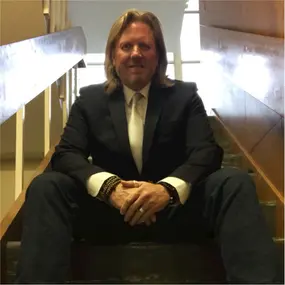
CEO / CharacterPlus
Mike Park is the CEO of CharacterPlus. Mike is a graduate of the Leadership Academy in Character Education (LACE), an Affiliate Scholar to the Center for Character and Citizenship, and serves on the Dean’s Cabinet at the UMSL School of Education. Mike served as an Army Intelligence Officer in Europe and later as an executive at multinational consumer-retail companies, with expertise in complex revenue and market-share growth that demonstrated sustained scalability. In his eighth year as CEO, Mike led a successful 2019 spin-off of CharacterPlus 501c3 from the Cooperative School Districts (dba EducationPlus) in St. Louis, MO, and, in 2025, completed a successful, time-sensitive acquisition of the international Character Education Partnership 501c3 (dba Character.org), which is currently operating from Alexandria, VA. CharacterPlus recently secured a multimillion-dollar grant to roll out School of Character Academies (SOCA) nationally. Mike is a graduate of The U.S. Army Intelligence Center and School, The University of Pennsylvania’s Wharton School Executive Development Program, and The University of Alabama. Mike’s work has afforded him opportunities to share his experiences and work with K-12 schools and universities, including the United States Military Academy at West Point.


