

 Amazon Music
 Apple Podcasts
 Audacy
 Castbox
 Castro
 Deezer
 Goodpods
 iHeartRadio
 Pandora
 RSS Feed
 PlayerFM
 PocketCasts
 Podchaser
 Overcast
 Soundcloud
 Spotify
 TuneIn
 YouTube
 Never Lose Sight: Angela Ricketts on Bringing Light to Rare Eye Diseases
In a world where challenges often seem insurmountable, finding purpose amidst adversity can be a powerful tool for personal growth. Angela Ricketts, an inspiring author, businesswoman, and nonprofit owner, shared her journey of resilience and discussed her son’s diagnosis at age five with an ultra-rare progressive blinding disease. She explains how grief inspired her nonprofit Sight Stones and her book Never Lose Sight with 100% proceeds supporting research.
We welcome Angela Ricketts, an author, business owner, and nonprofit founder, ahead of the show’s 400th episode. Angela discusses her son’s diagnosis at age five with choroideremia, an ultra-rare, progressive blinding eye disease affecting boys and men. She contrasts families who wait to accept the disease with her approach of learning, fundraising, and advocacy.
She shares how grief after losing her grandmother and father led her back to clay, inspiring Sight Stones—thumbprinted clay “worry stones” with a center hole symbolizing vision loss and messages about choosing focus. The donated proceeds (100%) of Sight Stones and her August-released book Never Lose Sight fund research for a cure for choroideremia. She highlights growing hope through gene therapy research and describes integrating the “never lose sight” mission into her St. Louis-based cleaning company’s supportive culture.
[00:00] Choosing Hope
[00:34] Show Introduction
[01:41] Meet Angela Ricketts
[03:49] Son’s Diagnosis
[04:28] Understanding Choroideremia
[05:55] Taking Action Path
[08:08] Not Broken Moment
[11:23] What Are Sight Stones
[12:18] Never Lose Sight Message
[15:13] Grief and Finding Focus
[15:50] Hope in Clay Origins
[21:37] Seeds of Happiness Connection
[23:43] Genetics and Gene Therapy
[25:29] Book and Speaking Mission
[26:46] Break and What’s Next
[27:19] Sponsor Break Better Rate
[28:04] Welcome Corps Refugee Program
[28:49] Back With Angela Ricketts
[30:00] Grandma Inspired Cleaning
[32:53] Ripple Effect Culture
[34:21] Funding Vision Research
[36:23] Waiting Room Sightstone
[38:52] Kids Adapting To Vision
[40:41] Family Coping And Travel
[43:26] Story Matters Takeaway
[46:08] Donations And Gift Ideas
[48:32] Closing Thanks
Takeaways:
- I remind listeners that every day we get to choose what to focus on, even amid crushing uncertainty.
- We created Sightstones — small clay worry-stone tokens stamped with a thumbprint and a hole — to fund research and spread a simple, tangible message.
- I started rolling stones from my garage and basically turned grief into purpose by fundraising for choroideremia research.
- We put 100% of the book proceeds toward research and I truly believe gene therapy will halt this disease for future kids.
- I learned that clay and pottery reconnected me to my dad and grandmother, pulling me out of stuck grief and into action.
- We use Sightstones in corporate settings, schools, and hospitals because a tiny, tangible reminder can change how people see their worth and purpose.
- As a mom I watched my son navigate progressive vision loss since age five, and I want listeners to know their stories matter — never lose sight of purpose, consider giving, because every dollar and shared stone moves research and hope forward.
This is Season 9! For more episodes, go to stlintune.com
#sightstones #choroideremia #visionloss #visiondiseases #rareeyedisease #visionawareness #stlouisnonprofit
Thank you for listening. Please take time to rate us on Apple podcasts,
Podchaser, or your favorite podcast platform.
00:00 - Untitled
00:15 - Guest: Angela Ricketts — Finding Purpose in Adversity
02:02 - Meet Angela Ricketts — Author, Entrepreneur & Founder of Sightstones
10:22 - Writing the Book and Launching Sightstones
14:59 - Introducing Angela Ricketts — Entrepreneur, Author, and Mom
21:11 - Turning Diagnosis into Action: Launching the Fundraising Effort
28:48 - Welcome Back: Angela Ricketts on 'Never Lose Sight' and Sightstones
38:51 - Recognizing a Child's Hidden Accommodations
45:00 - Eye Donation: Research, Transplants, and Possibilities
46:07 - Donations & Sightstone Angels
Arnold
We all face moments that threaten to steal our hope, but we can choose what we focus on.You can find purpose in adversity.You can treasure what matters most and discover that even life's greatest challenges can become invitations to live more fully.And our guest Angela Ricketts is going to talk to us about that on St. Louis in June.Welcome to Saint Lucian.Tune.And thank you for joining us for fresh perspectives on issues and events with experts, community leaders and everyday people who make a difference in shaping our society and world.I'm Arnold Stricker along with co host Mark Langston.Mark, it's been a little bit of a bit of time since we've been together.
Mark
Yeah, we took a little bit of a hiatus.I'm not sure what hiatus means, but.
Arnold
We took it, we went different ways and we had doubled up some shows, played those out later on.
Mark
But boy, this is the ending of an era or of a, I don't know how you would say it, a numeric block.
Arnold
Yes, this is Show 399.Next week we will be broadcasting our 400th show and mark and I are digging into the treasure trove of the archives to bring up moments that maybe we regret, maybe we don't.
Mark
Oh, yeah, really?Can we look at that stuff before you put it on the air?
Arnold
Can we listen to it?
Mark
Yes.I'd like to check that out before.
Arnold
We actually catch that show next week.But this show is probably, I would say, more important than the 400th show.And I want to give a thought to ponder before we introduce our guest.I actually put three down here.I couldn't decide which one to do, but I'm going to read the last one.And it says the measure of who we are is what we do with what we have.And that's my famous football coach, Vince Lombardi.The measure of who we are is what we do with what we have.And our guest, Angela Ricketts, she's an author, business owner and nonprofit owner.She has had her hands full in a variety of ways and she has learned over the course of time to do with what she had and make something out of it.I thought of the phrase Mark and you remember this one, when life gives you lemons, make lemonade.Some people don't have the recipe for lemonade, some people don't have the ingredients for lemonade.And some people don't maybe don't even know what lemonade is.But Angela is a person who, my gosh, she made, I would say, and I'm not saying in a bad Way she's made gourmet lemonade because of who she is.Angela, welcome to St. Louis and Tune.
Angela
Thank you so much.Thank you for having me.
Arnold
Yeah.So how's the lemonade business going?
Angela
Very gourmet.
Arnold
She doesn't make lemonade, folks.Honestly.She has a non profit which we're going to talk about called Sightstones St. Louis nonprofit Sightstones.And she just is a new author.She wrote a book that has was released in August.It's called Never Lose Sight.We're going to talk about that.She's a business owner.She has her own, one of the most reputable and outstanding cleaning services in the Midwest, if not the nation.
Mark
Okay, I like that.
Arnold
Yes.And it's based right here in St. Louis.
Mark
Stop that.
Arnold
Yes.
Angela
It started from my basement.
Arnold
Yeah.
Angela
Wow.
Mark
Wow.
Arnold
And I don't know where to start except to say your story is one that people need to read.
Angela
Thank you.
Arnold
Because your story impacts everybody in a variety of ways of how you have dealt with some of the things that you've gone through.Now let's go to the beginning.Where does the story begin?Does it begin with your grandfather?Does it begin with your dad?Does it begin with with your son?
Angela
I think it begins for me 10 years ago with the diagnosis of my son.And then it goes further back because it, everything pulls in that moment.It was just like time stood still.Right.And that's where my grandmother, my dad are introduced throughout the book.I could go way back too at the very, very beginning.Where would you like me to begin?
Arnold
Let's just let listeners know that your son has an ultra rare disease of his eye.
Angela
Correct.
Arnold
And it's 1 in 5,000 people of the whole United States have this.
Mark
Would this be one eye or both eyes?
Angela
It's both eyes.And the tricky part is it's progressive so it's not like a one and done.It's.This is a very slow, almost like a sleeper disease that it's just slowly taking away the eyesight.It's opposite of macular degeneration.It's called croiteremia.So macular starts center and works out.This is working out and working in.So you're slowly losing your peripheral all the way down to looking through a straw, looking through a keyhole.And then eventually that goes out as well.
Arnold
And if I'm not mistaken, generally it's going to happen to more elderly people or mid, mid age people.But this started with your son and he was 5.
Angela
Correct.So it does present.It can present in the earlier stages.He is Definitely more impacted at his age.He's 15 now.And yes, you really can't put a number or an age on it because some guys are more affected in their 20s, in their 30s.It's just like, there's not a fine line to do it.But typically mid-40s, you're like, fully.You're pretty well impacted.
Arnold
Now, you mentioned blindness.You mentioned in the book that there's usually two routes that people take, and one route is you get really involved, which is what you did, matter of fact, Mark.And you correct me if I'm wrong, Angela, you got really involved in this particular association, that of this disease that your son has.
Angela
Yes.
Arnold
And helped raising funds, et cetera, which then goes into the sightstones.And then there's a group of people that they kind of wait and the wait.They gradually accept it, if they ever accept it, and speak to that, because people deal with grief or kinds of situations all the time.And you have a couple ways to go.It's kind of like Yogi.Yogi Berra said, when you come to the fork of the road, take it.But you went to the.On the road that we're going to deal with this.We're going to.I'm going to learn everything I can.
Angela
Yeah.I think that's the entrepreneur in me.Just as a business owner, you're constantly giving challenges and you're constantly.Even like, when Covid happened, it's like, all right, how do you pivot when it's not just about you, it's about everyone else, especially in a company dynamic.Right.So I think early on, when we got this diagnosis, I knew how to run a business.I knew how to create something that could make money, truly.Because we found out that it's rare.Funding was needed.And it was like, all right, what can I do?How can I apply the skills and what I'm already doing?But I don't think that's necessarily the path for everyone.It's definitely an unusual path to follow, jumping in and getting your feet wet.But I always respect any way a family deals with, especially particularly this disease.Some kids are raised like they just go to doctor's appointments, and that's what they know.And then later on, when they are having more difficulties, typically in their 20s, then the family kind of shares.This is actually what it is.
Arnold
When did you share with your son specifically?Because he would go to these appointments, he would know something was wrong, something was up.And there was a line that he said, am I going to be.I may quote this incorrectly.Am I going to be healed or am I going to be okay?And you said, you are okay.That was very insightful.
Angela
That was.So My son, at 5, we did.We had to really track this thing down.And I share that in the book.We went all the way to University of Iowa because nobody in the state of Missouri, they were like, whatever it is, it's ultra rare.You need to go to this guy, Dr. Stone.People fly in from all over, around the world to hopefully find out genetically what they have.So my grandfather had this eye disease.So I was raised hearing stories of him going blind.And then I.He passed before I was ever born.So my son going to these eye appointments and us jumping right in.We got really involved in the foundation fighting blindness here.There's a St. Louis chapter here.And then once he did get diagnosed with croiteremia, a year later, we got involved in the Croiteremia Research Foundation.So if you can imagine, you're five years old and you're going to.
Mark
To.
Angela
There's a vision walk in the fall, and so you're around other people with other blinding eye diseases, and you're seeing service dogs and white mobility canes.So I think we never fully sat him down, but I think he began probably a couple years later to realize this is not normal to have to go to these eye appointments.So he began to connect the dots without us spelling out, you have progressive blinding eye disease.But to your referencing the book, he did.At 8 years old, before I left for my very first eye conference, he did ask a question, and that will always stay with me because I really determined how I was going to proceed in dealing with this.He said, mom, are these doctors going to be able to fix me?And that's when I stood there.I was in my garage packing up for this trip, and I realized, oh, my gosh.Like, how do you answer that?And I said, no, because you're not broken.That was like, the difference.We're not trying to do this to fix you.You're not broken.But if I can find a way to halt this disease and stop it in its tracks, that's what I'm gonna do.
Arnold
Isn't Mark.Isn't that.
Mark
I'm just.I'm on the verge of tears.I can tell you right now, yeah, is there any hope for that?I'm sure we're gonna get into that,.
Angela
But there's a lot of hope.And that's where I'm ready.I'm like, I've got my running shoes on and my gloves on I'm ready to just kick it over and cross the finish line.And that is truly why I wrote the book really, to explain the whole journey of all of this and to explain how the Sightstones were born.And the more that just being on here today and sharing that message, that's the awareness to raise the awareness to raise the funds to keep this research going.Because the research, I could super nerd you out, but there's.We need a whole nother show for that.But it's amazing it's going to happen.
Mark
And you feel confident about that?
Angela
I do.And my grandmother lived to be almost 97, so I've got a whole nother half of a life to live and that is my attention, my focus and my energy.This is all I'm working towards these.
Arnold
Days, you know, so probably on rare diseases, there's not a lot of funding going into that process of research and development, things like that.And I think about all these sports figures out there that make a million dollars an inning and then it's 10 million a game if it goes to extra inning.I think of what you've done with Sightstones and how you've used your entrepreneurial ship.Talk to us a little bit about Sitstones, the background behind them, all the funding, correct me if I'm wrong, goes towards the research and development in curing this particular disease.
Angela
Correct?Correct.Yes.And 100% too of the book as well.It's all going so.Yes, and we're really excited to do it.But so Sightstones is a about a quarter size piece of clay and it's rolled into a ball.It is stamped with a thumbprint and it looks like if for your listeners, for a worry stone, like something that you would place in your hand, it's got the smoothness of the glaze.The uniqueness about the.This stone is that it has a hole in.In the center.And the hole in the center is representing how what a more advanced version of this eye disease looks like, which is slowly happening to my son.But each of the stones are stamped with a message to never lose sight.And early on while I was creating these stones, the message came to me and it truly became a universal message, one that that really represented because throughout this journey my son has realized you can sometimes see what someone is going through and other times you can't.But we're all carrying something, right?We're all processing something.And so each of the stones has the message and it says carry the stone as a reminder of how important your vision is in this world, even in times when we struggle to see that every day, we get to choose what to focus on.
Arnold
I thought that was very beautiful is probably the wrong word, but it's the word that comes to mind.It's very beautiful because everybody's going through something.And that statement, never lose sight or focus of what's important in life.
Angela
And that our stories matter.And whatever we're going through today, however messy or great or wherever we're at, I said, whether you're in the beginning, the middle, or the end, and none of it makes sense at all.It's just to keep going and however that looks.And each day is different than the next, but just to not stop.And that we all have purpose and we all matter.And that's the true mission of the Never Lose Sightstones.And it's been amazing because now they're traveling, like, all over, and people are really impacted.And my amazing Sightstone angel volunteers that help create these every week.It's been just a beautiful journey, and they love coming out, and it's just.It's really cool to see.So the sightstones have already done what they're supposed to do is.And that's why I put it in a book so we can share this message further and hopefully find that cure.
Mark
And in the little bag that the sightstones come in, there's a couple of cards and one of the sayings on one of the cards.I love it.It says, we have the choice to choose what to focus on.
Angela
Yes.Every day.
Mark
Every day we have a choice to choose what we focus on.And you can.You can choose.You don't have to choose.I don't know.
Angela
And sometimes it's more difficult than others.Like, and that's one thing.This.The book is very raw.My feelings, everything.I had to, like, actually share it with family, some family and friends to let them know you were there for me through this whole journey.But there's.I had to come.I had to come basically not find myself, but I had to sit with myself.And it wasn't always easy.Right.So it's.It's easy to say, oh, focus on something else, but it's really hard when you're feeling so stuck.But it's just those small tweaks, the small changes to find our focus.
Arnold
This Arnold struck with Mark Langston of St. Louis in Tomb.We're talking to Angela Ricketts.She is an entrepreneur.She's an author, She's a business owner and a mom.A mom?Yeah.Not a pocket line.
Angela
That's A big job.
Arnold
And you can go to sightstones.org with your permission.And if you desire to go down that road, because you're very honest.She lays it out.
Mark
Yeah.
Arnold
She opens her heart.You were honest about what?You laid in bed for a long time trying to deal with all of the emotions.And then there was the death of your father and compounding things, and your husband was managing, taking care of things, and you were just really trying to find yourself again.
Angela
Yes.
Arnold
Where.What was the springboard that got you going back in the right direction?
Angela
I truly say I found hope in clay, and it was the clay, and that will share more on that.But, yes, my grandmother passed first, and she was the one that had watched my grandfather go blind from the side disease.And 17 months later, my dad passed.And those two just had such an impact on me.I was raised down the street from my grandmother, very close to my dad.And my grandmother, truly, when she passed, she really thought that I was going to do something with this eye disease.And she said, maybe this is part of your path, because she goes, look at what you've done with your cleaning company.You started it from the basement, and it's going in all directions today.And so she died knowing that I think that Kai would have this cure, that this disease was going to halt, and she planted that seed in my life, as well as my friend, my dear friend, Mark Barilla.Seeds of happiness, which is all intertwined in the story.And we can talk more on that.That's a whole other story intertwined in the story.Yes.
Arnold
So you've seen your father, who was at one time a Franciscan monk.
Angela
Yes.
Arnold
And then he became a registered nurse, and he worked at the va.He also worked in.Gosh, I should know this because I've had two family members go through it at the end of life.
Angela
Oh, hospice.
Arnold
Hospice.He worked in hospice and he worked in clay.
Angela
Yes.
Arnold
And you could hear him working on the potter wheel and.But you'd stayed away from it.But then when did.Was it after his passing that it drew you back?Because it was drawing you back to mean remembrance and closeness with him.
Angela
Yes.So when I was a little girl, my dad was a potter.So we.I grew up going to art shows.And truly, that's where I think I know that's where I learned the entrepreneurship.Because you're around them, they're making things, selling things, supporting their family.And early on, my dad, yes, he was a nurse, and we went to these art shows, and I made worry stones as a little girl.So that was my business 101.I got made, I sold them for a quarter.I had repeat customers.It was great as a kid and.But when I found out this was very rare eye disease and that funding was needed, I said to my dad, we could return to clay, make a worry stone, put a hole in it, make it into a nonprofit and give the money away.And we continued to reference a friend of mine that we had met two years before this diagnosis, which was Mark Barela, Seeds of Happiness.And he had shared one of these.They're clay based, they're round, they've got a smile in them.And he made them for a friend who was losing their child to cancer.And so I met Mark on this country road.He was painting one day and he's been doing these for 20 years now.But he literally planted that seed of happiness in my hand.So two years later, getting this diagnosis, I told my dad, I'm like, we could do the same thing but give the money away.And my dad and I would reference Mark Barela all of these years saying, we need to open up this shop, we need to make these stones.And my dad had a stroke, he had cancer.And we never rolled a single one together.So a year after my dad's passing, that is when I decided to go over to Kruger Pottery shop here in St. Louis.And I don't have an art background.That's the funny thing.I was raised with my dad being a potter.I didn't even know how to run a kiln.And I showed up to buy my first block of clay.And this guy walks in and he's like, I'm here to pick up an order from Seeds of Happiness.And I thought my heart was going to jump out.And I said, I have not heard that name forever.And he said, do you know Mark Borrell?And I said, I met him a very long time ago with my dad.And that's when I drove home.I thought, I'm going to make these.I'm going to follow through with our dream.
Arnold
And you did?
Angela
I did.
Mark
Great story.
Angela
I did.Even though the first year, I will say, and I write it in my book as clear as day, I really thought rolling these, I was rolling them.They were bumpy, lumpy, a mess.But I thought, you're either truly, you've lost it, Angela, this is like a far out idea, or my vision was so clear of where I was going and that really, that's what pulled me back.Because after my dad passed, I was in such a stuck place of we've Already had this, the business and the kids.But it was like these two figures in my life that just.That were like, everything were gone.And I was really left to deal with the grief of that.But also, I didn't realize 10 years ago when I got that diagnosis, that was grief.And I didn't put two and two together until after my dad's passing.I kept thinking, when have I felt this lost?This stuck?And it was that diagnosis.So sitting down with Clay brought back just my dad and the lessons, and.And I just kept working it until I finally was like, this is amazing.We're gonna do this.
Arnold
Did you put the diagnosis in the back seat and keep driving?
Angela
Yes.
Arnold
And then when the deaths happened, it was like, now the car's broken down.
Angela
Totally broke, Totally broke.And I think that's why I said, people take different paths on these.Right?I'm like the whole, like, all in, full speed ahead.But eventually that car is gonna, you know, hit a wall at some point.And I hit a wall, and a true wall where I had to really stop process the last 10 years, because when we were.When we got that diagnosis, we jumped right in for the fundraising, because to your point, for rare eye diseases, a lot of that funding comes from the families raising that money.And that's the truth about rare diseases.
Arnold
Wow.
Angela
Yes.So anytime, anytime some celebrity or sports fan wants to make a donation to Sightstones, I welcome it, because it's really hard.Every dollar counts.And so a year ago, I took Sightstones, and I was at an Iconference in Minnesota, and I was in a parent support group meeting.And these are parents that are getting that diagnosis for the first time.This is their first conference.And I had brought the stones and I brought the message.And when they.At the very end of the session, they said, every dollar matters.Go home, make do, garage sales, bake however you can.And I said, so let me tell you this story.So I started off with Mark Barela.Meeting him, I started off that I made these worry stones, went through the whole thing.When I ended, it was like everyone was able to connect to that Never Lose site, Not just because we were like parents of the same eye disease, but they truly got it.And that's when I met two parents.One, my friend Tisa, worked in the retail buyers with shops.And Mike, my friend, worked in branding and said.They said, let's bring this idea to surface.And I did.And that's when I came back and I said, man, this guy that really had inspired me, Seeds of happiness guy.He doesn't even know I'm making these.So I went out to his studio and that's when he remembered me.And he remembered me because I was pregnant with my daughter, who was like coming in 11 days or whatever.I don't know why.I was out on a very country bumpy road.I was with my dad.We were.We used to have a house out at Aspen off, and they were these a frame community.But Mark was painting that day and he said, I remember you.He goes, were you, like, really pregnant?And I said, yeah.And then I couldn't talk.I was speechless, I was crying.And he goes, I want to show you something.And above where he ships at the Seeds of Happiness studio is this gorgeous painting of the hillside and the rolling bales of hay.And that's what we were passing along the roadside that day.And it was.And he said, where are you making them?And I said, I'm making my garage.And he goes, no.He goes, I've done this for 20 years.I love what you're doing.Come here.And he's opened the studio up to the volunteers.
Mark
Yay.Yay.
Arnold
That's great.
Mark
Angela, how many folks are diagnosed with this disease?Is it.
Angela
So this is.It's 1 in 50,000 boys and men in the United States.It's very rare.
Mark
Boys and men.
Angela
It's males, yes.So the.How.It's past X linked.So I'm the carrier.So if you were to look at my eyes, they would look completely diseased as well.But because I have another X, it counteracts.It basically knocks the disease out.So the interesting theme with this eye disease, I have two daughters.And so each time you have a child, if you're a carrier, it's a 50, 50 shot, either passing it to a female as a carrier or if you pass it to a son and it's going to fully manifest at some point.So the interesting thing, and this is where the science gets amazing, is that the goal is right now, through gene therapy, to basically.So the gene in this eye produces the protein that nourishes the back of the cells.Because it doesn't work properly, the cells of the eye begin to die, which is causing this vision loss.But the hope for the future is that a female carrier, and this could happen in my daughter's time, that they may know or not they are a carrier, they have a child, the child gets tested and the child ends up having this eye disease.They would take a young baby and do the gene therapy at that point, and the child would never Lose sight.Literally never lose sight.And that, my friends, is going to happen.I'm going to see that happen.Yes.
Arnold
She's confident, folks.
Mark
I am too.
Arnold
And you need to read the book.The book is a great read.It's tough to put down.Honestly.It reads very quickly.
Angela
Thank you.
Arnold
I didn't know you were such a esteemed author that you kind of.You didn't have a ghostwriter or anything.
Angela
No, I didn't.
Arnold
Wow.
Angela
All came straight from me.Yeah, yeah.People that know me are like, you know what?I could hear you talk through the whole entire thing.It was like you were in my living room.Yeah.
Arnold
And you do go out and do my words speeches.You do go out and do encouraging messages to groups and things like that.
Angela
Yes.Any which way I can get my message out, I'm happy to come.And that's truly how the Sightstones, you can order them online.You can come in the shop Seeds of Happiness in Kirkwood and get them order the book.But I am hoping to take this message and apply it to every single audience, whether that is I related or not.Because I think even within my company, it's so often everyone's doing different roles, but it takes every single person and I think just to be reminded to never lose sight of that.That's what I want to do on a more of a corporate level where I can spread this message and they can buy the book for their friends or the seeds in the stones.However, we can get it out and I hope that's another avenue of fundraising for Sightstones.
Arnold
Okay, we're going to take a brief break and we're going to come back because there's I have a ton more questions and one deals with your experience with Better life home and how you shaped that with Shapestones and our Sightstones and how Sightstones has evolved with your business and the people that work there.I thought that was a fascinating story.So this is Arnold Stricker with Mark Langston.We're talking to Angela Ricketts and we're going to be right back.As strange as it may sound, at Better Rate mortgage.We love talking to people about mortgages.Everyone in St. Louis promises a better mortgage rate.But what you really need to turn that perfect house into your dream home is a better mortgage at better rate mortgage, we open the door to so much more.So where are you in the home buying process?Researching, maybe wondering how much you can afford House hunting.Get a pre approval from Better Rate Mortgage Ready to buy.Our team is ready to make your mortgage process fast.And easy.Whether you're purchasing your first home or taking cash out to make your dream home even dreamier, our door is open.Come on in and get started today.We'll show you how.Call Sean directly at 314-375-3293 or online@betterratemortgage.com Remember, at Better Rate Mortgage, a better rate is just the beginning.Betterratemortgage.com MLS HIgash41 335 and equal housing lender the United States has a strong tradition of welcoming newcomers and refugees.The welcome Corps is a new service opportunity for Americans inspired to welcome those seeking freedom and safety and in turn, help strengthen their own communities.Welcome Corps is a public private partnership that is inspired by what Americans represent to so many around the world, a beacon of hope and refuge.All it takes is a helping hand.Are you ready?To learn more?Contact the International Institute of St. Louis at infoistl.org or call 314-773-9090.That's infoiistl.org or call 314 203-9090.Welcome back to St. Louis in Tune.This is Arnold Stricker with Mark Langston.And we're talking to Angela Ricketts.She's an author, business owner and nonprofit owner.And folks, you need her book.It's called Never Lose Sight.And if you get a chance, check out sightstones.org sightstones.org here's another thought to ponder that I didn't read, Mark.Never let the things you cannot do prevent you from doing the things you can.
Mark
Oh, there you go.
Arnold
That's coach John Wooden, used to be UCLA basketball coach.
Mark
You got a lot of coaches this morning.
Arnold
You know what's interesting is they have a very good perspective on bringing people together and taking individual talents and focusing it to get one goal accomplished.And that's what Angela has really done kind of with your business, Mark.She's raised her mom and grandmother.Grandmother would probably be, since we're in south part of St. Louis, would probably be referred to as a scrubby Dutch woman.
Angela
Oh, yes.
Mark
Oh, no.
Angela
That is, that's serious.That is amazing.
Mark
It's rubbed off Angela.
Angela
That is literally.That is no, that's 100%.And I've heard that before about her.So this is, I feel like we're family now.
Arnold
So Angela grows up seeing this, Grandma's doing all this stuff, and man, the place is immaculate.Come to my house, which is which kind of forms the basis for your cleaning company.And I love it.The story that you go to talk to do I need to share sightstones with the company that you and your husband founded?And you sat down and you told part of the story and you saw the impact.
Angela
Yes.
Arnold
That it had with everybody, because everybody can lose sight at some point.You were like, never lose sight.And that opened up the company to a different.What?
Angela
So back to my grandmother, I always say, if you were raised by my grandmother like this, like down the street, you might have a cleaning company.So it's why I went into a cleaning company.But it's truly the way she showed up.That's how she showed her love.That's not what she did full time was clean, but that's how she showed up in her community with friends, families, neighbors.If anybody was struggling or going through a loss or even having a baby, she'd show up with a hot meal and she just clean a little bit.So the foundation early on, that is what I built our company off of.And even to this day, that is what I really try to encourage with all of all of our team members.Is that the way that we show up for, you know, not just our clients, but for each other.That's truly what Better Life was built off of.
Arnold
And you're just not going in to clean now.You're going in to be a support system for the family.
Angela
I always say for a moment the world is just right.It's got grandma's order, that feeling of just like we can't change anything we're going through.And that's one of the things I always say we don't know with our clients.And we don't know even in passing, even if you're at the grocery store line and people are having those, you know, moments and maybe somebody's not being very friendly, but we don't know.Maybe they just got done getting chemo, or maybe they just left an aging parent at a hospital and they're just totally feeling broken at that moment.I think that is where we have to maintain our sight of, you know what?Everyone's going through a lot of stuff.And so I brought that early in to the company, and that was my vision for Better Life, was to create a business to have a better life, not only for the employee, but also for the people that we're serving.And to this day, that's what we've done.And my bigger vision for my company was to create a positive workplace.Because I felt that if you're around people that genuinely care and you feel respected, at the end of the day, when you leave, you feel better about yourself, you can be a better mother, better partner, whatever the role you're having.And that today, that's what the company has been built off of.And I love that.And so about after about a year of making these, that's when I brought them to a quarterly meeting so that they understood to never lose sight of this impact that they're making every day in the homes.And sometimes we don't know the impact that we're making.We don't know that just doing those little things matter.And that goes on to create that ripple effect, that ripple effect that you touch one life.Mark always says, with the seeds, people will come in and share these amazing stories.And he said, it's not about the seed, it's about the person that shared the seed with you.So I said to Mark one day when he was like, how am I intertwined in your book?And I said, because you gave me the seed, you were the person that shared the seed.So we're constantly, I feel like on a day to day, our lives impact our.Whether it's a word or a gesture or just something simple, something small.And we may never see that.Not everybody goes back to a studio and says, oh my gosh, you made this huge difference in my life.I'm doing this thing.But we're impacted.Our lives impact each other.Just today, here, it's.It's amazing.And I can feel it.And within my company, I feel it.And I.That is one of the things I'm so proud of each of them.And just to watch individuals and team members grow within the company, it's been absolutely incredible.
Arnold
Isn't that great?
Mark
Wow.How do we bottle all of this up?Angela, is there.Where is the research being done?Is it being done in one place or different places or it's being done all over, actually.That's good news.
Angela
Yeah, it is.And it's just, I wish there was more funding because even within some of the organizations that are giving the funding through grants, there's so much.There's only so much.So a typical grant could be a hundred thousand, one hundred fifty, two hundred thousand dollars.Right.And so my goal, my dream with this is to continue the ongoing research for blinding eye diseases, because once they continue to solve it for one, they're going to be able to do it for others.And I'll tell you something, that's really cool.So when my son was diagnosed in 2016, my dad gave me a copy of the National Geographic and the front cover, it said, end it's the.It's basically end of blindness.And there was an article in there, and the woman, her name's Dr. Jean Bennett, she founded, found a cure for Lieber's congenital amaurosis.So children that go blind early or they're blind midway, basically through this gene therapy, children could see their mother's face for the first time, catch a ball for the first time.And she's out of Penn Medicine.And they are actively working on Croiteremia, actually, at that research lab.And that's where my son goes yearly.And that's an incredible story of its own.But her goal and mission with the blindness is that once you continue to do it, for one, it's just like everything else.It's like the ripple effect.And they just need to continue the research for all of these diseases because there's so many amazing doctors, and it's like you just want to be able to fund all of them.And I have big dreams, and my big vision is that there's money for everybody.
Mark
Yeah, I would think that'd be a challenge is to make all of these doctors in all these different places have the funding so that they can continue the research.You know, you almost want to say, let's consolidate and let's do it at Barnes, wherever they do these kind of things.
Angela
I'll tell you this, too.This was.This happened this summer, just a couple months ago.I was at my son's eye appointment.And these are really tough.These are tough eye points because it's not just an in and out.This is a seven hour.And he's the youngest kid in there.And all these, you know, men, they're older and they're navigating eye diseases that happen sometimes later in life.And I'm sitting there and there's this young woman in there, a little bit younger than I am, and I brought the sightstone with me.But at the time I was like, oh, it's.There's a lot of raw emotions in the waiting room because these guys are wearing these things that basically blind them out to test their nighttime vision.So my son's impaired at night, so he's night blind.And so these testing, they're grueling.And all day I'm sitting in this waiting room.I'm really just being in my own zone.And I'm just taking care of myself at that moment.And she left, and it was at the end of the day, and I was actually with my friend Tisa, and her son was there too for the psy appointment.And we were talking about the side stones and the stores and I thought, you know what?He really should have given that family a sidestone.So I caught him before they got on the elevator and I said, I know that we've been in that room all day.And it was, we're passing through and making eye contact.Like, this is awful, right?It's sad.It really is.And I gave her a sightstone and I was like, this is something we've been making.I know that you were listening to our story.Do you know what happened?This is why science is amazing.She took it and she was there.It was her father that had the progressive blinding eye disease.And she emailed me and she said, I was with my dad because he got diagnosed with this blinding eye disease.And he's, he was there to see if he could qualify for this FDA approved drug.And the fact he's going back in a couple months and he's going to get it, so literally his eye disease will be halted.And it's because of the research and it's because of these doctors that go in every single day.Can you imagine being a grown man?You have a grown daughter.She may have children, grandchildren, that you're not faced with having to lose sight of their faces because these cures are here.And that is what I truly see in my son's lifetime for his eye disease as well.
Mark
That's good.
Arnold
Now, you mentioned in the book that your son, you didn't realize how much he had accommodated himself.Yes, and I asked that question and I want you to comment on that.Just for people out there who may be like, yeah, I've noticed this about my child, but it's just a kid.But they're accommodating themselves to make life work for themselves.
Angela
Yes.And that is a really, that's a really good point.And I'm happy you're sharing that because early on I had a dot.My oldest was like, Kai was diagnosed at 5, but my oldest was 9 at the time, like a couple years older.And I noticed in that first five years of life, he just hitting those milestones, there was just different things that were red flags.But he was working with a physical therapist.And it was at that appointment that she said, has he had an eye exam?And I was like, no.
Mark
Why?
Angela
And she said, because when I'm working in his peripheral, he's overextending to see it.Almost like he can't see it at all.And then it started making sense.Okay.Like catching a ball, just the coordination, different things That I just thought, don't compare them to your older one.But then, like, everything kind of began to make sense for me as a mom.So he is impaired at night, which meant he.When we transitioned him from a crib to a big boy bed, he never left his room.I'm thinking you're just the greatest kid ever.Right?Because a sister just snuck out as fast as she could.And even with Halloween, we're in October, navigating the streets, all of the neighborhood kids are running out.And he just nicely held my hand, and I'm like, this is the perfect kid.It's because he was already having visual issues.And that was a very hard appointment to find out that he was night blind and not know it.As a parent, that's.I refer to it as mom guilt.That was.Yeah.
Arnold
How did his siblings handle all of this whole process and accepting and understanding exactly what's going on with him?Because they actually share that, albeit they can still see.
Angela
Correct.
Arnold
They.
Angela
Again, early on, it's not even spelled out.They're just showing up to the fundraisers.My husband ended up doing an Ironman, and I share that because he hates running.He does, he does.So he picked something very extreme, and he's like, one and done.I'm never doing that again.But one of the things that inspired him to do it was the fact that he's like, you know what?These guys are waking up every day and navigating something that is just.It's scary.It feels terrifying.I'm sure.And he's so.I'm pushing through and doing this.So my kids early on were at events and they were around it, I think for them growing up with this.And they're very sensitive as far as, like, when we are traveling at nighttime.And Kai, it doesn't want to utilize this white cane yet as long as he can.But we.We slow down and sometimes he'll grab an elbow, those type of things.So I think for them, they've just had this sense of, like, compassion.I don't know if it's empathy just to walk in someone else's shoes.And I think they've just become very sensitive that everybody's different and that's okay.But just be to be kind.
Arnold
Did they feel like they were getting left out when he was running all over the country to the various places, or did you haul them along or.
Angela
So we've done a little bit of both.Early on, we actually got an rv.I don't share that in the book.I'm like, that really should have made the book.I always wanted to do an rv.
Arnold
There's RV stories there.
Angela
Yeah, there's a lot of RV stories.So we did a lot of.With the rv, a lot of fundraising.We would go to conferences, and we'd bring the rv, we'd bring the dog.And so it just.We've just made it into.This is what you have.And I think that that way of embracing it, that has helped.I think for them just to be like, it is what it is.We can't change it, but it's how to maneuver through.And that's truly what the sightstone is and what the hole represents, is that sometimes you're given stuff and it's challenging and it's not what you would have decided necessarily to pick.And how do you move through.And early on, for me, when we talked about that chapter of sitting in that space of the stuck in the grief, is that I truly had to become a best friend to myself and giving myself grace and time.And that's why I said, with diagnosis and you're hitting that pitchfork, sometimes it's not necessarily like to put the running shoes on and jump all in.It may just be to sit with it too and come to that point when you can.
Arnold
Mark, when you think about.Everybody has an issue.Some.Some people can identify.I'll pose this way.I used to work with somebody who was in a wheelchair, and she taught speech.She was a speech therapist.And she said.She introduced herself and she said, you know, my disability.What's yours?
Angela
Wow, that's good.
Arnold
And, yeah, it's very good, because we all have something that maybe we cover up, maybe we hide, maybe we don't even know what it is.But it's.Everybody has to deal with the effects of it sometime in life.And then how you've grown up, how you've managed to deal with it, what kind of resources you have.I can tell Angela's kids were able to deal with some of the things.I've never met them by just who she is.What I've read about her, what I've read about her mom and dad and what I've read about her grandparents, that this is something.You learn these things by watching.This is my norm.And I would just encourage people out there to.To persevere.So here's a question that if listeners remember only one idea from never lose sight, what do you hope it is?
Angela
I hope that they really just know how much their story matters, wherever they are in it, that they matter.And to never lose sight of that.
Arnold
Okay.
Mark
Yeah.Beautiful.Got to take a deep breath after this, Angela.This is out of the.People donate their eyes to science or to research.Yeah.For.Or just to transplants.
Arnold
Yeah.
Mark
Is that something that can be used in this?
Arnold
Good question.
Angela
Since that's a really good question and I don't fully have the answer for it.I don't.
Mark
So they can't.
Angela
I'm sure that there's a researcher probably looking into it.I'm not sure on that, but that would be amazing.Yes.
Mark
Okay.So I couldn't donate my eyes and then have them go into your son.
Angela
I don't know.I'm not, I'm not seasoned on that.But that's a really good question.Now I'm like, I'm going to be processing.
Mark
I know my father gave his eyes, you know, so someone could see.
Angela
Yes.
Mark
And just wondering if that is a possibility.I'm not sure what they take.I don't want to get into the weeds with it.But if it's the pupil or the entire eye, I'm not sure how they.
Angela
Do it, but that would be amazing if they have, you know, working on it.
Mark
I'm pretty sure someone's thought of it.
Arnold
So this is the COVID of the book.It's very clever.Is that showing up okay, Mark?
Mark
Yeah, it looks great.
Arnold
It's very clever.
Mark
Never lose it.Love it.
Arnold
Because it looks like an eye chart.
Mark
I love it.Yes.
Arnold
I didn't know it was big E on the eye chart.In this case big N. I would know.
Angela
Yeah.
Mark
Donations.You need donations?
Angela
Yes, absolutely, yes.So there's actually on our website for sightstones.org you can be a regular, a one time donator.You make monthly donations.We call them sightstone angels.And it's just another way to just.
Arnold
To contribute because you would encourage people that donate like that in large sums.They do receive some stones back, don't they?
Angela
Absolutely.
Arnold
And then you're encouraging them to give those out.
Angela
Absolutely.For sure.So, yes, the stones.And that's the whole point, the whole message of this whole thing is it is.It's the sharing and it's the reminders.And these are what's really cool about the Sightstones is they are ways, even if no one is necessarily struggling with anything, but to say I see you.To say I see you for individuals in our community, whether that's police, firemen, teachers, nurses, to say I see you.Never lose sight of how important you are on this hospital floor.Never lose sight of how important you are you teaching my child.So that, that Is like how the gift giving has given.And that's how they're being purchased for retreats, for teachers.I had last year, someone brought them for their child's Valentine, Right?
Arnold
Oh, yes.
Angela
What a great idea.Never lose sight of what a great friend you are.Happy Valentine's Day.So, yeah.So these are just traveling in all different ways.And I'm just learning when people are asking to buy them, where they're going now.
Arnold
Have you ever had someone give you one of those?And you go.They go.They start to share the mat.
Angela
That would be wild, actually.That would be amazing.Then I'll be like, we're getting on another podcast.
Arnold
When that happens, you call me.
Angela
I will.That would be way cool.
Mark
That is fantastic.
Arnold
Oh, gosh.
Mark
Get some of those athletes, those professional athletes to donate.That's what we need.
Angela
Absolutely.I would.Oh, my gosh.I would do a cartwheel.Okay.I know I still have one or two.
Mark
We'd be done.Yes.
Angela
Yeah.
Arnold
It's not that much.
Mark
No, it's not.Yeah.And I.And I hope those people that have.Well, be well off like that are doing something to give back.I really hope that some of them do.
Angela
I do feel like a lot of them do.And this would be a great organization to.To give sight.
Mark
Right.They just don't know.Maybe they just don't know.Hopefully they know now.
Arnold
Listen, there's people handling the money and.
Mark
Yeah, yeah, okay.
Arnold
We won't go there.Angela, thanks for coming in today.
Angela
Thank you so much.
Arnold
What a wonderful, wonderful time.And learning more about this particular disease, learning that there is hope, that there is confidence that this is going to be completely wiped off the books in your lifetime.
Angela
Yes.
Arnold
And sitestones.org sitestones.org folks, you can get the book there.Never lose sight.And we're just grateful that you took time to come in to talk to us today.
Angela
Thank you so much to both of you.
Mark
Thank you for my stones.I got my stones.Thank you for my stones.
Arnold
I do, too.Thank you for bringing this.
Angela
You're welcome.
Arnold
Folks.What a great hour.And we want you to go back and listen to this again.Please follow up and go to those websites and investigate this.It's very important.If you've enjoyed this episode, you can listen to additional shows@stluntune.com where you can follow us and leave a review.We want to thank Bob Berthisel for our theme music, our sponsor, Better Rate Mortgage, our guest, Angela Ricketts and co host, Mark Langston.We thank you for being a part of our community of curious minds.St. Louis in tune is a production of Motif Media Group and the US Radio Network.Remember to keep seeking, keep learning, walk worthy, and let your light shine.For St. Louis in tune, I'm Arnold Stricker.
Angela
Sam.
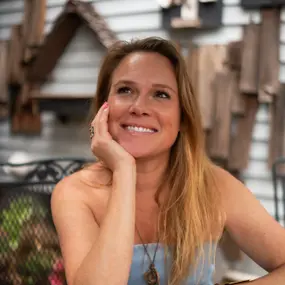
Author / Speaker / Artist / Entrepreneur / Advocate
In 2016, my five-year-old son was diagnosed with a rare eye disease that leads to blindness—the same that took my grandfather's sight. Struggling through fear and grief, I turned back to clay. As a child, I made simple worry stones with my father. This time, I pressed a hole at the center—transforming them into Sight Stones, symbols of vision loss and hope. Each one is a handcrafted reminder that we're stronger together.
From that moment, Sight Stones became a way to transform pain into purpose. Each handcrafted stone carries a message: Never Lose Sight. A reminder that even in our darkest moments, we can choose to see what matters most - connection, love, and hope. When you hold or share a Sight Stone, you are part of something larger. You support critical research for rare eye diseases. You help remind someone they are not alone. And you spread a ripple effect of presence, kindness, and resilience.


