
 Amazon Music
 Apple Podcasts
 Audacy
 Castbox
 Castro
 Deezer
 Goodpods
 iHeartRadio
 Pandora
 RSS Feed
 PlayerFM
 PocketCasts
 Podchaser
 Overcast
 Soundcloud
 Spotify
 TuneIn
 YouTube
 Voices of 9/11: Personal Stories and Artistic Tributes
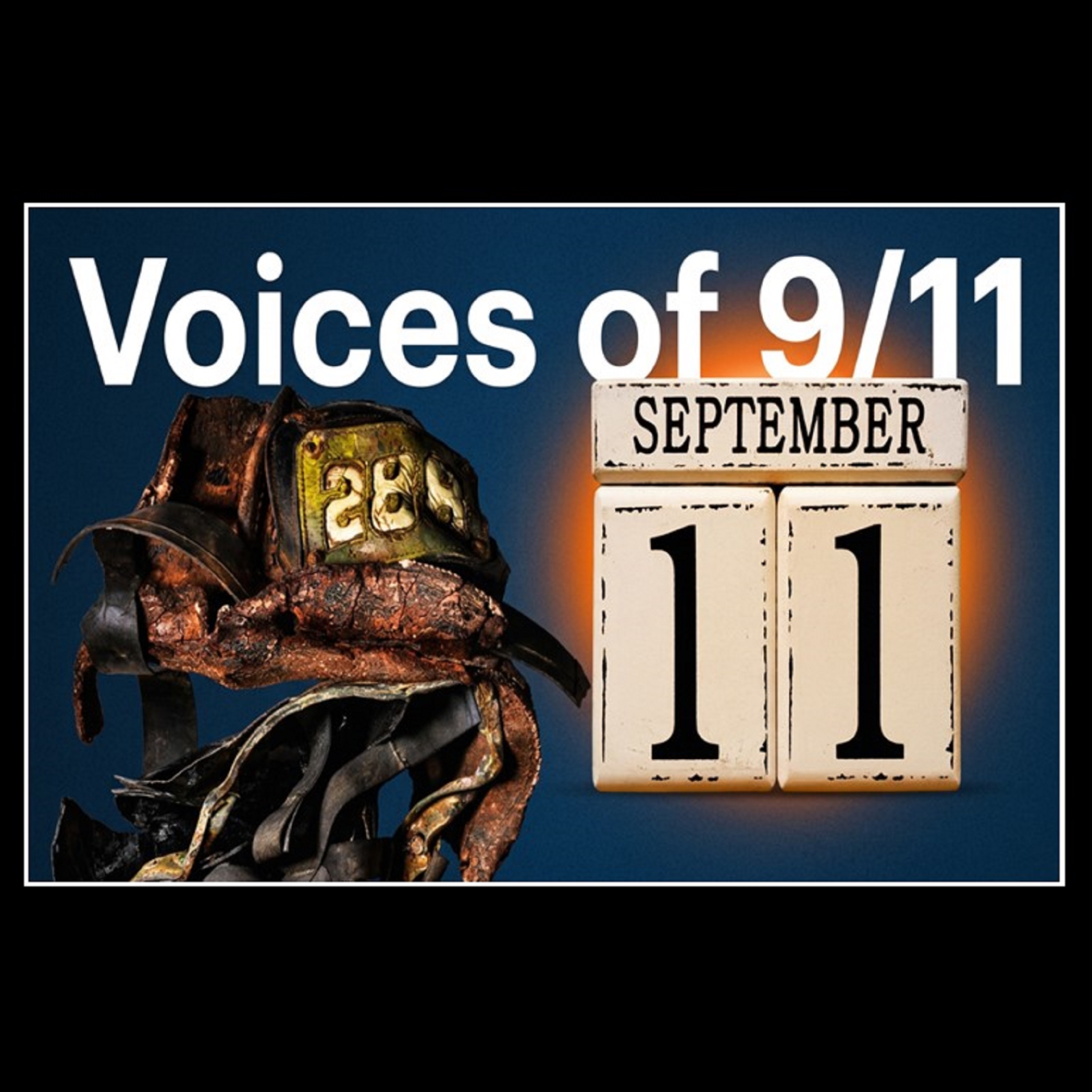
As we approach the 25th anniversary of September 11th, 2001, we pause to reflect on the stories of resilience and the profound sense of loss experienced by so many. In this special edition of Saint Louis in Tune, hosts Arnold Stricker and Mark Langston revisit poignant discussions with two remarkable guests from the 20th anniversary. Photographer Henry Leutwyler, whose striking portraits entitled "Sacred Dust" of 9/11 recovered objects published in National Geographic's September 2021 issue, shares his journey of capturing these artifacts. And Writer Kimberly Rex provides a deeply personal perspective on 9/11. She lost her father on that fateful day in Tower One and has since expressed her ongoing grief and struggle through her writing.
Arnold Stricker and co-host Mark Langston introduce a special rebroadcast for the 25th remembrance of September 11, featuring remarks from the show’s 20th anniversary guests: photographer Henry Leutwyler and writer Kimberly Rex.
Leutwyler discusses his National Geographic portfolio of recovered 9/11 objects, “Sacred Dust,” created by photographing items from the 9/11 Museum archives with a respectful, “portrait of objects” approach. He describes the selection process, the two-week shoot using respirators due to lingering dust, and the emotional flashbacks and smell encountered when opening containers.
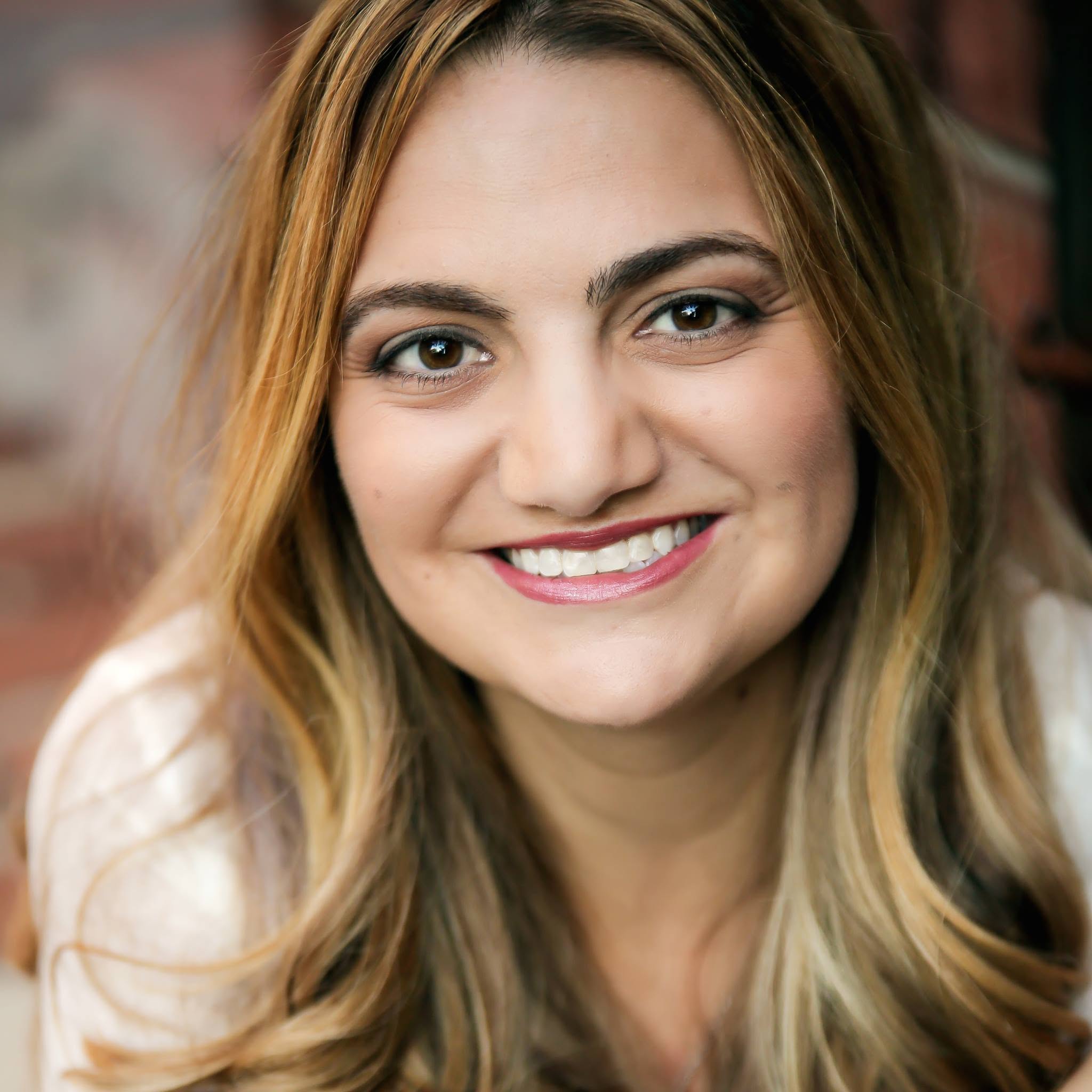
Rex, whose father died on the 104th floor of Tower One, reflects on enduring family grief, therapy, mental health impacts, how 9/11 continues to affect their lives through later illnesses, her writing as a form of honoring her father, her Ground Zero anniversary experience, and her belief that 9/11 is a sacred day that must be honored.
Let us honor the memories of those lost and recognize the profound impact of 9/11 on countless lives. While we may not have the answers to the questions that linger, we can choose to remember, reflect, honor the legacies left behind, and ensure that the stories of those we lost are never forgotten.
[00:00] 25th Remembrance Intro
[01:36] Meet Photographer Henry Leutwyler
[02:55] Portraits of Objects
[04:13] Choosing Museum Artifacts
[08:03] Sacred Dust Reality
[08:53] Manhattan Flashbacks
[11:41] Behind the Shoot
[13:37] Henry Closing Thanks
[13:49] Meet Writer Kimberly Rex
[14:35] Grief That Lingers
[17:48] Writing and Motherhood
[20:43] Telling Kids About Dad
[22:37] Ground Zero Anniversary
[25:35] What Never Forget Means
[27:40] Final Thanks and Close
Takeaways:
- This episode marks 25 years since 9/11, reflecting on loss and remembrance.
- Photographer Henry Leutwyler's work captures the essence of 9/11 through recovered objects.
- Kimberly Rex shares her personal journey of grief after losing her father on 9/11.
- The emotional weight of 9/11 continues to impact families years after the tragedy.
- Henry emphasizes the importance of respecting the items he photographed, calling them sacred dust.
- Both guests highlight the ongoing struggle with grief and how it shapes their lives today.
Listen to the Complete Conversations
9/11 Tribute: Capturing a Privileged Moment by Henry Leutwyler
9/11 Tribute: Relecting on Losing a Father on 9/11 by Kimberly Rex
- Kimberly Rex, Writer - Facebook
- Kimberly Rex - LinkedIn
- Kimberly Rex - Instagram
- Henry Leutwyler: Sacred Dust, photographs by Henry Leutwyler at Foley Gallery
- Press Release Leutwyler SacredDust.pdf
- Henry Leutwyler: Journal
- Henry Leutwyler - Instagram
- Henry Leutwyler Studio - Facebook
- Henry Leutwyler - Threads
- Henry Leutwyler - LinkedIn
This is Season 9! For more episodes, go to stlintune.com
#9/11remembrance #911 #twintowers #nypd #nyfd #september11 #sacreddust #cnn #washingtonpost #griefandrecovery
Thank you for listening. Please take time to rate us on Apple podcasts,
Podchaser, or your favorite podcast platform.
Arnold
Welcome to a special edition of St. Louis in Tune. I'm Arnold Stricker along with co host Mark langston for the 25th remembrance of those who lost their lives on September 11, 2001.Mark and I are rebroadcasting remarks from special guests we had on the show for the 20th remembrance.The first guest you will hear is photographer Henry Leutwyler who took portraits of 911 recovered objects which were displayed in the September 2021 issue of National Geographic. They vibrate with honor and tribute.The photographs which Henry entitled Sacred Dust were displayed at the Foley Gallery in New York City September 2021 where they evoked emotion and reflection of this unimaginable loss. The second guest is writer Kimberly Rex who lost her father that day. He worked on the 104th floor of Tower One.Kimberly wrote and had two opinion pieces published prior to the 20th remembrance. The first was for CNN entitled When people say never forget 9 11, this is what I hear.And the second for the Washington Post entitled My father was killed on 9 11. I still struggle to understand how he just disappeared.Kimberly graciously talked to St. Louis in tune and reflected on the loss and memories of her father and the ongoing grief which impacts many 911 families. There will be no intro or outro, music or conversation other than the remarks from our guest.Links for the complete conversations can be found on this episode podcast page@stluntune.com thank you for listening.In the September issue of the National Geographic there is an article by Patricia Edmonds on echoes of Loss and I was very taken by not only the words but by the photographs that were in there and I was very glad to contact the photographer Henry Leutwyler and. He was born in Switzerland.He's a self taught photographer. He was rejected by one of Switzerland's best photography schools, opened his own studio, went bankrupt in a year and a half.Apprenticed with a photographer in Paris named Gilles Tapis, he established himself as an editorial photographer. He moved to New York City. His portraits have graced the pages of Vogue, Vanity Fair, the New York Times Magazine, the New Yorker, Esquire, Time.He's photographed Michelle Obama, Julia Roberts, Rihanna to name a few. And he finds the beauty within. And Henry Lutewiler, welcome to St. Louis in Tune by Arnold Henry I find your photographs very moving.They resonate to me, especially the ones that you see in the National Geographic article and wanted to talk a little bit about in leading the interview with you. Talk a little bit about your background.
Henry
Initially I'm a portrait celebrity, celebrity photographer that then at some point started doing portraits and still life. When you photograph human beings, you're not always in control.You have a big team around you and sometimes the photograph is not what it should have been. Even though everybody blames the photographer for the mishap, it's not always just his fault.When you photograph still lives, objects, memorabilia, documents, historical, historically relevant material, I do believe that objects talk and it's really a one to one conversation. When I do still life, I actually don't do still life. I do portraits of objects. And to me, those objects talk back to me.And I hope they emote after they've been photographed something to you when you look at it. So.So for me, a portrait in a still life is actually identical in concept, identical in process, identical in care, except that when I photograph an object, I'm 100% in control. I am not 100% in control when I photograph a human being.
Arnold
You were commissioned by National Geographic for this issue in September and explored the archives of the museum of the 911 museum. Over 70,000 objects. And it's incredible. How did you pick the ones that you picked? Or were they picked for you, or did they pick you?
Henry
Both. First and foremost, National Geographic reached out to me. It was not something that I had planned, so they reached out to me.We started talking for many hours on concepts. And yes, you have to find the right concept to do something meaningful. It's a tribute.It's a tribute to 20 Years of Sadness, losses of families, losses of loved ones. You have to be very careful.At one point you go through archival photographs, you go through documents, you go through emails, and you talk to the curators, etc, etc. I at some point became very interested in the concept of recovery, recovered objects.And most of the recovered objects which we picked belong unfortunately to people who died.I didn't want to photograph drawings, I didn't want to photograph photographs, I didn't want to photograph quilts, memorabilia of the families that were given back to the museum. I really wanted to photograph objects recovered throughout the years because the process of recovery took years.And only then we realized, okay, recovered objects, how many out of the 70,000? Maybe 3,000, 4,000, 5,000. And then we started opening boxes and then we started to edit this down.I picked the items with David Bernhauser, who worked with me closely for the entire project. He was everybody, everybody was gracious enough to allow me to make the choice of what I wanted to photograph.It was really about, we want Henry's picks and Henry's vision. On this story. And that's also a very rare occurrence. Most of the time, people tell us what they want.In this instance, they let me do, which, again, I'm immensely grateful for. And my prerogative was, let's try with the choice of images, with the choice of objects we do that, we can actually tell a story.Of course, the journalist or the writer had not seen the photographs, so I was telling myself a story. How can I convey a humble, respectful portrait through the still lives of the tragedy of 9 11? So I haven't even counted how many photographs.I imagine. I would guess probably a little bit over 30. But I think I photographed over 360 images.And then I had to narrow it down to 150 and then to 80 and then to 50, and then I stopped because I couldn't. For me, the 50 last ones were all. They become a family of objects, and you become the guardian of those objects and those stories.And it became very difficult. So I let the magazine and the editors then pick what they thought was relevant in the show at the Foley Gallery in New York.Let's say there's maybe 80% of the images that have been featured in Nashville geographic and maybe 20% of images that were left behind, but I believe are relevant and interesting. So that's what happened, and that's how it happened.I came up with the recovery concept, and the recovery concept became very difficult because what recovered is obviously human dust, right? Sacred dust, asbestos. So we ended up wearing not just a Covid mask. We had the respirators and we had the gloves on. It was.It's not easy to work two weeks with the respirator if you're not used to it. It's quite difficult. And that's how we did it. Day after day, many hours, no lunch, never lunch, no time.And again, I'm immensely grateful that National Geographic reached out to me and that you have, too, and allowing me to have a voice above and beyond the photographs in the magazine.
Arnold
Now, you were in Manhattan on September 11th, really? Correct, I was.
Henry
And I was living on Leonard street between Broadway and Church, which is just a few blocks further up. It was obviously not a happy day.
Arnold
So when you photograph these objects that have been recovered, what did that stir in you? Did you remember things you tasted or smelled at the time?
Henry
When it was a flashback. It was a flashback, Arnold. So I refused to go back downtown and photograph.So I have not a single photograph of 911 beyond the photographs I did for National Geographic previously for Stern magazine 10 years ago. I did A different story, but distinctively.We then went back on Leonard street and the smell, the smell of death and the smell of burning buildings is still in my, in my memory. And when we opened boxes and when we opened the plastic containers within the boxes, the smell came out. Oh my. It's still there 20 years later.You can smell it. And again, I have the National Geographic in my hands and I just want to.The photograph of the pants on the hanger, the little note that said pants wound on 91101 at the World Trade Center. Please do not wash the ash is the remains of those that died. God bless them. This is is sacred dust.I would probably have called article the title of the portfolio Sacred Dust. Every item is covered with dust. Every circumstance.It doesn't matter if it's a Rolodex, it doesn't matter if it's a firefighter helmet or if it is a keyboard. Everything is covered in dust. And again, I don't want to go there, but we know what that does.So again, when you photograph 365 objects, you do it or you try and do it in the most respectful manner you can. A photographer usually made sure that the surface he's photographing on is always clean. And we wipe them, we wash them, we vacuum them.On this assignment, every speck of dust went back into the box. Again, we paid incredible attention and we tried to be as respectful as possible. We are touching human remains, it needs to be said.
Arnold
How long did that take you to do that shoot?
Henry
More or less two weeks. We did it in two different locations, Upstate New York and in New Jersey. Approximately two weeks, I would say.Weeks of preparation, of research and then weeks of editing and conversations and then minor supervision. National Geographic was very grateful, very kind. They allowed me to see the layout in progress.I gave a few comments, even when it came down to please do not re crop the images. It was an incredible assignment. It was incredible to work with a fabulous team. I had an incredible editor.The director of photography sent me an email in the beginning, Whitney Johnson, that I will never forget. Stop me if I talk too much and if time is running out. I never dreamt, I always hoped, but I never dreamt to have a 22 page portfolio.And in certain foreign issues, the French issue, also a cover. I think there's probably around 30 international editions around the world. And so the covers are always a little bit different.It's not always exactly what the American edition is, but it's a privilege and a dream to have this happen. I'm a baby Photographer within the National Geographic World. But it is definitely something that I never expected.I didn't really know how to get around and say, hey, why don't you assign me a 22 page portfolio and a cover? It just happened. I got an email from Todd James one morning while I was in Switzerland.He asked me, would you be interested in doing this for us and will you be in New York? And my response within seconds was yes. And that was it. These are those magic assignments that probably you never forget.
Arnold
Henry, thanks for coming on St. Louis in tune.
Henry
Yeah, thank you very much. I'm immensely grateful to you both.
Mark
I am grateful to you, sir. Thank you very much. Thank you for your contributions. Honestly, they're wonderful.
Arnold
Kimberly Rex is a freelance writer. She lives in New York City with her husband and two daughters.You might have read her articles in the New York Times or Wired, the Independent, the Huffington Post, CNN or the Washington Post. Her father was in one of the buildings on 911 when that entire catastrophe happened.Kimberly wrote an article for CNN entitled when people say never forget 9 11, this is what I hear. And then an article that she wrote for the Washington Post which says, my father was killed on 9 11.I still struggle to understand how he just disappeared. And how did that grief and loss play out in your family?You mentioned in the pieces it's one thing to lose a family member to a disease or old age, but the sudden loss that happened like on 911 is so much more different.
Kimberly
Yes, I would say that it's still playing out. It's a loss and just a level of grief that never dissipates it. Of course you learn to live with it because there's no other option.But it's 20 years and the pain and the grief just. It hasn't changed much at all really.I have three sisters and my mom and I think of course it's been the hardest for my mother and she is in no way over the loss of my father. You would think he died maybe a few years ago based on how she talks about it and feels about it.It's just it's not something she can ever really move on from and it just changes you.We all went through it in our own ways, but we went to group therapy as a family for a while and a lot of us went to individual therapy and some of us still do. And some of us ended up with depression and anxiety and who's to say whether or not those things would have happened either way?But I know for me personally, I think there was a perfect Storm where my father died. And a few months later I had a health scare. And it just created the perfect environment for mental illness.And that's obviously mental illness is some. That's something that never goes away. You're dealing with it for the rest of your life. We're all, I'm still dealing with it stuff.And then the other thing is that not just that we lost my father when we lost him.And even while we were thinking this is never going to be okay again and we're never going to get over this loss and life will never be the same, never be happy and all those thoughts, we still thought it was going to be this one thing that 911 made happen that would affect us. This one 911 happened. My father was killed and we'd be dealing with that death and that loss.What we didn't realize is that it would keep affecting us in other ways. And my sister ended up marrying a first responder who was there on 9 11. And he has plethora of 911 illnesses. He's a very sick man.And she has young children and she deals with that every day trying to take care of their kids and in that situation. And then my husband, who my husband, whom I met after 9 11, his father died of 911 cancer a year after we were married. And you.So of course my father was, for me personally was the biggest loss. But we never knew it was going to keep hurting us over and over again. You can't really get over something when you're reminded of it constantly.Especially for my sister who the days that one day is just affecting every single day of her life. Moving on. So that's another way that really it was like an unexpected grief that we didn't expect to happen.
Arnold
Having something like that come back and my words slap you in the face every once in a while is really difficult because how does that impact what you do as a writer and as a mom and as a wife? How does that impact you?
Kimberly
I think as a writer, I write about it. And it's not that. I don't know that necessarily is therapeutic for me. Sometimes it is. I think it depends on what piece I'm writing.But I will say with the two pieces that you talked about, the CNN and the Washington Post, those are both the kind of pieces where you just an idea was in my head and it just pours out of me, that first draft.And it's almost more like a stream of consciousness where I'm just writing it to get it out of my head and then eventually I hone it and edit it and get help editing it and before publishing. But so I guess those two pieces actually were therapeutic, those two.And I think it makes me feel good because I feel like I'm honoring my father and I'm especially if I'm getting published and other people are reading about him and those two pieces went up.I've gotten a lot of messages on Facebook and emails and people just promising that they never will forget and that they always remember and how they commemorate that day and how they tell their children about it and just really reassuring things. I've had a few people contact me who were. Who knew my father, who I don't know.One of them was his elementary school classmate who was telling me stories about how he would cheat on my father's tests in school. Things like that were just really fun to hear because I don't know those things about my father. So that's writing.And then as a mom it's hard in general because when my father died and then my father in law died, all this tragedy happening, I became a really negative person with a really negative outlook on life. And why are we even trying and why do we want to be happy when God knows what's going to happen to rip that happiness away from you?And I can't say that I don't feel that way anymore. But I'll say that I. It's a struggle where I want to. I don't want to teach my children to think that way, of course.And I want to give them a positive outlook on life and I want them to believe that this is all worth it no matter what happens in the end. So I have to find that balance and make sure I'm not letting that those thoughts that I have impact them. And then as a wife, my husband is really.He's really super, super supportive. He's my rock. If I am feeling depressed or I'm dealing with grief one day or I'm having anxiety, he's really there for me.I can open up to him about it and share how I feel and he can do the same with me. So I feel that he's probably the one person where I don't really have to. There's no effort involved. I just can be real about it and it's okay.
Arnold
What are you going to tell your children about your dad? Or what have you told your children about your dad?
Kimberly
So they know some. Mostly what they know now is just little stories, anecdotes of funny things.When I wanted to be a singer, but I have no singing talent, and my dad told me they were dead dogs on the lawn outside because I was singing. Love, big white bag, funny story. And I'd like to tell them how smart he is and how smart he was. I find a hard.I can tell stories about my father, but I actually have a pretty hard time describing him. And I think that has to do with the grief.
Arnold
So is the grief getting in the way of that?
Kimberly
Yeah, I definitely think so. I think it gets in the way of a lot of my.
Arnold
My.
Kimberly
Even my memories of him. I almost feel sometimes I can try to think.I can think of a moment if I want to remember what the dog thing or another funny moment that happened with him or a serious moment, I can pull up those memories without a problem. But to just try to remember him, just the essence of who he was and picture him and feel who he was, I have a really hard time doing that.And I do think that's the grief that I just. I almost feel my mind turn it off and I'll try and adjust. My brain won't stay on the thought.It's very strange to me, but I'm guessing it's actually probably pretty normal. And everyone grieves differently. And I think there are other people who are the opposite, and it's all they can think about.And for me, I have a harder time with that. I'm better at avoiding. And it's easier for me to focus on the little moments than it is to focus on the big picture.
Arnold
When you went on the first anniversary back to ground zero and how the wind seemed to bring up the. My words, the souls of the individuals who were there. What was that moment like? Because you really.It's an eerie moment from when you talk about the wind and everything like that and had the temperature and everything. What was that moment like, personally, for you?
Kimberly
It's a com. I'd say there was a combination because on the one hand, it was a devastating moment, and to feel that was obviously so sad and devastating.On the other hand, it was incredible and amazing because I literally remember walking down. There used to be that long ramp right when it was still the pit, they called it. And on the. As we walked down the pit, it was just.You weren't expecting it. It was just. It was as if it was happening to us. And as I'm walking down the pit, I just. The feeling is just growing.And the second our feet hit the ground, you just felt something inside you. It was the most. Incredible or it. I can't even think of the word to describe it.But I'd never before felt something so intangible but so unbelievably real and unbelievable but real. If that makes sense. Yeah, it just. It was just this concrete pit and it. But it wasn't. It was just. I've never felt anything like that before since.It was just. It was like they were there just inside you. And I feel that there's a difference between.If I had walked in the pit and immediately felt horribly sad and I started crying because I'm in this place where I know my father died. It, of course that was there too, but that wasn't what. It wasn't the only thing you felt. You literally felt something injure you. It was amazing.Awful and amazing.
Arnold
Was that something that your siblings and your mom experienced also?
Kimberly
Yeah, everybody says that. And when I even. Yeah, and when I've.I can't remember someone I know, I can't remember who it was said that they know a family member and they said the same thing. And the wind was out of control, so it was 35 miles per hour when normally it's under 10, I believe. And it was like.It was almost like you felt like you got caught in a whirlwind and your hair, our hair was whipping and we were being moved around by the wind. It was just incredible. I know I keep using that word, but that's the best word I can.
Arnold
Best description.One last question, and I'm going to pose it to you this way is you have a large audience who will be listening to you and who are listening to you either through your articles or through your contacts on a day to day basis through the radio waves. What do you tell people about 9, 11?
Kimberly
For me, I. I'm not a political person. I know there are a lot of people, even family members, who lost, people who would have something more politically driven to say about it.For me, it's just more emotional that I just feel the day is sacred and it should be treated that way. And I can't help but be bothered when it isn't. And when people seem to treat it as though it's any other day and it's not a regular day.And what went on was horrific and devastating to thousands of people and so many people that should be considered heroes who didn't just die, but saved lives before they did. There were first responders, obviously, we all know that, who went and who died trying to save others.And then there were regular people who just saved people in the building, tried to save them in the building and failed stories that came out. And I just feel that my father and those people, who knows? I don't know what my father did inside the building.I have no idea if he saved someone, if someone saved him, tried to save him. All of those people should be remembered and all of them should be honored. And it shouldn't be a typical any other Saturday in September.It's no big deal. It's sacred. And I think it should be remembered, and I think it should be honored.
Arnold
Kimberly, Rex, thank you very much for coming on St. Louis in tune, talking about your articles and your personal experience. And I appreciate your candor and your honesty.
Kimberly
Thank you so much. I really appreciate you having me here. I'm grateful.
Photographer
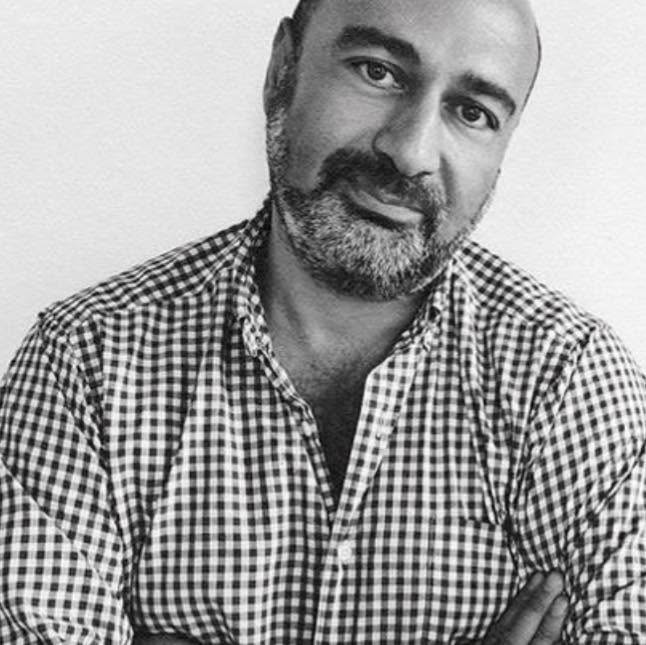
Born in Switzerland in 1961, Henry Leutwyler is a self-taught photographer with a stubborn streak and unflappable love for the medium. His grandfather and father were both printers. He decided not to follow their path, instead to travel and photograph, soaking up color and culture from around the world. After having failed not once, but twice the entry exam at one of Switzerland’s leading photography schools, he opened his own photo studio in Lausanne. In 1985, Leutwyler moved to Paris where he rapidly established himself as an editorial photographer. A decade later, Leutwyler moved to New York City and resides in downtown Manhattan.