

 Amazon Music
 Apple Podcasts
 Audacy
 Castbox
 Castro
 Deezer
 Goodpods
 iHeartRadio
 Pandora
 RSS Feed
 PlayerFM
 PocketCasts
 Podchaser
 Overcast
 Soundcloud
 Spotify
 TuneIn
 YouTube
 Empowering Children with Disabilities: The Transformative Work of Variety St. Louis
Brian Roy, CEO of Variety St. Louis (formerly Variety Club) joins us and details how Variety St. Louis helps fill gaps in healthcare and support that many families face of children with special needs. They provide life-changing medical equipment, therapy services, and inclusive opportunities that truly make a difference. For over 90 years Variety St. Louis has been making a difference and now serves 1600 kids in 30 counties in Missouri and Illinois.
There are pressing needs of children with disabilities and their families in our community. Brian Roy, CEO of Variety St. Louis, joins us to shed light on the amazing work the organization does. For over 90 years, Variety St. Louis has been a beacon of hope, providing essential medical equipment, therapy services, and inclusive opportunities for children with disabilities. Brian shares how the organization has evolved from its early days as a social club into a vital service provider that identifies and fills the gaps in support for families.
Variety St. Louis offers various programs, from equipping children with necessary medical devices to providing therapy services that many families struggle to access. Brian discusses the challenges faced by families in affording these vital services and how Variety St. Louis steps in to bridge the gap. With heartfelt stories from families, he illustrates the profound impact of these resources on children’s lives, helping them achieve independence and confidence. He emphasizes the significance of inclusive opportunities that not only help children with disabilities but also enrich the community as a whole.
We touch on the critical aspect of funding and how Variety St. Louis operates primarily through private contributions. Brian shares insights on how the fundraising landscape has evolved and the importance of community support. He candidly discusses the challenges of securing funds while emphasizing the impact that even small donations can have on a child’s life. The ultimate message: together, we can redefine possibilities and create a more inclusive world for all children.
[00:00] Why Variety Matters
[00:30] Show Welcome and Sponsor
[01:27] Thought for the Day
[02:19] Meet Brian Roy
[03:00] Variety History and Shift
[04:51] Who They Serve
[05:51] Equipment and Therapy Help
[08:10] Arts and Camp Programs
[09:25] Adventure Camp Explained
[12:19] Ages and Transition to 21
[14:17] Service Area and Vision
[15:37] Inclusive Theater Spotlight
[18:30] Current Productions Update
[20:18] Impact Stories from Families
[25:03] Break and Sponsor Message
[26:17] Dred Scott Stamp Petition
[27:23] Variety Funding Overview
[28:15] Gala Evolution and Headliners
[31:06] Private Funding and Impact Data
[35:14] Budget and Scaling the Mission
[37:58] How Families Find Variety
[41:03] Program Limits and Eligibility
[44:17] Donation Impact Breakdown
[49:46] Karaoke Banter and Wrap Up
[51:21] Final Credits and Sign Off
Takeaways:
- There's a real need in our community for support systems for children with disabilities and their families.
- Variety St. Louis is stepping up by providing essential medical equipment and therapy services to make life easier for these kids.
- Our programs not only offer tools but also priceless experiences, like summer camps and performing arts, to help kids thrive socially.
- Funding for these programs mainly comes from private donations, which is crucial since there are no federal programs covering these services.
- Variety Kids | Greater St. Louis Region | Supporting Kids with Disabilities
- Variety the Children's Charity of St. Louis | Facebook
- Variety the Children's Charity of St. Louis | Instagram
- Variety the Children's Charity of St. Louis (@VarietySTL) / X
- Variety the Children's Charity of St. Louis | YouTube
- Variety the Children's Charity of St. Louis | LinkedIn
This is Season 9! For more episodes, go to stlintune.com
#varietystl #childrenwithdisabilities #specialneedssupport #assistivetechnologyforchildren #adaptiveequipmentfordisabilities #specialneedscamps
Thank you for listening. Please take time to rate us on Apple podcasts,
Podchaser, or your favorite podcast platform.
00:00 - Untitled
00:05 - Introduction to Variety St. Louis and Its Impact
04:32 - Transitioning to Community Support for Children with Special Needs
11:29 - The Importance of Accessible Camps for Special Needs Children
12:55 - The Journey of Transitioning to Adulthood
23:03 - The Impact of Theater on Youth Development
27:37 - Transitioning Funding Strategies
36:10 - Increasing Capacity and Community Engagement
44:02 - The Importance of Funding for Disability Services
47:53 - The Importance of Support for Families
Arnold
There is a growing need facing children with disabilities and their families across our region.We're going to discuss what Variety St. Louis is doing to provide life changing medical equipment, therapy services and inclusive opportunities throughout the St. Louis area.Welcome to St. Louis in tune and thank you for joining us for fresh perspectives on issues and events with experts, community leaders and everyday people who make a difference in shaping our society and world. I'm Arnold Stricker along with co host Mark Langston. Mark, how are you today, sir?
Mark
I am, I'm good. We're recording this in what, in August?
Arnold
Yes.
Mark
And it's another heat wave.
Arnold
It's the dog day.
Mark
Yeah. But there's no global warming. Isn't that what somebody said in government?
Brian
Yeah. Thankfully on the drive down here it was only going to be a hundred today.
Arnold
That's our guest jumped into the team here.
Mark
He's a meteorologist.
Arnold
Meteorologist Brian Roy is here. Talk to us.
Brian
That kind of sounds good. Yeah, I got a new calling.
Arnold
We're glad that you joined us today.
Mark
That's the whole thing.
Arnold
There you go. We're glad you joined us today, folks. We want to thank you, thank our sponsor Better Rate Mortgage for their support of the show.You can listen to previous shows@stluntune.com where you can follow us and even leave a review. Theodore Roosevelt has our thought for the day. The best preparation for tomorrow is doing your best today.
Mark
Yeah. Always do your best. New day. Try to do better than you did yesterday.
Arnold
That's, that's a really good thought. Say that one again, Mark.
Mark
I like that guy.
Arnold
That's worth repeating.
Mark
Try to do better today than you did yesterday.
Arnold
And that way you're constantly getting better. You're improving relationships with your family, with your neighbors, with those in your community, with people you work with to just people.You go pumping gas with everybody.
Mark
It's a new day or the seventh day thing. It's a new week, it's a new month.
Arnold
If everybody did that, where would our society be?
Mark
I don't, I'm afraid to find out.
Brian
Wow.
Arnold
Obviously we know their neural hunger.
Mark
Maybe, I don't know. Whatever.
Arnold
Well, Brian Roy, he's the CEO of Variety, the children's charity and he, he actually sidelines as a quasi meteorologist. No, but I know he also loves to do karaoke, but he doesn't have the voice for that. At least that's what he says.
Brian
Yeah. So I think you read something that. I have three brothers who also read that and remind me often of my song selections are what I said.I Would in an interview, sing if I could sing.
Mark
We should have set it up. We should have set up the karaoke.
Brian
Machine that would have turned away any of your lifelong listeners. Your sponsor might have dropped you to set up scratch record.
Arnold
Brian, tell us a little bit about Variety St. Louis, and maybe some folks will know it as the Variety Club.
Brian
Yeah, I think that's where it's kind of one of those things being around for over 90 years. There's the good and the bad. The name Variety Club when we started back in the 30s has stuck. And I think people remember the telethon days.Sammy Davis Jr. There's just folks that grew up with Variety Club and a telethon. They're always going to call it Variety Club.And that's okay that they know us and at least what our work is.
Arnold
What's the name? Always Variety. The children's charity.
Brian
We changed that. See, so I've been there 16 years. We changed it probably in the early 2000s to represent a transition. It really was a social club that got together.It was theater owners who wanted to do good and it was a social club. And they would have events and raise money and. And then give the money out. And as we have evolved, so.
Mark
So it was Variety Club in the. Till the early 2000s, and that's okay.
Brian
And that's when it kind of changed. Saying that it was. Wanted to be maybe a little more inclusive and not just exclusive exclusive with the wealthy who are. Are doing great things.But I think it also represented that we weren't. We were making that transition from raising money and giving it out to having our own programs and really being a service provider.So we were in that transition to say that's what we did and we're good at that. But we need to. We've identified gaps in the community where aren't programs currently for these families and these kids with special needs.We're starting to do them ourselves. And ultimately by 16 or 17, we had fully transitioned to. We're raising the money, but we're doing that for our own programs now.
Arnold
I think people will maybe understand a little bit dealing with individuals, children who are. What is it? Age, birth to 21.
Brian
Correct.
Arnold
Who. Who have some struggles and what kind of things do you do and what kind of things don't you do?
Brian
So you think about special needs and disabilities and language is important, but language can also be confusing. So children with physical and developmental disabilities.And so some of those are obvious kids who need mobility challenges or use wheelchairs or braces or walkers or I think maybe sometimes what's less visible are kids who maybe are on the autism spectrum where you don't see it, but they have some developmental challenges. So we get into helping those kids from when they're born until they turn 21.What we don't do, there's mental health challenges with anxiety and depression and those types of things which can be debilitating and need lots of services. But you don't get into that space. We're really more thinking about the tools that these kids need.So if it's medical equipment, you'll hear adaptive equipment or assistive technology. Those are kind of your tools to access the world every single day.So if you need a wheelchair, if you need a communication device, cochlear implants, they have lots of. There's just lots of different things that kids need that are their arms, their legs, their voice.And we provide those because unfortunately there's a massive gap between what's needed and what families can afford or what insurance covers. And we step into that void.
Arnold
Would it be fair to say as an older adult, durable medical equipment for younger kids?
Brian
Correct? Yes.
Arnold
Okay.
Brian
Yeah.
Arnold
But you don't do, you don't provide any support like if they have to go to the doctor or go to a specialist or anything like that, with.
Brian
The exception on the therapy side. So as we were doing the equipment, we started to.And again, some of this, we'd like to always say it was strategic, so a lot of it was organic where we're providing this amazing equipment.And we started to hear from families, hey, this is great, but I can't get all the physical therapy or the speech therapy or the occupational therapy that my child needs. And so this equipment that you got us, we can't use anymore.
Arnold
Okay.
Brian
Because my child's either not maintaining or, or my child isn't making progress. They're regressing. And they're regressing because maybe your insurance says you've got 20 sessions a year that will cover.And a family say, my kid needs three different types of therapy weekly. And so within a couple months I've used all of my therapy sessions. What am I going to do for the rest of the year? I can't pay out of pocket.So we then got into, we called it their happy kids. Where we're. Now we go out to the, the therapy providers that they already have and say, hey, can we negotiate?Charge us just what you would charge an insurance company, not what you would do the, the self pay rate. Let's say it's about 100 bucks a session, and we'll fund three sessions a month for a year.We'll commit to you that we're going to fund what insurance won't. And so the can the child can continue to receive those services. So wonderful. We got into the equipment. We then evolved into supporting the therapy.And that's where we kind of say with our core programs, that's what you need to do to just be able to go to school, to be active in the community.You need these tools where I think we being part of the entertainment space and theater owners, the performing arts and that element of variety has always been around. And so we started with the children's. We had the Variety children's Chorus and evolved into performing arts with musical theater and dance.That kind of ties to our roost.We thought those enrichment programs, like doing those things or going to camp, summer camp, having those adaptive experiences that are meaningful, I think are just as important. You got to have the tools, but you also have to have those experiences that every kid has. That's where you learn to socialize or you learn.You gain confidence in yourself or you start to realize how to navigate the world in a different way with relationships.And we realize that there's a gap in those experiences that are available to kids who have either mobility challenges or folks who aren't neurotypical and so they have sensory issues or different things that you need to accommodate. So we said, let's do those things together. And that's going to have the biggest impact.
Arnold
Now let's delve into those a little bit and pick those off a little bit at a time. You talked about the choir. You talked about the children's choir. You talked about the theater. You also talked about the camp.Let's start with the camp. And so people understand adaptive kinds of things. Explain that, because some people may not.
Brian
Yeah, yeah. I think if you think about growing up and you're like, I'm going to go to.I'm going to go off and spend the week at camp, not at a residential camp, but just going and having day activities. If you're going to go swimming or if you're going to do arts and crafts or do different activities, those experiences are different. If.If you have a child with special needs. And there's probably two limitations.One, you have to adapt those experiences to be accessible to kids who have mobility challenges or sensory issues or just think differently. You also have to have the physical space. Considerations of. Are these. Are. Are these activities accessible to our kids?And so they're just not a Lot of those opportunities out there. And what we found is where there might be some opportunities out there.One from they might be cost prohibitive because it's not inexpensive and everything we do is at no charge and free. You might not be able to spend $800 to send your kid to a camp because you don't have $800 to do that or you need $800 for lots of other things.But we started to find a gap in that kids who are complex where they. There might be a camp that's available to them to accommodate physical challenges that they have, but they're not adaptive for the. The neuro typical.They're set up for neurotypical kids. Neurodiverse kids might not succeed there. So we started to find. We're getting kids who got kicked out of camp because their behavior was.They couldn't accommodate the behavior. They could accommodate the physical challenges, not the behavior or vice versa.A move set up who could handle neuro diverse kids but they couldn't deal with kids who needed feeding tubes or have trachs or needed medicine or have seizures or there's just other complications. So our team and I'll give credit to our programs team has developed over the years a camp that meets kids where they are.And so we are going rock climbing or we're going swimming or we're going to do robotics and stem or we're gonna go bowling or we're gonna do those. Those camp experiences that kids love and love to return to school in the fall and tell all of their classmates about.We're gonna make that available for kids with special needs.
Arnold
Is it called camp where you are?
Brian
We call it.
Arnold
That would be it.
Brian
Should we call it adventure camp?
Arnold
Okay. But we could.
Brian
We could be up for changing it. But it is. It's like meeting the kids where they are. And we hear from a lot of families say I finally. We finally found our people.
Mark
We're.
Brian
We're able to come to this camp and my child is seen for who he is, not for who he or she is, not for the disability that they. Or the challenges that they might have.
Arnold
That doesn't define who they are.
Brian
No.
Mark
What's the age group?
Brian
So yeah. So while we are our programs generally we're birthed till 21. Camp starts at 4. So we have the littles but we not. We don't have the infants.So camp starts at 4. Our performing arts is a couple years older. We usually start at 6 or some of the programs are 8 years old but a couple years later for Those.But our goal is. And the reason we help up until they're 21 is we want to be on this journey with them. So we want to. We want to be a partner with them as.As their needs change, as the opportunities change, as their interests change. We've got that. We've got services and programs that help them.
Mark
There's a big difference between 18 and 21. I think it's great that you're filling.
Brian
That gap, and it's a good point. Legally, at 18, you're now an adult. But for our families, that's a really tough transition.Legally, a lot of families might have to reestablish guardianship. Every. Surprisingly, every county handles that differently.Some say, oh, a sheriff or someone has to serve your child with notification that someone is wanting to establish. Re. Establish guardianship. That can be traumatic or, you know, that's difficult. So navigating the legal side of that is challenging for the families.Your benefits change. So if what. Depending on what types of insurance via public. If it's Medicaid, there's benefit changes that happen.And so we figured they got enough going on. Let's help them transition good.And by still keeping some stability with having our help with equipment and therapy and then having access to our program still where they can school. School. Things at school change.
Arnold
Depending, they're good till 21. Generally between graduation and 21 with an IEP and.
Brian
And it's a little different. Missouri's a little bit different as well from Illinois because we're over on both sides of the river.So they're trying to navigate the differences there. So we figured if we can be with them till they're 21, then that's one less thing that the families have.
Mark
Good for you to worry about.
Arnold
And you're in how many counties in Missouri and Illinois?
Brian
So 15 on each side. So total 30. That's a haul. People ask, why is that your service area? And it's a great question.
Arnold
Because we couldn't make it bigger.
Brian
Yeah, we'd love to make it bigger, but in the telethon days, they wanted to make sure that everyone. It's the tv.
Arnold
Gotcha.
Brian
So they wanted to make sure anyone who was calling in with a donation so Would be in that TV viewing area that they. We were providing services in. Their couch.
Arnold
Makes perfect sense.
Brian
So that's how we. We set that up.
Arnold
Yeah. Mark. Here's their vision. To create a world where abilities are redefined and possibilities are reimagined.Now, if you have a child who has a disability, who has Special needs. You understand that. You understand exactly what Brian's saying in everything that he's talking about right now.And even to the point where, you know, the children's chorus, the dance, the theater talk about that because you have kids see things on media, okay, Television, movies, their phone and man, I'd love to do that but that three letter word but. And whether it's at school or it's outside in the community course or something like that, how do you work?
Brian
If you don't see yourself, then you can't imagine yourself someday starring on stage or you love to sing, but you don't have that outlet or, you know, you are a great actor, but there aren't opportunities. And I think it started with variety.Children's chorus was, hey, we've got these kids who have these amazing voices and want to express themselves this way. And so let's provide that opportunity and then let's go out into the community and change perspectives.And so if you see a child who, who you didn't expect to be able to be a performer and see them, that starts to maybe reset your expectations. The natural evolution of that. So Jan Albus, who was my predecessor, had had some expertise in the arts.And so her vision was, why let's do a musical production that is equal or on par with what you would see touring or on Broadway, and let's shoot for that and say they should have that equal experience. So we started the musical theater and started putting on massive productions with. We were at the Two Hill to begin with and so huge stage.We had a full orchestra, sets and design and all of the production behind that, the choreography, lighting and drops, lighting and drops. And we had the whole thing.And I think just as importantly, it was inclusive in that if you looked at the children's ensemble, half of the kids were what we would say were a variety kids and half the kids were just theater kids who loved theater. And as much as our kids were getting out of it, I think those other kids we would say inclusive kids were.That changed their perspective pretty profoundly when they saw kids who were, who could sing, dance or act better than they could, who were also overcoming lots of other challenges that they didn't have to.
Mark
Inspirational, I would think.
Brian
We had a. We had a full equity actors in the adult ensemble. And so you're learning from the best of St. Louis.We would bring in always a couple folks from Broadway in New York as well.And it really was a, an incredible experience and I think for everyone involved, but then for an audience to come and See these children really shine and capable of being the stars. We would hear from. From folks who came and said, I thought this was just gonna be a high school type production.I didn't know it was gonna be a Broadway level production. But they said, and quickly, pretty quickly. I had no awareness that the kids were any different, you know. And when I would see, we had. We created.We would say we created some stars that really, once they got on stage and one got in front of the lights, just gave incredible performances. And we're having an effect, I think, more than they would realize.
Arnold
Now, the choir, you're taking. It's like an opening for the choir now, and you're getting ready for the theater production. Or did I read that wrong?
Brian
We just finished, actually. Sunday was our last show of the Addams Family and we partnered with Coca Cola.
Arnold
Okay.
Brian
That one is like a three week. So we did this big production, was fantastic. We did it for about a decade. Covid hit and everything kind of gets realigned. And we thought, okay, we.Maybe we can't undertake. This isn't sustainable to do this big of a production every year. Can we take all of the elements that. That are.Make this so successful and replicate that, find a partner and replicate that on a little bit of a smaller scale. And so that's what we now put on. It's a three week production where the kids rehearse for three weeks. It's just kids.There's no longer adults involved. And we just put on the Addams Family, which was a incredibly funny and witty show.
Arnold
And we.
Brian
So we do a run where it's just. We do five shows after the course of the three weeks of rehearsals. And that's it there.
Mark
It's the Adams family that we all know.
Brian
Yes. And if you realize that there are. They are true to that. But they also. It was a wonderful production.Just a lot of the kids, I think they connected quickly with the show. I think the humor part of it, you get so into it that they learn their lines faster.
Arnold
Oh, yeah.
Mark
Were you, Lurch?
Brian
Yeah. Yeah.
Mark
You were Lurch.
Brian
Yes.
Mark
You.
Brian
Yeah. For the sake of the production. I was left off.
Mark
Yeah.
Brian
Left off stage.
Arnold
I was allowed to help Usher sing a solo.
Brian
Yes. I will give credit to Andrew, who was our Lurch, who was one of our Variety teens. Definitely beat me out for the part.
Arnold
This is Arnold Stricker with Mark Langston of St. Louis and Tune. We're talking to Brian Roy from the Variety, the children's charity. And Brian, give us a couple stories that you think Might.I'm gonna give you a moment to think about that, but I want to give the phone number and the website, folks. The.The website is yale.org the phone number, 314-720-7700, where you can get more information or you can email them@infoarietiestl.org what are some stories that you can. Without disclosing details and somebody's name, etc.That would let people understand a little bit who may maybe are still struggling with the idea or kind of they get what you're doing, but this is going to tug at their heartstrings a little bit, and maybe even families who, like, man, I never knew this existed out there. Wow. I wish I would have known this for my child or now I'm going to give them a call, I'm going to email them, et cetera.
Brian
Yeah. Because we get to be on this journey for 20, 20 years, and hopefully the kids come to us as early as possible.I think I hear of, as the kids grow up, their profound insight and perspective kind of takes your breath away. A couple times, we had one of our variety teens, and at this time, she was probably only 17 or 18. She had been in all facets of.We had helped her with medical equipment. We had helped her with some therapy. She got into the performing arts and really started to shine.She said at one point, happiness is a choice, and I choose to be happy. And I thought, you're 17 years old, and that's a perspective that I wish I always had.And despite all of the physical challenges that she had and has that she was. She was choosing to be happy and not to focus on those, but to focus on the positive things. One quick story.When she was in the theater production and they were working on all of the costumes and getting the fittings done and doing all the different things, and if you're in a wheelchair, the way you do the costumes is a little different. And they're working through all those things.And they were getting her dress set up and getting her all the different things she needed, but they weren't giving her shoes. And she. Because she didn't need necessarily costume dance shoes. And she said, what? I need shoes. I'm gonna be dancing. And she was moving her feet.She didn't walk, but she was moving her feet and dancing like she was in the show. And she knew and advocated for herself and said, I need you. I need to have dance shoes because I'm gonna dance.And I think that's the kind of perspective of it. Comes. That wisdom, I think, comes with a lifetime of overcoming daily challenges and saying, I'm not going to dwell on the negative. I'm gonna.I'm gonna focus on the positive and choose to be happy.
Arnold
Also, maybe change the perspective of the.
Brian
Costume designer 100 where it didn't think, oh, didn't in passing, it wasn't mean, or it was just, oh, that's not something we need to fit for. And she's like, oh, no, I'm gonna be moving.
Arnold
She learned the steps and everything.
Brian
Absolutely. So she's like, I'm gonna be dancing and I need to have the shoes, costume shoes. And so. So it's. It's things like that. I think it's stories with.We recently go back to the. Was a strategic or organic part of the camp program.And having this for years and years is we had kids who grew up with us in camp, and we started to hear from some of the folks who they wanted. They needed a job or wanted to have a job. Could they come back as counselors?
Mark
Oh, yeah.
Brian
And that's maybe not something we thought about when we launched the program, but we were like, you know what? That would be fantastic on multiple levels.You want to teach the kids the hard and soft skills that come with having a paycheck and having to show up and be responsible and do the things that you need to do. But it also would be inspirational for the other campers to see themselves coming back as counselors.So over the last several years, we always have several teens who were former campers who are now counselors. And one of the.One of the guys who just came back had been with us for a while and then left, was growing up and is now in high school and getting ready to be a senior.And he came back last year to be a counselor and sent a note recently thanking us for being a place that he knew he could come home to and still be welcomed for who he was. And it was the family that he hadn't been around in a few years, but we didn't miss a beat. And so that was a credit to the.I think the culture that we had set up at camp that he came back in and now is inspiring.
Arnold
That's tremendous. That's tremendous.
Brian
Other kids.
Mark
Yeah.
Arnold
Let's take a brief break, and when we come back, we're going to talk about how is this organization funded? And we're going to talk also about do hospitals or social workers refer to the organization, et cetera, like that.So this is Arnold Stricker with Mark Langston of St. Louis and Tune. Don't go away. We'll be right back. As strange as it may sound, at Better Rate Mortgage we love talking to people about mortgages.Everyone in St. Louis promises a better mortgage rate. But what you really need to turn that perfect house into your dream home is a better mortgage.At Better Rate Mortgage, we open the door to so much more. So where are you in the home buying process? Researching, maybe wondering how much you can afford?House hunting Get a pre approval from Better Rate Mortgage Ready to Buy. Our team is ready to make your mortgage process fast and easy.Whether you're purchasing your first home or taking cash out to make your dream home even dreamier, our door is open. Come on in and get started Today. We'll show you how.Call Sean directly at 314-375-3293 or online@betterratemortgage.com Remember, at Better Rate Mortgage, a better rate is just the beginning.Betterratemortgage.com and MLS ID 401335 and equal housing lender this is Arnold Stricker of St. Louis in tune on behalf of the Dred Scott Heritage Foundation. In 1857, the Dred Scott decision was a major legal event and catalyst that contributed to the Civil War.The decision declared that Dred Scott could not be free because he was not a citizen.The 14th Amendment, also called the Dred Scott Amendment, granted citizenship to all born or naturalized here in our country and was intended to overturn the US Supreme Court decision on July 9, 1860.The Dred Scott Heritage foundation is requesting a commemorative stamp to be issued from the US Postal Service to recognize and remember the heritage of this amendment by issuing a stamp with the likeness of the man Dred Scott. But we need your support and the support of thousands of people who would like to see this happen.To achieve this goal, we ask you to download, sign and share the one page petition with others. To find the petition, please go to dredscottlives.org and click on the Dred Scott Petition drive on the right side of the page.On behalf of the Dred Scott Heritage foundation, this has been Arnold Stricker of St. Louis Intune. Welcome back to St. Louis in Tune. This is Arnold Stricker with Mark Langston.We're talking to CEO of Variety, the children's charity, Brian Roy and you can get more information about them varietystl.org or 314-72077. Brian, how is the organization funded? It's a 501C3. There's gazillion out there.
Brian
Yep.
Arnold
Many are. I'm gonna. This is my editorial comment. Many are very good. There are some that people put. Now this is again my bias here.
Mark
Okay.
Arnold
Some people put together a 501C3 and get money and they draw these huge salaries and there's very little done towards the group that they're intended. And it's like a little slush fund that they have. You guys are not.That you guys have seen over the last 90 plus years the benefits of what your organization has done. How are you funded?
Mark
Are you doing a telethon too anymore?
Arnold
Yes.
Brian
We don't. The telethon evolved into we're not going to do the telethon because that's not how people.People weren't at that time going to TiVo a telethon and watch it at their leisure.So they took one cool aspect of that was the headliner who came in would always do a dinner with kind of the key supporters and the night of the telethon and so they kept that part of it and called it Dinner with the Stars. So we then transitioned into having a headliner, having a gala, having a headliner perform, but having a nice dinner formal. It was black tie.We would have dinner and then variety would come out and we would feature our children's chorus or we would tell our story. The kids would perform. We would talk about the feature a family and interview or talk. I have a featured child who.We would tell their story, we'd raise some money and then our headliner would put on a show.So we were blessed to have some folks that made it possible before COVID hit of bringing in James Taylor and John Legend and Lionel Richie and Harry Connick Jr. So we had these great events that were high profile. They were. They took a lot of energy and a lot of oxygen to do and to produce.But we kept part of that and called it Dinner with the Stars. We would do this, this headliner and do this big gala. Covid obviously not for we weren't unique in that and that it changed.We were already in conversation with the folks who supported that and underwrote that to say is this the best use of the dollars or do we need to continue to do it this way or should we think about changing it up? And Covid was. That gave us the chances when you stopped it and you couldn't do that at all because people couldn't gather.It gave us a chance to kind of rethink it.What evolved or came out of that is what we now Call the Believe Gala, where we have, we go to the Ritz and so we have a nice gathering with good food. But we wanted it to be a little bit more mission focused.We started to think about headliners who had a connection in some way to our mission and to what we do. And so the first couple years we tried it, we had some folks who themselves had physical challenges or disabilities and had overcome those.We tried to tie that into them, telling their story and connecting that to what we do. And then this last year, for example, we had Christopher Jackson, who was the original George Washington and Hamilton.And he, in addition to having an unbelievable voice, has A son who's 18, who's on the spectrum. So he lived the life of a variety family and understanding the challenges.And so he was able to combine telling his story and his son's story and also sharing his talent with us. So it's evolved, I think, into that, sure. But in general, as an organization, you would say we're primarily privately funded.So either through individual contributions, through foundations and grants and corporations, that's the majority of our funding. There aren't state or federal programs that fund what we do. So it's always been that gap.
Arnold
Say that again.
Brian
So there aren't state or federal programs that fund any of our programs.
Mark
Okay.
Arnold
Did you hear that, folks?
Mark
That's crazy.
Arnold
Totally privately funded.
Mark
They should be helping.
Brian
So we are blessed that we've been around and built the trust up with the community to be around for 90 plus years in doing that. But as the landscape continues to change, we're always looking for new opportunities and new sources of funding.We have been lucky over the last couple years. There, there's a group of, they call it SB 40 or Senate Bill 40 boards. Each county has a.A board that collects some personal property tax revenue and they have some dollars. They fund a little bit, our medical equipment program.And so we've gotten into a partnership with St. Louis county and the city and St. Charles and Jefferson county to provide some funding for medical equipment. But on the large part, on the whole, that might be only 10 or 15% less than 15% of our overall revenue.It comes from the hardest money to raise, the private contributions.
Arnold
So is it. This may sound like a silly question. I'm not meant to, not meant to put you on the spot or any organization that gets private money.Is it difficult to get private funds or corporate funding for. Because there's a lot of, There's a lot of great things going on in the metropolitan area. And St. Louis is a very giving kind of community.But how difficult is that? You have to, I know you have to make your case. You're just not going to go in and somebody's going to write a check for you.
Brian
I think everyone has gotten more sophisticated in their giving, which is probably a good thing. It makes it more competitive. And I think the evolution, if you think of it, started probably with corporate giving.And as now individuals and foundations are getting more narrow and more focused on what they're doing. So you have to make that case of how you align with their priorities.But they're gone are the days of oh, we just want to put our name out there and you seem to be doing good things. So we'd like to be, we'd like to give you a gift.You now have to kind of show what's the data, what's your theory of change and what's the data that supports that what you're doing is making an impact or making a difference. And all of the donors are now looking for that information and wanting to know that there's a return on investment. Right.There's a provable, knowable, something tangible that you see. And that forced us, we're probably about a decade into to our internal processes of.We decided we had to think back and say, okay, what are the areas we're trying to affect change? And we landed on independence, skills, socialization and self esteem.And so the things that we're gonna track and we're gonna do assessments on are in those areas. And so each program that we have might affect things in different ways or might be focused a little bit.If you think of our enrichment programs, they're probably a little bit more on the self assessment steam and the socialization side, some skills.But there that's going to have a little more profound impact in that area where maybe the equipment and the therapy is going to have a bigger impact on your independence and your skills. But that's what we decided, that's that these are the threads of all of our programs.So we're going to start to do assessments with all of the kids after they complete the programs in those areas. And we're going to track that data and then one to inform us on how can we make it better.But also too to externally say and make the case to our supporters. See, we set a goal of, we want at least 80% of the kids who participate in a program to report improvement in at least two of those four areas.And so we've been able to exceed that. But that was a way for us to Quantify what we're doing or the scale of what we're doing.
Arnold
What do you. What's your budget for the year?
Brian
So we're about a 5 million operating.
Arnold
Okay, now I'm going to stop for a second and I'm going to talk to Mark. Brian, you can listen. I'm going to put on maybe my editorial hat here.$5 Million, that's a drop in a bucket for some of the salaries that we hear floating around in a variety of entertainment industries. Oh, and I won't name any of the sports.
Mark
I'll go ahead or.
Arnold
But you know, $5 million, that is, that's what is. That's what somebody makes in one inning of a baseball.
Mark
Yeah, yeah, yeah.
Brian
And yeah, you.
Mark
It's true.
Brian
That maybe gives you perspective a little bit of the need. Right. And we would.And so as a leader of a great organization, I have to think through, all right, how do I significantly increase my capacity if I'm at $5 million now, how do I get to 10?Because the needs there in the 30 counties that we serve, I would say it's hard to get real numbers on how many kids with disabilities are in those counties, but I would say a conservative number is at least 30,000 on a safe number. We're changing the lives of about 1600 of those kids right now. So the demand is out there.How do I, as an organization get to the point where I can just double triple 5x or 10x the number of kids that we're helping? Because we know that not all the kids need financial help with equipment or therapy, but they certainly would benefit from the enrichment programs.But a lot of them do need the help.The cost is, I think the national average is probably 20 to $30,000 a year to have a kid with disabilities and to pay for all of those services or all those extra things that you need, it's kind of like buying a new car every year. There are lots of families, lots more families who would benefit. So we're always trying to look.And how do we increase our capacity in an environment that if you think about corporations, the landscape in St. Louis, it's no secret that as consolidation happens, as companies get bought out and the headquarters move to out of St. Louis, and that's where the power structure, the decision making moves. You have to adapt with that and change. And as the, as generations, how do you get involved with. Maybe their parents are big supporters.How do you get the kids involved? And so when that next generation comes into running the privately held companies or the publicly Held companies or being in the community leaders.How do you get them involved, though?
Arnold
So maybe my 5 million and inning, maybe it's like 5 million for a couple games. But I think people know what I'm.
Brian
Talking about is perspective.
Arnold
This will piggyback into exactly one of the questions I was going to ask you because I think about outstate Missouri and I think about outstate Illinois.And if you're in the tight metropolitan area, the counties you mentioned, St. Louis City, just over on the east side in St. Clair county, maybe St. Charles County, St. Louis County, Jefferson county, there's proximity and if you're out in Warren county or Lincoln county, there's a little distance factor there. How do you get my words clients? Are they referred through social workers, through hospitals, through social workers at hospitals for physicians.How do you receive clients?
Brian
We it's kind of a multitude. One, the providers themselves know.So the pediatricians or the therapists or the folks that are providing the services know the families that need the help.And so working with them, we had a program we called the Pedia Pals, where we're just trying to get information or present to large hospital groups or to large groups of physicians or therapists or the folks that are the providers to say we're here.Our ideal world as we start to serve the kids younger and younger, we don't want kids to come to us when they're 7, 8, 9, 10 years old and the parents have depleted all of it's a triage situation where they've, they've utilized their own resources, their friends and family network and now they're in a triage situation where they're coming to us from help.We want to get to them as soon as possible, the earlier the better so that we can start helping in our areas and then they can use those limited resources for other things that we don't get involved in.So the physicians and the therapists and the nurses and the folks that are that see these kids on a daily or weekly basis know who's not getting hey, I ordered that equipment and I gave you a prescription for that. Why didn't you get it? Insurance denied it. We didn't have the money to pay for it, so we just didn't get it.So they know those folks and they're a great resource. I would say the parents themselves are the advocacy that happens in the network of sharing just information is pretty profound.So once you get into the world, the word of mouth and saying, hey, you need to go talk to a variety as soon as possible because they can help you and they're going to be with you for a long time. So get registered and reach out and get connected. So the parent groups are good kind of resources for that information.
Mark
How many. How many clients? Kids? I don't know.
Brian
Yeah, that's a good question. So we have about 1600 kids that are in our network right now.
Mark
Okay.
Brian
And now not all of them may need the service. They've right away, in a typical year, about a thousand of those will receive a service from us.The others have qualified and maybe we gave them a piece of equipment, but they don't come back to us for 18 months when they need another piece of equipment or new. So there's right now about 1600 families or kids that are in our service programs team.And I think for us, we're able to make a profound impact for those 1600 kids. But we would love to be able to make that 5,000 kids.
Mark
And you're only restricted by funds, is that right?
Brian
Yeah, I would say on the equipment and the therapy side, that's really a funding. The more money that we can have, the more money we can deploy relatively easily to provide more equipment. We always. We have wait lists.So there are more kids who need equipment and therapy than we're able to provide for right now. And so we have to prioritize. We do.On that side of the programs, we do have an eligibility where if a family up to 300% of the federal poverty level will automatically qualify as you for the equipment and the therapy. And so what that means is if you're a family of four, that's probably around $90,000 is 300% of the federal poverty level. Not a lot.When you consider I might need a $50,000 wheelchair or I got to pay for therapy every three.Three different types of therapy every week, or I need a communication device that's cost $5,000 or a safety bed that costs 10,000, that goes away pretty quickly. But we do have that kind of threshold, at least of qualifying for our services. And the more kids you have, that changes.We have lots of families that have multiple kids with disabilities, and we try and help those and prioritize there on the enrichment side. So the camp and the performing arts, there is no income threshold.Just if your child has a disability, medically diagnosed disability, you qualify and so you're able to receive the services. But yeah, so we're. One side of it is a funding mechanism on the enrichment programs.If you think about camp and performing arts, there's more of a physical space there's just not a lot of spaces in a camp week for us. We're at five different locations.Typically we're going out and renting a wow Rec center or we're out in a park or we're going to rock climb or we're renting out an aquatic center. There's not a lot of spaces that are truly adapted and accessible. They might be, but sometimes when we say we do about.We serve about 80 kids a week in camp. But to do that, most of the kids have one to one counselors. Some have two to one. So we have 80 kids plus probably another 80 to 90 to 100 staff.And there's just not a lot of places that you can go that have. Can accommodate that many kids. And so it's always an art and a science of trying to find those locations.So we're a little bit restricted of that's probably our number. We can't do more than 80 kids in a week because there's not the space.
Arnold
Sure.
Brian
And transportation and getting them around and having the nurses on site and behavioral specialists on site. There's just a kind of a captain.
Arnold
It's just not good. Getting on a bus and going.
Brian
No, it's. Yeah. There's a lot more to it. And so making sure that they have a meaningful experience.We're probably limited more by the venues and the space and access to those because a lot of those times those folks are running their own summer camp. So.
Arnold
Right.
Brian
They won't give you a whole week. They'll give you a day that you can rent it out, but they can't because they have their own camps going on.So there's that challenge, I think, of physically finding the appropriate space to.
Arnold
So I'm going to ask you to do something and if you don't feel comfortable doing it, don't do it. And it's not singing, by the way.
Mark
All I was going to say is that karaoke.
Brian
I'll go. If I need to, I'll go for it.
Mark
Anything for a buck.
Arnold
That's right. I know there's a lot of appeals out there for funds, people. It's like you always. It's like somebody's always.At certain times of the year, the phone's always ringing. You get the notices in the mail or the emails. And I know Give STL Day has a big thing like that. And they're a very good organization.I'd like you to take 30 to 60 to 90 seconds. However, if you feel comfortable with just saying this is who we are. This is what we do. This is what we need.
Brian
I think it's maybe always good for people to personalize it and say, what would happen? What do you do with the money? Right. And so I always try to give an example of what is a hundred dollars. Think about $100.That's a therapy session, right? So that hundred dollars is really important to a kid who's trying to learn how to speak or learn how to feed himself or learn how to walk.And so if you think about it in those increments, for every hundred dollars, you're getting a therapy session for a kid.
Arnold
One therapy.
Brian
One therapy session, $1,000. What does $1,000? $1000 Gets a kid to go to camp for a week.So for a thousand bucks, a kid has now experienced one, found his people or her people and had an experience that they feel like they're welcome and they're important and they're valued, and they're making friendships that will last their lifetime, which is, hey, that's pretty good deal for a thousand bucks.
Mark
Yes.
Brian
When you think about a tool, that's your voice for five grand, a communication device that allows you to have a voice, literally have a voice so you can talk to your classmates, you can talk to your families, you can talk to your physicians, you can just talk to your friends. It breaks down that barrier, and it gives you a voice that's cool and doesn't seem all that expensive, but that's a profound impact.For $5,000, $10,000, that's a safety bed. So when you think about our kids who have. If they're flight risks or if they're medically involved, and even the act of sleeping can be dangerous.If you roll over and can't move yourself out, you're.You get stuck in the side of a bed and you can suffocate or you roll over on your equipment, your tubes, or those types of things, or if you're neurodiverse and you need a safe space and the parents need a safe space that they know that you can be enclosed and sleep for the whole night and not elope or run away. Insurance doesn't cover safety beds. They cost $10,000. But that gives that child a restful night's sleep. Sleep every day of the year.It gives the parents.We were hearing stories about parents sleeping with their kids until they're 18 because they were concerned about them getting injured or running eloping or running away. Now the parents have a restful night's sleep every night because they know their child's in A safety bed.So that seems like a pretty good return on investment for $10,000 should be covered by insurance, but it isn't. That's a whole other issue. But. Or think about the cost of these incredible power wheelchairs that do so much and the technology that's in there.These are their act literally get moving you around from daily life. Those cost 50 grand. But the technology and the freedom that provides is. Is pretty important.And no one, there's very few people that have the ability. If insurance says we gave you a wheelchair a couple years ago, even though your child's grown out of that and that's not usable anymore, you're not.We're not going to provide a wheelchair for another year. That they don't have a year to wait. So being able to provide that is pretty important.So that's kind of how that's how I think about it or how we talk about it. Personalizing, what does the support mean for a kid? And at different levels, they're all impactful.And so I think people feel better about being able to, hey, my hundred dollars actually is making a big difference. Or my 5,000 or $10,000 is making a profound difference. People feel good about that, can trust that we're putting it to good use.
Arnold
That's an excellent.
Mark
Wow.
Arnold
Excellent way to put that.And it's no doubt that the organization that you're involved with is making a profound difference in the lives of children and families in the metropolitan area. So thank you very much.
Brian
Yeah, I'm honored to be able to lead an amazing team. I get to. To see every day and have that perspective and, and it's a blessing and an honor to be.This is a role that I'm in and can make a difference for families.
Mark
Brian, again, how long have you been so.
Brian
I just finished my 16th year.
Mark
Good job.
Brian
Yeah, thank you.
Mark
Hope you stay longer.
Brian
As we were talking about earlier, I have to think about this organization needing to be around. I'd love to work ourselves out of a job, work myself out of a job, not be needed. It would be fantastic.But I am pretty certain that we're going to be around for another. Need to be around for another 90 years.
Mark
Good for you for what you do.
Arnold
It's been your team. Great thing that you guys are doing. I've been talking to Brian Roh, CEO of Variety, the children's charity.You can go to varietystl.org, 314-720-7700. Brian, thanks for coming in today.
Brian
I appreciate you guys having me And I think if you guys can think about. You guys are giving our families a voice. Right. And so they've given me the opportunity to tell their stories. Thank you guys for allowing me to.To chat with you, but then to give them a voice and make sure that they're heard and their stories are heard.
Mark
Okay. Next time, will you do some karaoke, though? Did you have a favorite karaoke song?
Brian
So can I bring someone with me?
Mark
Sure, sure, we'll do it.
Brian
I might need too wet. I'm gonna bring one of the variety teens who can. I'll sing background and let them.
Mark
Do you have a favorite song?
Brian
So I know where you're trying to go. So if you got a couple minutes. For those who aren't aware in a story, I said that the Indigo Girls, what would I sing?And I'm a fan of singer songwriters and acoustic guitars, and that was the one I could think of at the time, so. And I unfortunately said one of their songs and. And you all and many others and especially my brothers continue to remind me about that. About that.Answer to an impromptu question.
Arnold
You are also, by the way, named one of 500 top business people in St. Louis.
Brian
I'll take that honor on behalf of the team that I have and the privilege of leading. So that was more a reflection of, I think, their work than. And maybe a little bit of my.
Arnold
Leadership, but mostly their work and humbly done that way. Good leaders are very humble, and it's not about them. It's about the organization and the people that work there that make the mission successful.
Mark
Good job.
Brian
Absolutely.
Mark
Brian, thank you for what you all do.
Brian
Absolutely.
Arnold
Really great, Mark. Maybe we just call it here.
Mark
Yeah, call it.
Brian
I think Mark was auditioning. He wants to do some sound design with the music selection in our theater program.
Arnold
There you go.
Brian
Might have a spot for you on the. Running the board. Running the board at our next production,.
Arnold
The man behind the curtain there, the Adams family. That's all for this hour, folks. Thanks for listening.If you've enjoyed this episode, you can listen to additional shows@stluntune.com where you can follow us and leave a review. Want to thank Bob Berthisel for our theme music, our sponsor, Better 8 Mortgage. Our guests, Brian Roy and co host Mark Langston.And we thank you for being a part of our community of curious minds. St. Louis in tune is a production of Motif Media Group and the US Radio Network.Remember to keep seeking, keep learning, walk worthy, and let your light shine. For St. Louis in tune, I'm Arnold Stricker.
Brian
Sam.
Arnold
In studio Ariel Ben.
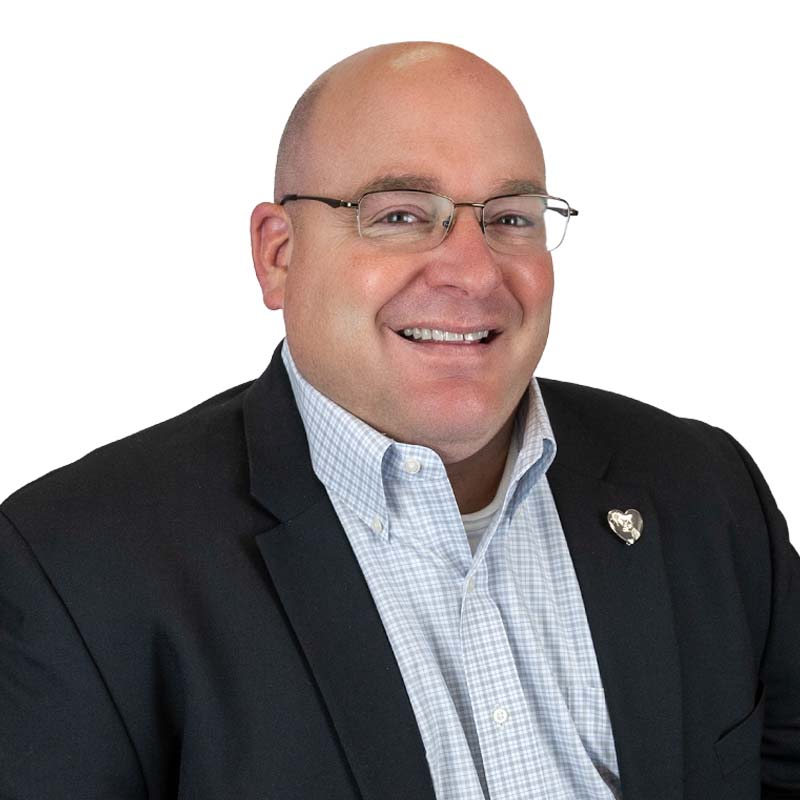
CEO
Brian Roy is the CEO of Variety the Children's Charity of St. Louis, stepping into the role in 2021 after a highly successful 16-year trajectory within the organization as Executive Director, COO, and Director of Development & Marketing. A seasoned executive with over 30 years of cross-sector experience in non-profit management, sports, and entertainment, Brian steers Variety’s mission through cohesive financial, operational, and fundraising strategies.
Prior to Variety, Brian was the Director of Sales at Live Nation, where he famously secured the multi-million-dollar Verizon Wireless naming rights partnership and spearheaded regional Fortune 500 accounts. He also brings extensive experiential marketing credentials from his work with Momentum Worldwide and DelWilber + Associates, where he managed campaigns for General Motors and directed major NCAA and LPGA tournaments.
Brian holds a B.S. from the University of Dayton and resides in Wildwood with his wife Sara and three teenage children.


